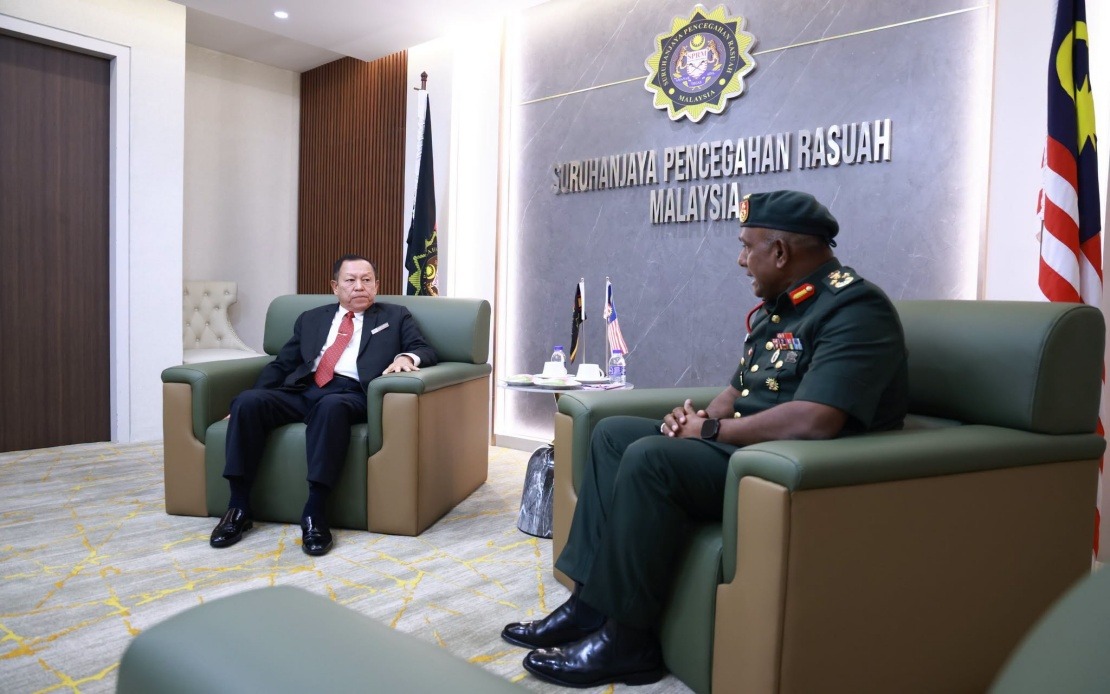
The Malaysian Anti-Corruption Commission and the Malaysian Armed Forces have renewed their institutional commitment to collaborative anti-corruption efforts, signalling the growing importance of cross-agency coordination in tackling integrity issues within the military establishment. The partnership was formally reaffirmed during a courtesy meeting at MACC headquarters in Putrajaya, underscoring the dual agencies' determination to leverage their respective mandates and resources in pursuit of a more transparent public sector.
MACC Chief Commissioner Datuk Seri Abd Halim Aman emphasised the value the anti-corruption body places on its established working relationship with the military, framing the cooperation as essential to advancing national interests. His remarks reflected recognition that corruption within defence and security institutions poses unique risks to national stability and public trust in government operations. The MACC chief expressed confidence that the partnership would deepen across several key operational domains, with particular focus on mechanisms for sharing intelligence, exchanging critical information, and implementing governance improvements that raise institutional standards.
The courteous visit was occasioned by the official appointment of Malaysian Defence Intelligence Organisation director-general Lt Gen Datuk Fazal Abdul Rahman, who assumed his position on May 21. The timing of the meeting highlighted the importance the MACC attaches to establishing clear communication channels with newly appointed defence officials, ensuring that anti-corruption protocols and expectations are understood from the outset of their tenure. Such proactive engagement represents a strategic approach to preventing misconduct before it materialises within sensitive defence portfolios.
Lt Gen Fazal articulated the Armed Forces' unwavering dedication to maintaining elevated governance standards and instilling discipline across all military operations and personnel. His statement served to affirm that the MAF recognises corruption as a serious institutional threat that undermines operational effectiveness and erodes public confidence in the uniformed services. By coupling this commitment with an explicit pledge to deepen cooperation with the MACC, the defence intelligence chief signalled that accountability mechanisms are not viewed as external impositions but rather as integral to the military's own professional standards and self-regulation.
The intelligence-sharing dimension of this partnership carries particular strategic weight in the Malaysian context. By establishing formal channels for the MACC to access defence-related intelligence and for the Armed Forces to receive anti-corruption guidance, both institutions can identify and address integrity risks more swiftly. This arrangement acknowledges that corruption within defence procurement, personnel management, and operational planning can have cascading consequences for national security and effective resource allocation within the military budget.
Governance enhancement, the third pillar of the renewed partnership, extends beyond simple compliance monitoring to encompass systemic improvements in how the Armed Forces structures internal controls, financial oversight, and decision-making processes. The MACC's technical expertise in identifying corruption vulnerabilities and designing preventive measures can contribute meaningfully to the military's efforts to strengthen its own governance frameworks, particularly in high-risk areas such as defence contracts, equipment procurement, and overseas operations where transparency is often challenged by legitimate security considerations.
The presence of senior officials from both institutions at the meeting—including MACC Intelligence Division senior director Datuk Saiful Ezral Arifin and MAF Security and Counter Intelligence Directorate director Lt Col Muhamad Zainol Md Yusof—indicates that the partnership operates at multiple levels of organisational hierarchy. This multi-tiered engagement ensures that anti-corruption efforts are not confined to abstract policy commitments but are grounded in operational implementation and day-to-day coordination between working-level personnel in both agencies.
From a regional perspective, Malaysia's emphasis on strengthening anti-corruption mechanisms within its defence establishment reflects broader Southeast Asian trends toward greater institutional accountability and professional military governance. As defence spending across the region continues to rise, donors and regional partners increasingly expect recipient nations to demonstrate robust internal controls and integrity safeguards. Malaysia's visible commitment to MACC-Armed Forces cooperation thus carries diplomatic and strategic implications beyond domestic governance.
The partnership also addresses an area of persistent vulnerability in many militaries worldwide: the intersection of defence procurement, intelligence operations, and financial management. Corruption in these domains can compromise operational security, divert resources from genuine defence capabilities, and create vulnerabilities to foreign exploitation. By institutionalising regular communication and information exchange between the MACC and the intelligence and security apparatus, Malaysia seeks to create a surveillance ecosystem that deters potential misconduct while maintaining the operational confidentiality that legitimate defence activities require.
Looking forward, the effectiveness of this renewed partnership will depend substantially on the development of clear protocols for handling sensitive defence information within anti-corruption investigations, ensuring that national security imperatives are respected while anti-corruption mandates are fully discharged. This balance represents an ongoing institutional challenge, requiring sustained dialogue and mutual trust between civilian accountability bodies and military leadership. The high-level nature of the recent meeting suggests that both the MACC and the Armed Forces are committed to navigating these complexities through structured engagement rather than allowing bureaucratic friction to undermine cooperative efforts.

