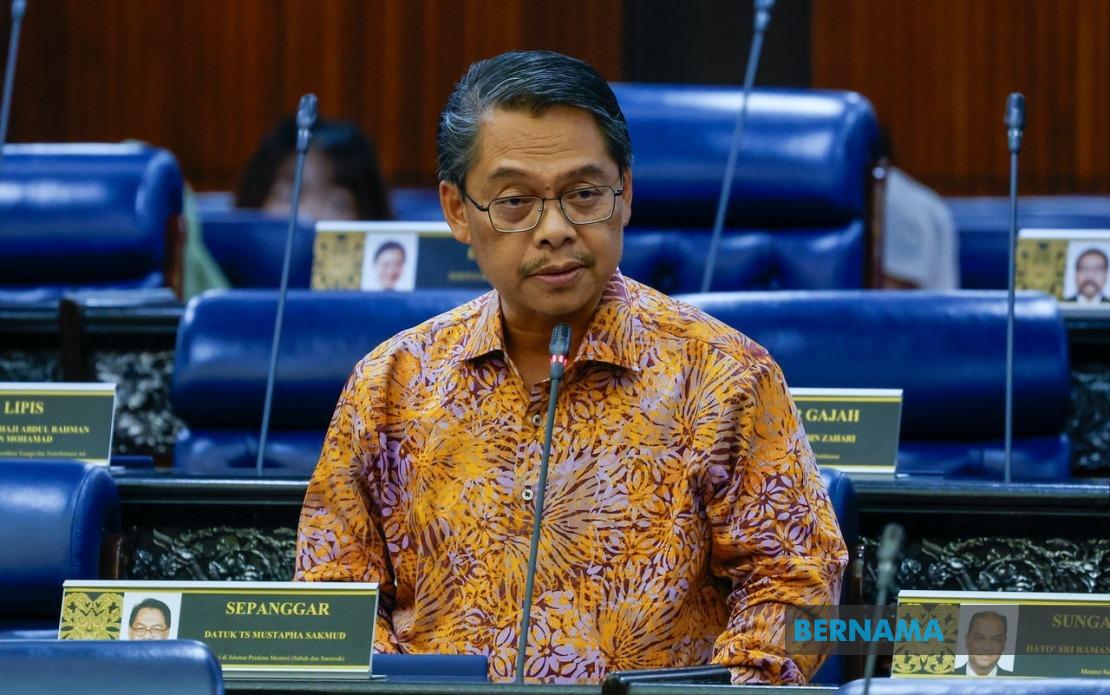
The Malaysian government has made measurable headway on implementing the Malaysia Agreement 1963 (MA63), with 13 of 29 substantive matters now fully resolved following formal negotiations, Datuk Mustapha Sakmud announced in Parliament this week. The Minister in the Prime Minister's Department responsible for Sabah and Sarawak Affairs revealed during question time that alongside these resolved issues, five additional matters have reached interim status—a middle ground between ongoing discussion and complete settlement that reflects partial consensus among negotiating parties.
The progress marks a significant moment in the long-standing dialogue between Kuala Lumpur and the two East Malaysian states over their constitutional relationship. The MA63, signed in 1963 and forming the legal foundation for Sabah and Sarawak's entry into the Malaysian federation, has been a focal point of regional politics, with longstanding grievances over resource allocation, autonomy, and representation periodically resurging. This formal negotiation platform, overseen through a dedicated technical committee, represents an institutionalised effort to address accumulated tensions methodically rather than through ad hoc political interventions.
Among the five matters achieving interim status, four involve substantial questions of public sector governance and demographic representation. These centre on expanding state public service positions under Article 112 of the Federal Constitution—a matter with direct implications for employment opportunities and political patronage networks in Sabah and Sarawak. Alongside this employment dimension, interim agreements have been reached on health and education issues, sectors where East Malaysia has historically argued for greater autonomy and resource allocation. The government also reports interim progress on Borneonisation of the federal public service—the practice of recruiting and deploying federal civil servants from within Sabah and Sarawak rather than transferring personnel from Peninsula Malaysia.
The Borneonisation agenda carries particular symbolic weight in both states, where residents have frequently expressed frustration at federal positions being filled by outsiders unfamiliar with local contexts and priorities. This policy touches questions of economic opportunity, cultural representation, and perceived marginalisation within the broader Malaysian system. The interim status suggests negotiators have identified potential pathways forward without yet reaching final agreement on implementation mechanisms, timelines, or scope.
The remaining 11 unresolved matters continue under close monitoring by the Sabah and Sarawak Affairs Division (BHESS), which functions as secretariat to the negotiation process and coordinates input from federal and state government stakeholders. The deliberate pace of resolution underscores the complexity of constitutional reform in Malaysia's federal system, where changes require coordination across multiple governmental layers and, in many cases, amendments demanding two-thirds parliamentary majorities.
Mustapha addressed perhaps the most politically charged outstanding issue: the demand to increase parliamentary representation for Sabah and Sarawak to achieve a 35 per cent quota of total Dewan Rakyat seats. This matter remains unresolved and subject to ongoing discussion, yet faces formidable structural obstacles. Any electoral redelineation exercise—the technical process of adjusting constituency boundaries and seat allocations—can only proceed after an eight-year cycle elapses following the previous exercise. More fundamentally, increasing East Malaysian representation requires constitutional amendment to Article 46 of the Federal Constitution, which governs Dewan Rakyat composition. Such amendments demand a two-thirds majority in Parliament, a threshold that has historically constrained efforts to restructure Malaysia's electoral architecture.
The parliamentary seats question extends beyond technical electoral procedure into foundational questions about Malaysian federalism and power distribution. Currently, Sabah and Sarawak hold approximately 13 per cent of parliamentary seats despite representing roughly 22 per cent of Malaysia's population. Advocates in both states argue that achieving a 35 per cent quota would better reflect demographic realities and historical expectations established when the agreement was negotiated. Critics outside East Malaysia worry that such reallocation would fragment Parliament's stability, while others question whether population-based allocation remains appropriate given Malaysia's federal structure.
The Election Commission retains ultimate authority over redelineation under the 13th Schedule and Article 113 of the Federal Constitution. This separation of powers means that even if the federal government and East Malaysian state governments reached consensus, implementation would still require EC action and constitutional amendment. The structural insularity of the electoral machinery from immediate political pressure reflects constitutional design principles intended to prevent partisan manipulation of boundaries, though it also constrains rapid reform.
For Malaysian readers following regional politics closely, the MA63 resolution process reflects broader questions about federalism, resource distribution, and minority safeguards within a dominant-majority state system. Progress on employment, health, education, and Borneonisation suggests federal willingness to accommodate East Malaysian preferences in administrative matters. The slower movement on parliamentary representation indicates friction between technical constraints and political ambitions—a pattern common in federal systems where fundamental structural change requires supermajority support.
The interim categorisation of five issues represents a significant diplomatic tool. By formally acknowledging partial progress rather than treating all unresolved matters equally, negotiators maintain momentum and demonstrate good faith commitment to ongoing dialogue. This approach allows governments to claim achievement while preserving negotiating space for future compromise. However, Sabah and Sarawak stakeholders must weigh whether interim status represents genuine progress or merely political positioning.
Looking forward, the 11 remaining matters will likely occupy the technical committee for extended periods, particularly those requiring constitutional amendment. The composition and timeline for further negotiations remain undisclosed, meaning public tracking of progress remains difficult. For a region where political stability and intercommunal accommodation prove increasingly important amid regional economic competition and migration pressures, the deliberate if incremental pace of MA63 implementation suggests that federal-state relations will continue generating negotiating agendas for years ahead.

