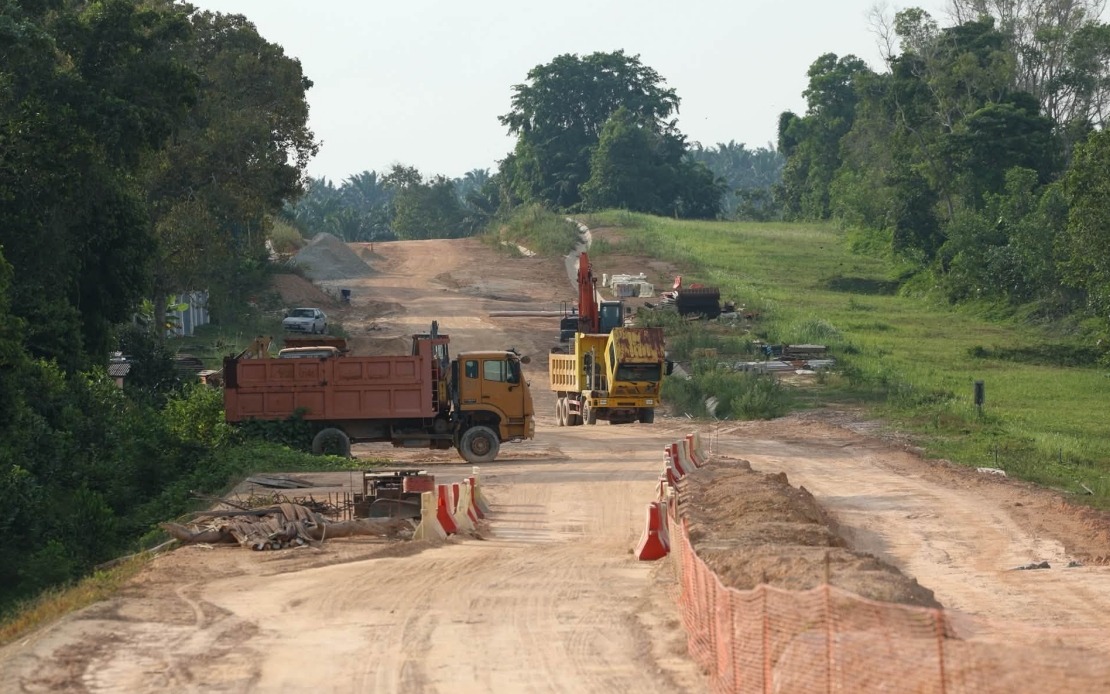
Construction of a new road connecting Lukut to Kampung Sirusa through Port Dickson's Kampung Paya and Kampung Bagan Pinang has crossed the 60 per cent threshold, with the project delivering tangible progress against an accelerated timeline. The Works Ministry confirmed on July 16 that the RM81.92 million infrastructure initiative has achieved 60.57 per cent physical completion, with work proceeding 43 days faster than originally projected. Scheduled to open in August 2027, the development represents a significant investment in Negeri Sembilan's transport network and reflects the growing emphasis on infrastructure as a driver of regional development.
The 10-kilometre route adheres to Public Works Department R2 specifications and encompasses comprehensive civil engineering elements designed to establish a modern transportation corridor. Beyond the primary roadway itself, the project incorporates slope stabilisation, sophisticated drainage and sewerage systems, structural installations, utility integration and ancillary infrastructure. This comprehensive approach indicates recognition that effective transportation infrastructure extends far beyond asphalt and concrete, requiring integrated support systems to ensure durability and environmental sustainability. The technical scope underscores the complexity of contemporary road development in Malaysian contexts, where projects must balance speed of delivery with quality standards.
Deputy Works Minister Datuk Seri Dr Ahmad Maslan visited the Port Dickson site to assess construction methodologies, verify adherence to contractual specifications and troubleshoot operational challenges. Such ministerial oversight has become routine practice in major federal infrastructure projects, serving both as quality assurance and political visibility for government commitments. The visit focused on ensuring that work maintains the accelerated pace while preserving construction standards, a delicate balance that prevents shortcuts compromising long-term asset value. Site-level interventions address bottlenecks and resource constraints that can derail project timelines, particularly critical given that Malaysian infrastructure projects have historically experienced delays.
For Port Dickson residents and businesses, the completion of this road corridor promises measurable improvements in daily mobility and economic participation. Journey times between Lukut and surrounding settlements will compress significantly, reducing transportation costs for commuters and commercial operators. The smoother traffic flow resulting from dedicated modern infrastructure supports more efficient goods movement and passenger travel, foundational to competitive commerce. Enhanced accessibility extends beyond convenience, creating tangible economic opportunity by shortening the time and cost barriers separating communities from employment, educational and commercial hubs. For workers in Port Dickson's tourism and manufacturing sectors, reduced travel friction translates directly to improved livelihoods.
The project's strategic objective encompasses strengthening connectivity between dispersed settlements that have historically operated somewhat in isolation. Port Dickson's geography—with communities distributed across coastal and inland areas—has meant that physical separation has constrained social cohesion and economic integration. Modern road infrastructure acts as a connective tissue binding communities into unified economic zones, enabling people living in Kampung Sirusa or surrounding areas to participate in opportunities across the wider district rather than remaining confined to immediate surroundings. This connectivity dimension reflects contemporary development thinking that emphasises the relationship between physical infrastructure and social inclusion.
Government documentation emphasises that the new road will facilitate improved access to essential public services including schools and clinics distributed across Port Dickson. Healthcare and educational accessibility remain critical determinants of quality of life, particularly in communities previously isolated by poor transportation. A student in a remote kampung can now feasibly attend a superior school in a larger settlement, while residents requiring specialised medical treatment can reach appropriate facilities without prohibitive journey times or costs. Tourism development in Port Dickson, an important economic component for the district, will also benefit from enhanced accessibility, allowing visitors easier entry to attractions and allowing local tourism businesses broader market reach.
The Ministry of Rural and Regional Development's stewardship of this project reflects intentional policy prioritisation of connectivity in less-developed regions. Federal development allocations directed toward Port Dickson signal commitment to balanced regional growth rather than concentrated investment in major urban centres. The State Public Works Department's implementation role embeds local expertise and institutional knowledge, creating accountability mechanisms where state-level officials directly manage outcomes. This administrative structure distributes responsibility across government layers, potentially enhancing responsiveness to local conditions while maintaining federal standards and funding discipline.
From an economic development perspective, the road functions as a catalyst for broader investment and activity expansion. Infrastructure improvements reduce business operating costs, making areas previously marginal for commercial activity suddenly competitive. Manufacturers, traders and service providers considering investment decisions assess transportation accessibility as a primary variable—improved roads shift Port Dickson from the periphery toward viability for new ventures. The project documentation explicitly identifies job creation and investment attraction as expected outcomes, acknowledging that infrastructure investments generate multiplier effects as construction employment transitions to permanent economic activity supported by improved connectivity. Tourism operators and agricultural producers, both potentially significant for Port Dickson, gain competitive advantage through lower logistics costs.
The 43-day acceleration in scheduling deserves analytical attention as it suggests either conservative original planning or genuine construction efficiency gains. Malaysian infrastructure projects frequently experience delays due to weather, supply chain disruptions, labour availability and site conditions, making accelerated progress noteworthy. Successful early completion may reflect improved project management, adequate contractor resources, favourable site conditions or prioritised governmental support removing administrative barriers. Understanding the mechanics of this acceleration offers valuable lessons for future infrastructure delivery, particularly as Malaysia pursues ambitious infrastructure expansion across rural and developing regions. If replicable, the factors enabling schedule acceleration could reshape delivery timelines across the portfolio of ongoing national development projects.
The road's completion in 2027 positions Port Dickson for a development trajectory reflecting its geographic potential and economic assets. Between now and project delivery, surrounding communities and private investors will likely anticipate the connectivity improvements by planning complementary development—residential expansion, business establishment, agricultural modernisation. The infrastructure investment thus catalyses private sector response, with public investment triggering private capital deployment. Port Dickson's district authorities and state government should concurrently advance complementary initiatives—land use planning, skills training, business support—maximising the economic benefits that the improved road network creates. Without such coordination, infrastructure improvements risk remaining underutilised, with their development potential unrealised.

