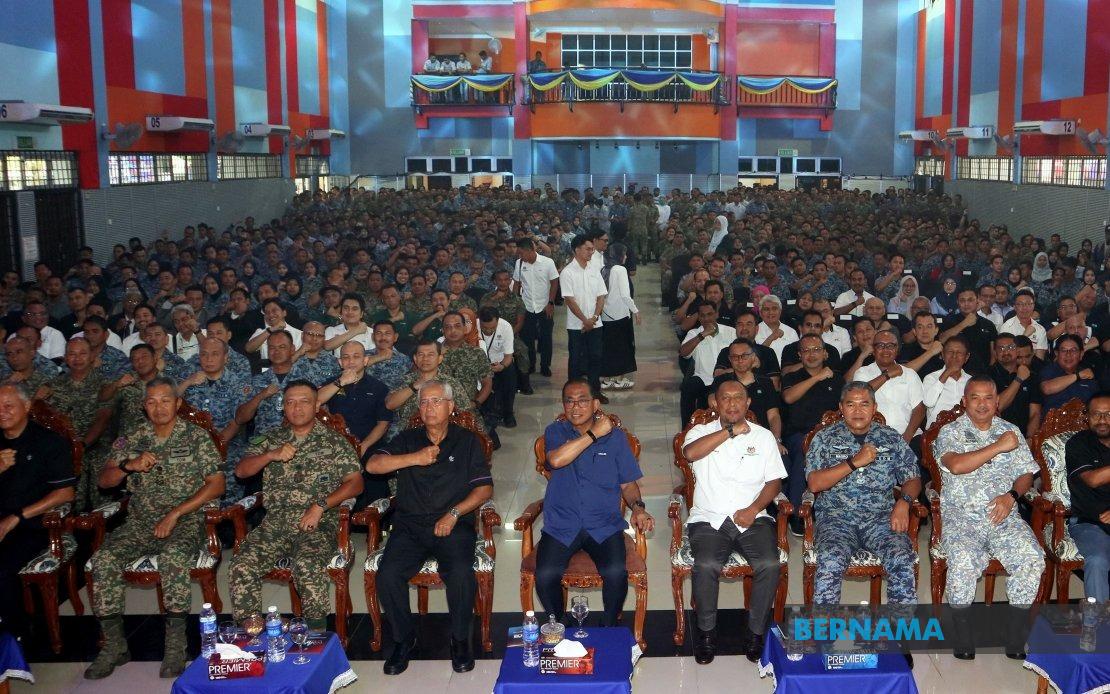
The Armed Forces Fund Board (LTAT) has made significant progress in its nationwide engagement initiative, reaching 28,500 Malaysian Armed Forces (MAF) personnel through the Jelajah Wira tour. The phased nationwide campaign represents a strategic effort to deepen the relationship between the fund's management and the military community that sustains it through mandatory monthly contributions. The initiative demonstrates LTAT's commitment to moving beyond traditional administrative channels and establishing a more interactive dialogue with service members across different ranks and operational locations.
Mohammad Ashraf Md Radzi, the Chief Executive of LTAT, explained that the tour structure was deliberately designed to ensure comprehensive national coverage while maintaining meaningful engagement at each stop. He emphasized that the initiative serves a dual purpose: allowing military personnel to better understand the fund's operations and allowing LTAT's management to directly interact with contributors who commit 10 per cent of their monthly salary to the scheme. This ground-level engagement strategy reflects a recognition that military personnel, despite their substantial financial commitment to the fund, may have limited visibility into how their contributions are managed and invested.
A centrepiece of the tour is the launch of the LTAT-Affin Debit Card, positioned as a tangible recognition of the armed forces' service and loyalty to the nation. The debit card initiative carries symbolic weight beyond its practical utility, serving as a physical token of appreciation that acknowledges the sacrifices and dedication of military personnel. According to LTAT leadership, the card represents more than a financial instrument; it symbolizes the nation's recognition of the invaluable contributions made by defence force members in safeguarding national security and territorial integrity.
The Jelajah Wira tour encompasses multiple military installations across the East Coast region and beyond, including Kem Desa Pahlawan in Kelantan, Kuantan Air Force Base, Kem Seri Pantai (16th Royal Malay Regiment) in Terengganu, Kem Sungai Udang in Melaka, KD Sultan Ismail in Johor, and Kem Mahkota Kluang in Johor. This geographical spread ensures that military personnel stationed in different parts of the country have access to direct interaction with LTAT representatives, reducing the perception of distance between the fund's headquarters and the personnel it serves. The choice of diverse military facilities across different service branches—air force, army, and navy—underscores LTAT's commitment to inclusive engagement across the entire armed forces ecosystem.
Mohammad Ashraf articulated LTAT's broader vision as one encompassing holistic welfare that extends beyond individual service members to encompass their families and the wider military community. This expanded perspective acknowledges that the financial security provided by LTAT contributions has ripple effects throughout military families and the communities surrounding military installations. Such an approach recognizes that effective welfare provision must address the interconnected needs of military personnel, their dependents, and the social fabric that supports the armed forces.
From the perspective of military contributors themselves, LTAT's savings and investment scheme offers distinct advantages that warrant active engagement. Airman I Muhammad Syahmi Mohd Shobri, 23, highlighted the scheme's competitive annual dividends, which he noted have demonstrated consistent year-on-year growth that exceeds returns available through alternative savings mechanisms. For younger service members early in their military careers, the long-term compounding benefits of regular contributions and reinvested dividends can translate into substantial financial accumulation over decades of service.
The retirement dimension of LTAT benefits emerged as particularly significant when Airman I Muhammad Izzuddin Mohd Hanapi, 25, discussed how accumulated contributions combine with continuing dividend payments to provide post-service financial security. This dual benefit structure—combining accumulated principal with ongoing dividend income—addresses a critical concern for military personnel planning for life after active service. The transition from military employment to civilian life can present substantial financial challenges, and LTAT's structure provides a foundation for managing that transition more smoothly.
The tour incorporated elements designed to generate enthusiasm and strengthen emotional connection to the initiative. Royal Malaysian Air Force Air Sergeant Haidil Jafar, 39, won an electric motorcycle through a lucky draw, an experience that generated positive reactions from participants and reinforced the notion that LTAT's engagement with military personnel extends beyond dry financial discussions to include recognition and tangible rewards for loyalty. Such promotional elements, while modest, contribute to creating memorable occasions that strengthen institutional bonds.
The high-level attendance at the Jelajah Wira events underscores the political and institutional importance assigned to military welfare. The presence of Defence Ministry Secretary-General Datuk Lokman Hakim Ali, LTAT Chairman General Tan Sri Azizan Ariffin, and LTAT Investment Panel Chairman Datuk Khairol Anuar Mohamad Tawi signals top-level commitment to the initiative's success. This elevated participation demonstrates that military personnel welfare and LTAT's operational effectiveness are viewed as significant priorities within Malaysia's defence and financial governance structures.
For Malaysian observers and regional analysts, LTAT's engagement strategy offers insights into how government institutions can strengthen institutional legitimacy and contributor satisfaction through direct, high-touch engagement. The initiative reflects a growing recognition that mandatory contribution schemes require continuous justification and transparent communication to maintain buy-in, particularly among younger contributors who may have multiple competing financial commitments. The success of the Jelajah Wira tour in reaching 28,500 military personnel demonstrates that even large institutions can create meaningful connections through systematic, planned engagement initiatives that prioritize direct dialogue over purely formal administrative channels.

