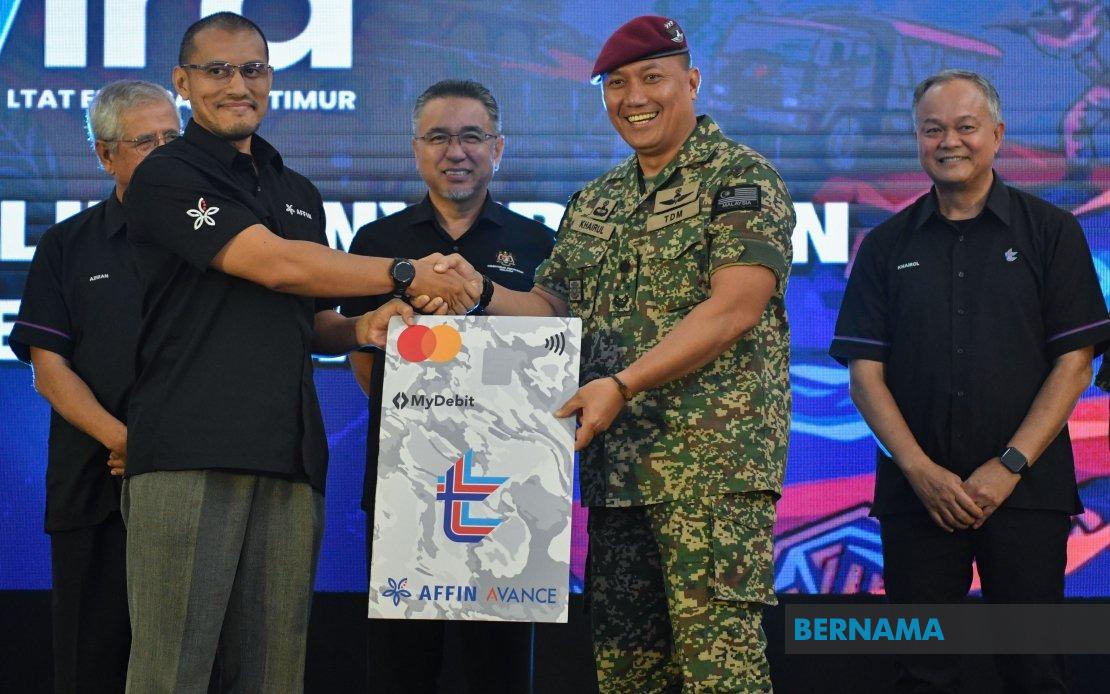
The Armed Forces Fund Board (LTAT) has unveiled an expanded digital strategy for the Jelajah Wira LTAT 2026 roadshow series, marking a significant shift in how Malaysia's defence community receives financial and social support services. Launched at Desa Pahlawan Camp in Kota Bharu on July 2, the East Coast Edition represents a hybrid model that merges conventional in-person engagement with live-streaming technology, allowing the initiative to extend its reach beyond the 3,600 military personnel expected to attend physical venues across the region.
Deputy Defence Minister Adly Zahari inaugurated the roadshow, which will traverse key military installations including Sri Pantai Camp in Kuala Terengganu on July 9 and Kuantan Air Base in Pahang on July 13. This phased geographical approach reflects LTAT's effort to systematically engage the armed forces across multiple states, ensuring no service member stationed in remote or geographically dispersed locations remains excluded from essential financial literacy and welfare initiatives.
The digitisation of Jelajah Wira represents more than a technological upgrade; it embodies LTAT's commitment to modernising service delivery within Malaysia's military ecosystem. By integrating live-streaming capabilities, the board acknowledges the contemporary reality that armed forces personnel are stationed across vastly different locations, from coastal naval bases to inland air force installations. Traditional roadshow models, while valuable for direct interaction, inherently leave gaps in coverage. The digital component directly addresses this limitation, enabling personnel unable to attend physical sessions to participate in real-time discussions and access identical information simultaneously.
LTAT frames this expansion within the broader MADANI Economy framework and PuTERA35 aspirations, positioning military welfare as integral to Malaysia's economic development agenda. This contextualisation signals that supporting defence personnel's financial well-being transcends military boundaries and carries implications for national economic resilience. When armed forces members possess stronger financial literacy and stable economic foundations, they contribute more effectively to the workforce and economy at large, reducing vulnerabilities within critical sectors dependent on military expertise.
The roadshow introduces practical value-added services designed to address immediate needs within the defence community. The symbolic presentation of the AFFIN LTAT Affiliate Debit Card alongside distribution of smart devices under the 2026 SPM e-Perkasa programme demonstrates LTAT's integrated approach to family welfare. By providing military children with free online tuition access, the initiative acknowledges that military families often face unique challenges, including frequent relocations and limited access to educational resources in remote postings. This multi-generational support model strengthens family stability and educational outcomes, factors that indirectly enhance military personnel retention and morale.
A cornerstone of the roadshow programme involves honouring and empowering armed forces veterans through structured economic interventions. The graduation ceremony for participants completing the Second Series of the LTAT Wira Entrepreneur Empowerment Programme in the Northern Zone, combined with the launch of the third series targeting the East Coast veteran community, reflects growing recognition of post-service economic challenges. Veterans often transition to civilian life unprepared for entrepreneurial ventures, lacking mentorship networks and access to business development support. By providing structured six-month economic intervention programmes, LTAT directly addresses this vulnerability while creating pathways to self-sufficiency.
Data from the entrepreneur empowerment initiative reveals compelling outcomes: programme participants recorded average monthly business income increases of 162 percent following completion. This statistic transcends mere programme success metrics; it demonstrates that combining organised business mentoring with financial literacy and ecosystem support creates measurable economic impact. For military personnel contemplating post-service career transitions, these documented results provide tangible evidence that structured support generates genuine economic advancement. Such outcomes carry particular significance in Malaysia's regional context, where rural and semi-urban areas have historically experienced limited access to quality business development services.
The LTAT Contributors' Briefing and Financial Literacy Programme, established in December 2023, has cumulatively reached over 68,000 armed forces personnel through continuous sessions across various military installations. This reach represents substantial penetration within Malaysia's total armed forces complement, suggesting institutional acceptance and high participation rates. The consistency of briefing delivery across multiple camps indicates that financial literacy has become embedded within military operations planning, rather than treated as an ancillary service. This institutionalisation strengthens the programme's sustainability and ensures new personnel cohorts systematically receive financial education.
From a Malaysian defence policy perspective, LTAT's digital expansion reflects evolving understanding of force readiness and personnel welfare interconnection. Modern military effectiveness depends increasingly on personnel psychological stability, family security, and financial confidence. Service members burdened by financial stress or lacking basic economic literacy represent suboptimum resource deployment. By investing comprehensively in financial education and economic empowerment, LTAT addresses root causes of military personnel vulnerability, potentially reducing attrition rates, improving operational readiness, and enhancing recruitment attractiveness to civilian populations considering military careers.
The two-way communication platform architecture embedded within the digitalised roadshow signals LTAT's recognition that engagement flows bidirectionally. Military personnel can ask contextualised questions about financial planning relevant to their specific postings, family circumstances, and career trajectories. This interactive dimension transforms the roadshow from information dissemination into genuine dialogue, allowing LTAT to refine services based on direct feedback from the defence community. Such responsiveness builds institutional credibility and demonstrates that armed forces welfare receives genuine institutional priority.
Regionally, Malaysia's LTAT model offers a replicable framework for other Southeast Asian nations managing defence personnel welfare. Many regional military establishments face similar challenges: dispersed personnel distributions, post-service transition difficulties, and limited access to financial services in remote locations. Malaysia's integration of digital technology with physical engagement, coupled with measurable economic empowerment outcomes, provides a practical blueprint that other armed forces could adapt to local contexts. As regional defence budgets increasingly incorporate personnel welfare components, such innovative approaches gain strategic importance.
Looking forward, the expansion of Jelajah Wira 2026 through digital channels establishes foundations for sustained engagement extending beyond the roadshow's physical completion. Recorded sessions, digital resources, and ongoing virtual consultations can remain accessible indefinitely, creating permanent institutional infrastructure supporting military personnel financial management. This shift from episodic engagement to continuous availability represents fundamental modernisation in how defence organisations deliver social welfare services, positioning Malaysia's armed forces within contemporary approaches to personnel support and economic empowerment.

