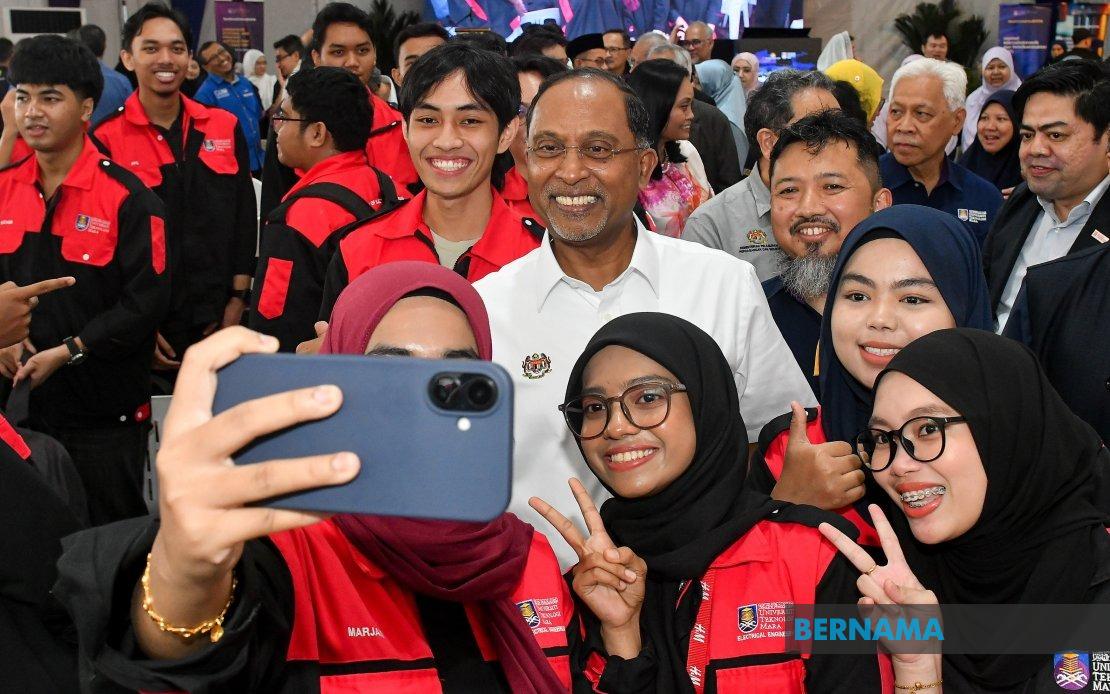
The opening of the Light Rail Transit 3 Shah Alam Line is reshaping how students and commuters navigate the Klang Valley, with UiTM Shah Alam emerging as a key beneficiary of improved public transport infrastructure. Higher Education Minister Datuk Seri Dr Zambry Abd Kadir has highlighted how the new rail corridor addresses long-standing mobility challenges at the campus, where rapid urban development has intensified traffic pressures on surrounding roads. The dedicated UiTM Shah Alam Station now provides students with a faster, cheaper alternative to private vehicles, fundamentally altering daily commuting patterns for thousands of undergraduates and postgraduates.
The timing of the line's launch carries particular significance given the economic pressures facing Malaysian university students. Prime Minister Datuk Seri Anwar Ibrahim's announcement of free fares for all passengers through July 31 effectively removes financial barriers to public transport usage during the critical early weeks of operation, when user patterns are established. For UiTM Shah Alam students, many of whom travel from residential areas across Selangor and into central Klang Valley hubs, this zero-cost initiative could translate into substantial monthly savings previously allocated to fuel and parking. The psychological impact of experiencing seamless rail connectivity may prove equally important, normalising public transport dependency among a demographic traditionally reliant on private vehicles.
The 20-station Shah Alam Line connects UiTM Shah Alam directly to neighbouring commercial and residential zones including Bandar Utama, Subang, and Stadium Shah Alam, while extending southward through established urban centres such as Klang and Johan Setia. This geographic reach positions UiTM not as an isolated campus but as a node within a broader metropolitan network, potentially attracting diverse student populations who previously considered commuting distance prohibitive. The route's design also facilitates reverse-flow travel, enabling campus-based employment and research facilities to recruit talent from across the region without relocation requirements.
Beyond transportation benefits, UiTM's simultaneous launch of the Semiconductor@UiTM initiative reflects a strategic pivot toward producing workforce capacity aligned with Malaysia's broader economic ambitions. The RM20 million government allocation represents a substantial institutional investment in physical infrastructure, faculty expertise, and curriculum development specifically calibrated to semiconductor industry requirements. This dual announcement—infrastructure enhancement coupled with specialised skills development—demonstrates coordinated thinking about how universities must evolve beyond teaching institutions into integrated economic actors capable of addressing sectoral labour shortages.
Malaysia's semiconductor sector contributes 13 per cent of global market share and generates over RM300 billion annually, positioning the industry as a critical economic pillar requiring sustained talent pipeline investment. The Semiconductor@UiTM programme directly addresses this need by establishing UiTM as a dedicated training centre for Electrical and Electronics Engineering graduates equipped with both theoretical knowledge and practical exposure to industry standards. By embedding cross-learning between academia and multinational semiconductor manufacturers, the university moves beyond classroom instruction toward apprenticeship-style education where students gain direct exposure to cutting-edge technologies and supply chain realities.
The initiative aligns with the government's National Semiconductor Strategy, which explicitly targets workforce development as essential infrastructure for maintaining Malaysia's competitive position. Regional competitors including Thailand and Vietnam are simultaneously investing heavily in semiconductor talent development, creating urgent pressure for Malaysia to accelerate skills production. UiTM's enhanced E&E programme positions Malaysia to retain manufacturing operations and higher-value semiconductor design activities that might otherwise migrate toward countries offering deeper technical talent pools.
Minister Zambry's framing of this investment as translating government policy into human capital development contains an implicit recognition that economic sustainability depends on institutional capacity to bridge academic learning and industrial practice. Traditional university models struggle with this translation; curricula often lag industry evolution by several years, leaving graduates unprepared for contemporary workplace realities. The Semiconductor@UiTM structure, by contrast, positions faculty and students within active industry ecosystems where technology obsolescence is managed dynamically.
For UiTM specifically, the initiative offers opportunity to establish benchmark standards that other Malaysian universities may adopt when upgrading their own engineering programmes. This replicability potential multiplies the intervention's economic impact beyond a single institution, creating precedent for coordinated national workforce development. The university's vice-chancellor Professor Datuk Dr Shahrin Sahib@Sahubuddin's participation signals institutional commitment to this transformation, suggesting resource allocation and strategic planning will sustain the initiative beyond initial launch enthusiasm.
The convergence of improved transit accessibility and specialised skills development carries particular relevance for Malaysian regional integration. The Klang Valley's status as an economic centre depends partly on attracting and retaining talent; enhanced public transport combined with proximity to advanced technical training may strengthen the region's competitive advantage in attracting semiconductor manufacturing investment. Likewise, students from across Malaysia considering university options gain tangible infrastructure benefits through attending UiTM Shah Alam, potentially shifting institutional choice calculus toward campuses offering both educational quality and liveable metropolitan environments.
Looking forward, the LRT3 Shah Alam Line and Semiconductor@UiTM initiative together suggest a maturing approach to university infrastructure development in Malaysia. Rather than treating transport and education as separate policy domains, this coordinated approach recognises that workforce competitiveness depends on integrated ecosystems where mobility, academic excellence, and industry alignment reinforce one another. Students who can easily access campus via rapid transit while studying within industry-aligned curricula emerge as globally competitive graduates capable of anchoring Malaysia's position within semiconductor supply chains.

