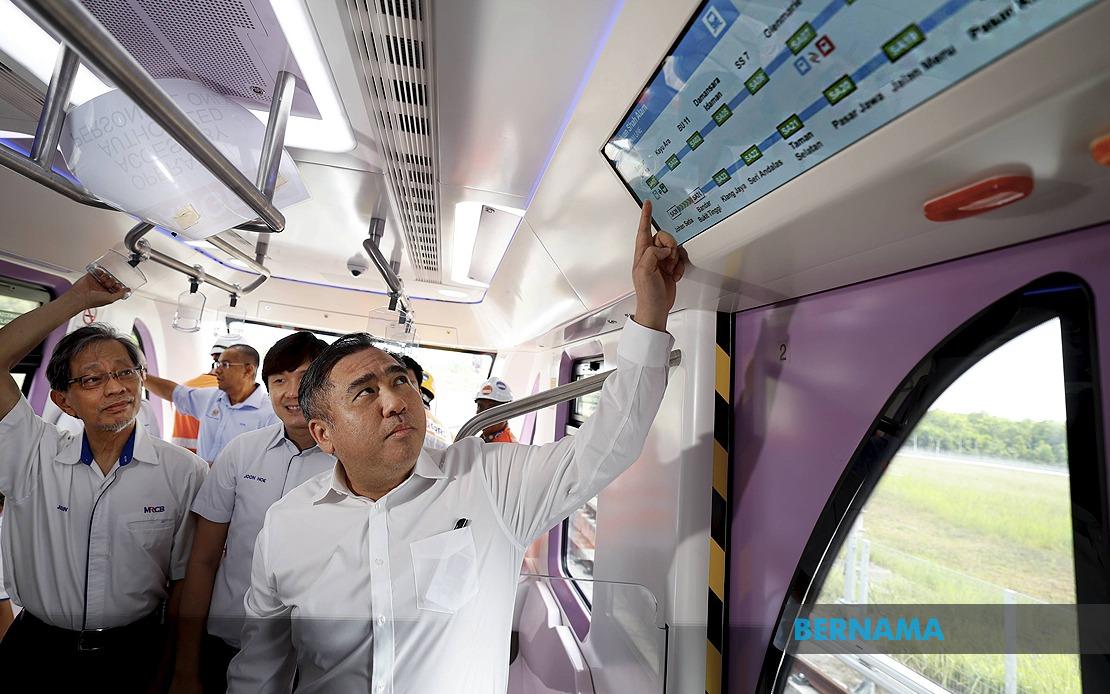
Malaysia's long-awaited Light Rail Transit 3 line will finally begin passenger operations on Monday, June 29, Transport Minister Anthony Loke announced on Saturday. The official ceremony inaugurating the new rail service will take place the day before, with Prime Minister Datuk Seri Anwar Ibrahim set to perform the honours. Loke made the announcement while speaking to journalists after attending the opening of a new branch of the Road Transport Department at Terminal Bersepadu Selatan in Kuala Lumpur, confirming that service will start immediately following the Sunday launch event.
The LRT3 infrastructure represents a substantial addition to Malaysia's public transportation network, spanning 37.8 kilometres across the Klang Valley's western corridor. The line stretches from Bandar Utama in the north to Johan Setia in Selangor's southern region, traversing some of the country's most densely populated and economically significant zones. This routing reflects deliberate planning to connect major urban centres with emerging residential and industrial precincts that have experienced rapid growth over the past decade.
Policymakers project that approximately two million residents will benefit from the new connectivity offered by LRT3. For many commuters in the Shah Alam metropolitan area and surrounding districts, the line promises to significantly reduce journey times and provide a viable alternative to private vehicle travel. The new rail corridor will particularly serve communities in newer townships and satellite cities that have previously relied heavily on road-based transport, often contributing to congestion on major highways during peak hours.
The LRT3 alignment strategically targets multiple categories of destinations along its route. Residential developments, including large-scale housing projects and newer suburban communities, will gain improved access to employment centres and urban amenities. Commercial nodes and shopping districts positioned near stations will benefit from enhanced footfall and accessibility for shoppers using public transport. Industrial and manufacturing areas, particularly those scattered throughout the western Selangor corridor, will gain better connections to the Klang Valley's labour pool and logistics networks.
Connectivity improvements from LRT3 carry implications beyond immediate passenger convenience. The line's opening is expected to support ongoing economic development along the western Klang Valley corridor, potentially accelerating property development and commercial investment in station areas. Urban planners anticipate that transit-oriented development will cluster around major stations, creating mixed-use precincts that combine residential, retail and office functions. Such clustering could help reduce vehicular congestion on radial highways serving the same regions.
For Malaysian public transport enthusiasts and advocates, the LRT3 launch marks another milestone in gradually expanding the Klang Valley's rapid transit network. The project extends a system that already includes the older LRT lines, the KL Monorail, and the Kuala Lumpur-Selangor Commuter Service. However, significant portions of the metropolitan area still lack comprehensive rapid transit coverage, meaning LRT3 opening addresses a genuine gap in transport infrastructure serving millions of daily commuters.
The project's completion represents years of planning, construction and coordination between multiple government agencies and private contractors. Like most major infrastructure initiatives in Malaysia, LRT3 experienced various delays and challenges throughout its development phase. The final delivery of the service demonstrates the authorities' commitment to incrementally modernising transport systems serving the country's economic heartland, though questions remain about the pace at which other transport improvement projects progress.
From a regional Southeast Asian perspective, Malaysia's continued investment in urban rail transit reflects broader trends across the wider region. Countries including Thailand, Indonesia and Vietnam are similarly expanding rapid transit networks to cope with urban congestion and air quality concerns in major metropolitan areas. LRT3's opening adds to the growing portfolio of modern metro and light rail systems across Southeast Asia, though disparities remain in the comprehensiveness and integration of networks between different countries and cities.
Operational success of LRT3 will depend partly on integration with existing transport networks and how effectively commuters are encouraged to shift from private vehicles. Fare pricing, station accessibility, service frequency, and connections to feeder bus services will influence passenger uptake. Competition from private vehicles and ride-sharing services means transport authorities must deliver reliable, convenient and competitively priced services to achieve projected ridership targets and maximise the infrastructure's contribution to congestion reduction.
For residents of Shah Alam, Petaling Jaya, Subang Jaya and other communities along the LRT3 corridor, the opening will finally deliver transport options that have been promised for an extended period. Many residents in these densely populated areas have advocated for improved public transit connectivity as a priority for urban planning. The June 29 commencement means that commuting patterns in Malaysia's second-largest metropolitan region will undergo gradual transformation as passengers become familiar with the new service and adjust their daily travel habits accordingly.