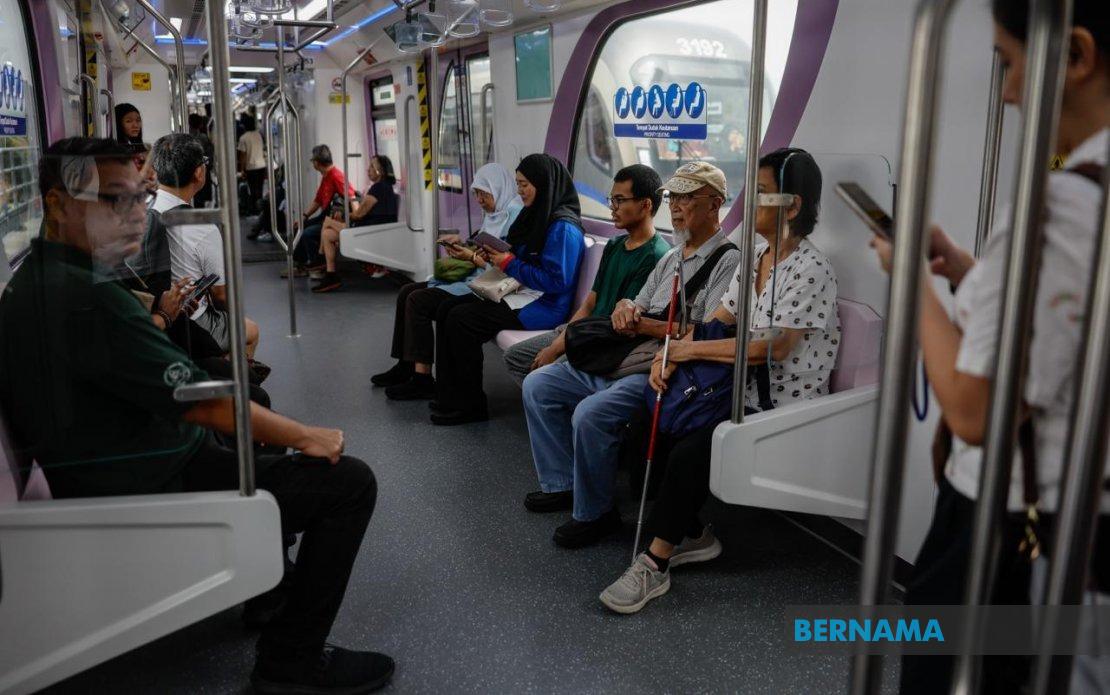
The Light Rail Transit 3 (LRT3) Shah Alam Line commenced operations to widespread commendation, with passengers hailing the service as a substantial step forward in addressing connectivity challenges across the Klang Valley's congested transport networks. The inaugural day saw visitors and regular commuters alike traverse the new route with considerable satisfaction, underscoring the infrastructure investment's potential to reshape urban mobility patterns in Malaysia's most densely populated commercial region.
The RM16.63 billion project represents a significant commitment from the government to expand rapid transit options beyond the existing framework, directly connecting previously underserved suburban areas to central business districts. For regular commuters navigating the sprawling geography between Kajang and Glenmarie 2, the direct routing eliminates the frustrating necessity of multiple transfers that have long characterised journeys through this corridor. This streamlining of travel patterns carries particular relevance for working professionals and students whose productivity gains from reduced transit times accumulate substantially over months and years.
Visually impaired passengers, however, have articulated constructive observations about the implementation's incompleteness. Razlan Ibrahim, a 40-year-old commuter who tested the full route on opening day, acknowledged genuine progress in tactile infrastructure deployment, particularly praising the guiding pathways installed at Bandar Utama Station that facilitate intuitive navigation to facilities designated for persons with disabilities. These textured surface treatments represent tangible recognition that modern public transport systems must serve all demographics, not merely able-bodied users operating under standard assumptions.
Yet Ibrahim's feedback highlights a critical gap between physical accessibility and informational accessibility. The absence of Braille signage at essential locations—including designated toilets, prayer facilities segregated by gender, and lift entrances—creates an informational deficit that undermines the utility of otherwise well-designed infrastructure. For visually impaired individuals, navigating newly constructed environments requires directional cues that transcend physical pathways. The provision of such signage represents relatively modest additional expenditure compared to the overall project cost, yet yields disproportionate benefits for vulnerable user cohorts who might otherwise hesitate to utilise the service.
Among general commuters, the reception emphasised convenience and time efficiency. Samantha Fong, a 26-year-old private sector employee, highlighted the psychological relief associated with eliminating transfer requirements, noting that direct journeys between major destinations reduce not merely transit duration but also the cognitive burden of navigating interchange complexities. This observation reflects broader patterns in urban commuter preferences: passengers increasingly value journey simplicity and predictability over absolute speed, particularly in markets where multiple modal options theoretically exist but carry varying reliability levels.
Fong's suggestion regarding women-only coaches warrants consideration within Malaysia's specific context. Such provisions have gained traction in several Asian markets, reflecting legitimate concerns about personal safety and harassment that persistently deter female commuter engagement with public transport during peak and off-peak periods alike. The decision to implement gender-segregated seating or coaches represents a policy choice with significant implications for ridership expansion among demographic segments whose participation remains essential to achieving full cost recovery and network sustainability.
The government's decision to offer complimentary travel until July 31 functions as both promotional incentive and extended trial period, allowing potential users to evaluate the service's suitability without financial commitment. This one-month window proves particularly valuable for students and casual workers whose limited budgets might otherwise defer experimentation with alternative commuting patterns. As Rainchie Lee observed, such promotional mechanisms democratise access to new infrastructure, enabling informed decision-making about long-term modal choices rather than enforcing adoption through necessity.
The cumulative effect of positive opening-day feedback reflects successful delivery on fundamental operational expectations: trains departed on schedule, passenger capacity accommodated demand, and stations functioned as designed. These baseline requirements, while sometimes overlooked in celebratory discourse, prove essential prerequisites for sustained public confidence. The LRT3 Shah Alam Line's ability to maintain such performance consistency through peak demand periods will ultimately determine whether initial goodwill translates into permanent behavioural change among commuters previously entrenched in private vehicle dependency.
Looking forward, the accessibility recommendations raised during these opening observations should inform immediate operational adjustments rather than languish in feedback repositories. The installation of Braille signage, while straightforward, symbolises institutional commitment to inclusive design principles that extend beyond tokenistic gesture. Similarly, systematic evaluation of women-only coach provision through pilot implementation on specific time slots could provide empirical data informing broader network-wide policies without imposing universal requirements that might prove unsuitable across diverse route characteristics.
For Malaysia's broader transport policy agenda, the LRT3 Shah Alam Line's successful launch demonstrates that ambitious infrastructure expansion remains achievable within the current development trajectory. However, the accessibility feedback equally demonstrates that physical infrastructure alone proves insufficient; complementary policy refinements, operational flexibility, and genuine responsiveness to marginalised user constituencies determine whether new transport systems genuinely democratise mobility or merely replicate existing inequities in modernised form.

