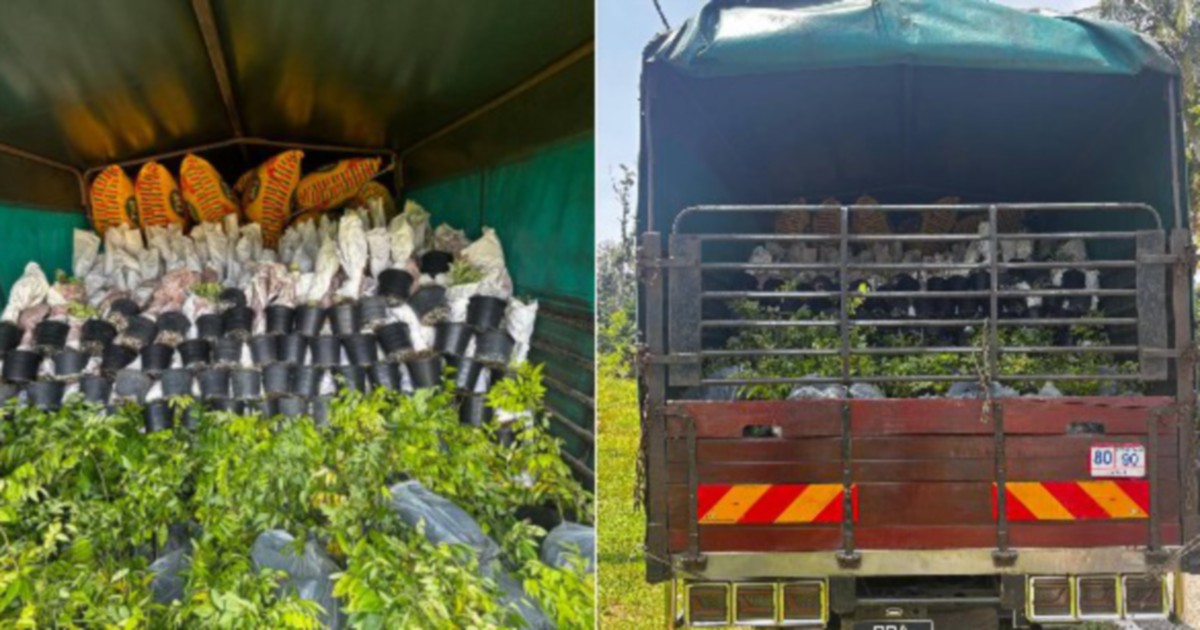
Authorities have arrested a lorry driver following a significant interception of illegal plant saplings at the Rantau Panjang border crossing in Kelantan. The operation, conducted at Kampung Padang Licin today, resulted in the seizure of 6,000 ornamental plant saplings with an estimated market value of RM200,000. The cache represents one of the more substantial horticultural smuggling cases along Malaysia's northern border in recent months, underscoring persistent challenges in controlling illicit cross-border trade in botanical specimens.
Investigators believe the consignment was smuggled from Thailand, where a thriving trade in exotic and ornamental plants continues to supply underground markets across Southeast Asia. The driver's detention marks the latest enforcement action in a region where porous border controls and high demand for rare botanical specimens have created lucrative opportunities for smuggling networks. Border officials have intensified operations in response to repeated intelligence suggesting organised trafficking of high-value plants, particularly species sought by collectors willing to circumvent legal import channels.
The seizure highlights how ornamental plant trafficking operates alongside more publicised smuggling activities. Whilst wildlife and narcotics interdiction typically dominate headlines, the horticultural black market represents a parallel threat to legitimate commerce and biodiversity conservation. The RM200,000 valuation indicates the commercial appeal of these specimens, suggesting they were destined for retail distribution through nurseries, garden centres, or direct sales to enthusiasts prepared to pay premium prices for restricted or difficult-to-source varieties.
For Malaysian plant nursery operators and retailers, such enforcement actions carry dual implications. The legal trade in ornamental plants represents a viable economic sector, particularly in states like Kelantan, Selangor, and Penang where horticultural commerce has developed substantial infrastructure. Smuggling operations undercut legitimate businesses by offering cheaper alternatives that bypass customs duties, quarantine inspections, and phytosanitary certification procedures. This unfair competition threatens the livelihoods of registered operators who comply with regulatory frameworks designed to protect Malaysian agriculture and ecosystems.
Quarantine regulations governing plant imports exist for scientifically sound reasons. Border officials and veterinary authorities emphasise that unchecked importation risks introducing pests, diseases, and invasive species that could devastate local agricultural production. The phytosanitary protocols enforced at official entry points provide critical screening mechanisms. By circumventing these checkpoints, smuggled consignments potentially carry significant hidden risks to Malaysia's food security and native plant communities, particularly in sensitive ecosystems already under pressure from habitat loss and climate change.
The Rantau Panjang checkpoint sits at a critical juncture on the Malaysia-Thailand border where daily cross-border traffic creates operational challenges for customs and border personnel. Lorries carrying legitimate goods move constantly between both nations, and identifying contraband among thousands of daily transits demands significant investigative resources. This particular case suggests either intelligence-led targeting of the driver or screening protocols flagging anomalies in documentation or vehicle conditions. Enhanced border vigilance has proven effective in previous operations, though smuggling networks continuously evolve tactics to adapt to enforcement pressure.
Thailand's position as a regional hub for ornamental plant cultivation means its nurseries legitimately supply markets across Asia. However, this legal framework also provides cover for illicit operators moving restricted or protected species across borders without proper documentation. Malaysian authorities work alongside Thai counterparts through bilateral agreements and ASEAN frameworks to address transnational smuggling, though coordination challenges persist. The complexity increases when determining species origin, particularly for varieties cultivated in multiple countries or where documentation proves falsifiable.
The arrested driver's cooperation with investigators will likely prove crucial in establishing whether this represents an isolated incident or part of a broader smuggling network. Law enforcement typically focuses on identifying suppliers, logistics coordinators, and intended recipients to dismantle organised operations rather than pursuing individual transporters. Intelligence gathered from this seizure may illuminate distribution channels and demand patterns that inform future enforcement strategies. Successfully prosecuting the driver could yield sentences and fines sufficient to deter others considering similar ventures, though systemic factors driving the trade—price differentials, enforcement inconsistency, and persistent consumer demand—will require broader policy approaches.
For consumers, the seizure underscores why purchasing plants through registered retailers and reputable sources protects both personal interests and broader environmental objectives. Plants obtained through questionable channels lack health certification, may carry pathogens, and support criminal enterprises undermining legitimate commerce. Malaysian horticultural associations have increasingly promoted consumer education campaigns emphasising the benefits of supporting certified nurseries and licensed traders whose compliance with regulations ensures quality assurance and environmental responsibility.
The case also reflects evolving priorities within Malaysia's law enforcement framework. Whilst traditional smuggling concerns—wildlife trafficking, narcotics, counterfeit goods—command significant attention, agencies increasingly recognise that ecological threats from unregulated plant trade warrant serious investigative investment. Botanical smuggling intersects with environmental protection, agricultural security, and legitimate trade interests, positioning it as a multidimensional challenge requiring coordinated responses across multiple government agencies and continued cross-border cooperation with neighbouring states.

