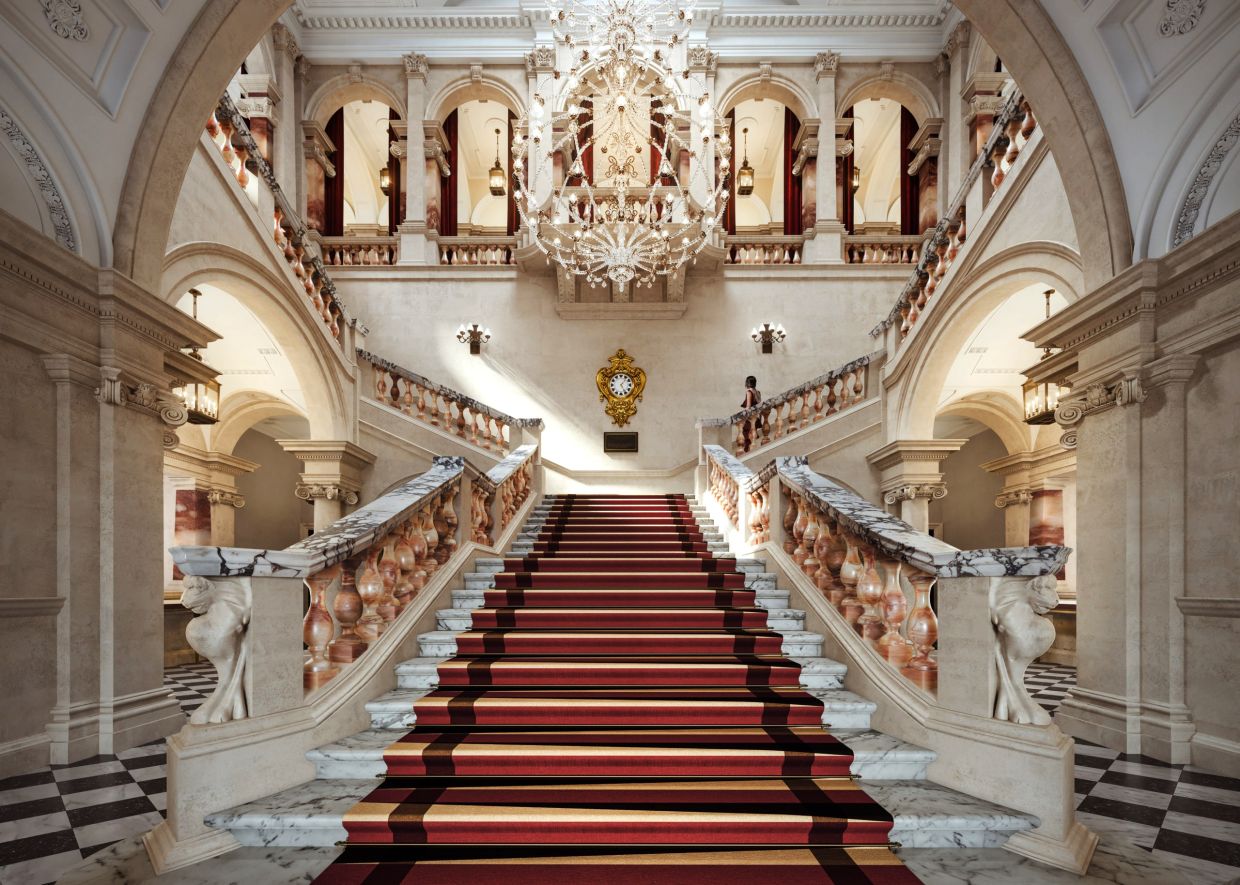
London's most exclusive new hotels are not purpose-built monuments to contemporary design; they are repurposed seats of power, where guests now pay handsomely to inhabit spaces once closed to the general public. The Raffles London at the OWO invites visitors to sip cocktails in a basement where British intelligence operatives once exchanged classified information. The NoMad London, housed within a former magistrates court in Covent Garden, permits tourists to wander through the very cells where playwright Oscar Wilde languished awaiting trial. Meanwhile, the Chancery Rosewood occupies the former United States Embassy in Grosvenor Square, a building that has witnessed pivotal moments in Anglo-American diplomacy. These conversions represent far more than a property development trend; they reflect a fundamental shift in how wealthy travellers view luxury accommodation, where authentic historical narrative has become as valuable as thread count and culinary innovation.
The appeal of these establishments lies in their irreproducible character. Heritage consultants and hospitality experts observe that converted government buildings offer architectural advantages that new constructions cannot match: soaring ceilings, period details, imposing facades and layouts that communicate gravitas and permanence. Guests are drawn to the transgressive pleasure of inhabiting once-forbidden spaces, experiencing what observers describe as a "strangely subversive" sensation—the ability to socialise and rest in locations that formerly represented impenetrable bastions of state authority. This psychological dimension transforms heritage into an amenity, one that luxury hotel operators have successfully monetised at nightly rates exceeding £1,000 (RM5,506).
London's prominence in this architectural reinvention stems partly from the British government's urgent need to dispose of underutilised properties. The Old War Office, sold for £350 million (RM1.926 billion) in 2016, underwent an ambitious £1.4 billion (RM7.7 billion) redevelopment that reopened in 2023 as the Raffles London. The Admiralty Arch, a neoclassical structure standing between Trafalgar Square and Buckingham Palace, fetched approximately £60 million (RM330.13 million) in 2012 and is now being developed by the Reuben Brothers as a Waldorf Astoria, scheduled to open later this year. These transactions have prompted criticism—one prominent editorial characterised the Old War Office sale as "public theft"—yet they reflect pragmatic responses to reduced government accommodation demands.
The drivers behind this disposal pattern are structural and longstanding. Over the past two decades, Britain's civil service has contracted significantly, while hybrid work arrangements have fundamentally altered workplace requirements. Government occupiers now seek highly efficient, modern office buildings with superior environmental credentials and amenities capable of attracting employees away from home offices. The stately government buildings of earlier eras, despite their architectural prestige, conceal considerable operational liabilities: ageing mechanical systems, outdated electrical and plumbing infrastructure, inefficient cellular office layouts and structural vulnerabilities that governments increasingly regard as financial burdens rather than assets.
Private developers and luxury hotel operators, by contrast, possess both the financial capacity and operational flexibility to undertake comprehensive renovations. The conversion process demands extraordinary investment and patience. The Raffles project required eight years of work, necessitating not only the addition of three new floors above the existing structure but also the excavation of six basement levels beneath it—all while maintaining historic designation and navigating protective legislation. Every modification, from new doorways to heating and cooling systems, required approval from local planning authorities in consultation with Historic England, Britain's statutory heritage body.
These conversions across Europe signal a broader phenomenon, yet London remains unmatched in scale and concentration. Paris, Lisbon and Rome have each converted ex-ministerial buildings into hotels as governments pursue cost reduction and facility modernisation. However, no European capital has witnessed the volume of recent transformations occurring in London. The convergence of government surplus properties, private capital, and architectural heritage has created conditions unique to Britain's current economic and administrative moment.
The architectural challenge of converting fortress-like government buildings into welcoming hospitality spaces cannot be understated. Structures designed to project authority and exclusivity must be reconfigured to feel accessible and warm. At the Old War Office, architects successfully persuaded Historic England to permit additional entrances, fundamentally transforming a building that functioned as a fortress into a permeable structure where restaurants, bars and public spaces now spill onto Whitehall. This shift from insularity to openness represents not merely cosmetic alteration but philosophical reimagining—converting institutions of state control into venues for civilian pleasure.
Historic England, the governmental body responsible for protecting Britain's built heritage, faces inherent tensions between preservation and pragmatism. David Brock, head of the organisation's government historic estates unit, acknowledges that allowing commercial conversions involves compromise. However, such compromises are regarded as preferable to the deterioration that occurs when landmark buildings sit vacant. The alternative to hotel conversion is often dereliction, which both endangers architectural integrity and represents a loss to national culture. Historic England's pragmatic acceptance of hotel development reflects recognition that without viable commercial uses, many historically significant structures would face uncertain futures.
The commercial success of these ventures depends substantially upon marketing their historical narratives. The NoMad London houses the Bow Street Museum of Crime & Justice, which interprets the building's evolution within London's law enforcement history. The Raffles employs tour guides to narrate the building's wartime functions, including stories of Boy Scouts cycling through vast corridors delivering dispatches during World War II. Guest reviews on platforms like Google and Tripadvisor consistently emphasise these heritage dimensions, with visitors expressing delight at the opportunity to experience spaces infused with historical significance. This feedback demonstrates that heritage authenticity functions not as supplementary amenity but as core value proposition.
For Malaysian and Southeast Asian travellers, these conversions illustrate how established economies repurpose state infrastructure in response to contemporary work patterns and resource constraints. The phenomenon invites reflection on how Asian cities might approach similar challenges with their own colonial and post-independence government buildings. As hybrid work reshapes administrative needs across the region, questions about adaptive reuse of institutional architecture become increasingly relevant. The London model demonstrates both possibilities and complexities: heritage preservation requires substantial investment, regulatory engagement and long-term patience, yet can yield economically viable outcomes that generate employment and cultural value.
London's luxury hotel market continues strengthening despite geopolitical uncertainty and post-Brexit tax policy changes. The city remains among the world's most robust markets for premium accommodation, with numerous properties commanding rates exceeding $1,000 (RM4,089) nightly. CoStar's hospitality analytics division notes that heritage buildings specifically enhance luxury market appeal through their distinctive character—a quality that generic new construction inevitably lacks. The architectural and historical distinctiveness of converted government properties positions them as particularly well-suited to attracting affluent international visitors seeking experiences beyond standardised luxury hospitality.
These transformed buildings ultimately embody a contemporary paradox: spaces created to exclude and intimidate have been reconfigured to welcome and delight. The basement where intelligence officers once gathered in secrecy now functions as a convivial bar. Prison cells where accused persons awaited judgment have become narrative attractions for heritage-conscious tourists. An embassy that projected American diplomatic power now hosts guests from every nation. This inversion—where institutional authority becomes historical spectacle—reveals how heritage tourism capitalises on cultural distance from state power. The conversions succeed not despite their institutional origins but because of them, with historical gravitas transformed into commercial value and public access replacing official exclusivity.

