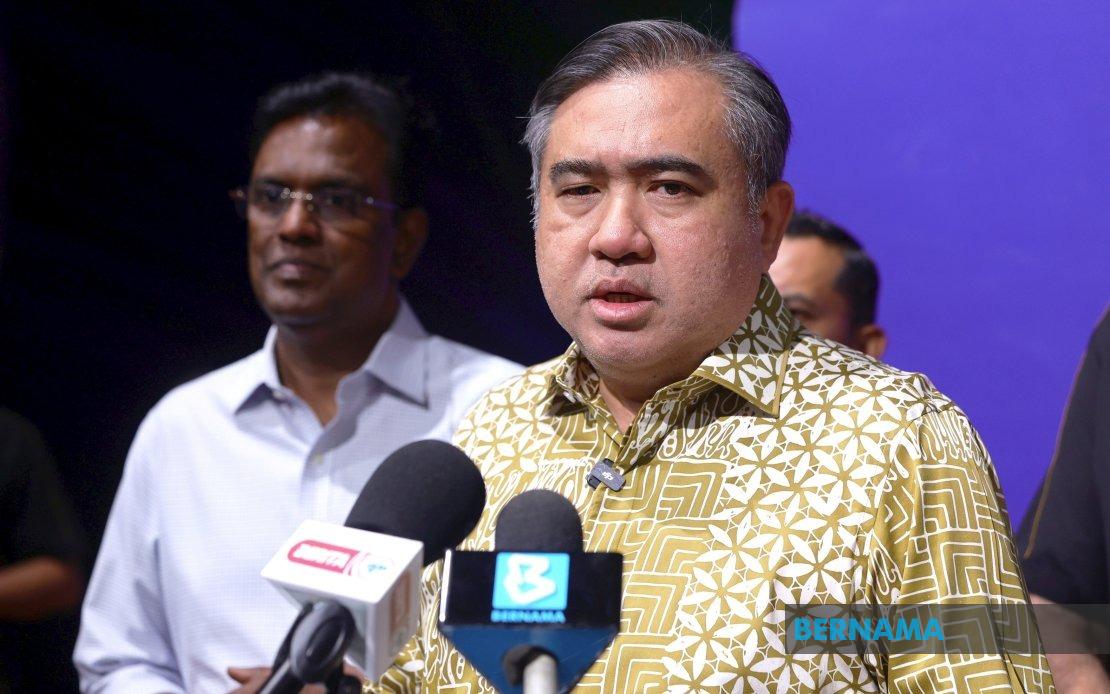
Anthony Loke, the sitting assemblyman for Chennah and secretary-general of the Democratic Action Party, has signalled his confidence ahead of the forthcoming Negeri Sembilan state election by publicly welcoming potential rivals to contest his seat. Speaking in Seremban on July 2, Loke framed electoral competition as an inherent and healthy aspect of democratic governance, underscoring that any qualified individual has the constitutional right to put themselves forward as a candidate. His remarks came amid media speculation regarding businessman Albert Tei's potential entry into the race, following reports that Tei had received a political party nomination.
Loke's approach reflects a broader acceptance within Malaysian political circles of robust electoral competition, even when it directly threatens incumbent positions. Rather than dismissing Tei or other potential challengers, Loke chose to reaffirm democratic principles, suggesting that competitive elections strengthen rather than undermine the political system. This stance carries particular resonance in Negeri Sembilan, a state where demographic shifts and evolving voter preferences have created openings for political realignment. The incumbent's equanimity signals confidence in his constituency base and three consecutive electoral victories.
However, Loke tempered his welcoming remarks with a significant caveat: all aspiring candidates must satisfy the Election Commission's eligibility criteria before they can officially contest. These requirements include ensuring that their registered residential address aligns with the constituency they wish to represent. This administrative note holds practical importance, as improper residential registration has historically disqualified numerous candidates at the nomination stage. In the context of the Chennah seat, such procedural safeguards ensure that only genuinely committed contenders with legitimate connections to the constituency proceed to ballot.
The timing of Loke's statement comes as the Electoral Commission has announced a compressed timeline for the Negeri Sembilan state election. Nomination day is set for July 18, with early voting scheduled for July 28 and general polling on August 1. This condensed schedule leaves candidates and parties limited time to organize campaigns, register formally, and mobilize voter support. For an incumbent like Loke, the compressed timeline potentially favors existing political machinery and established voter networks, advantages that independent or newly-fielded candidates would struggle to replicate.
Loke's emphasis on his primary responsibility—serving the constituents who elected him across three terms—demonstrates a strategic pivot away from potential personality-based contestation. By focusing the conversation on constituent service rather than political rivalry, he frames any challenge as secondary to his core mandate. This approach acknowledges that in Malaysian electoral politics, incumbent advantage often derives less from controversy-avoidance and more from demonstrable delivery of constituency-level benefits and infrastructure development. Chennah voters' repeated endorsement suggests this formula has worked effectively.
The potential entry of Tei into the race introduces an intriguing dimension to Negeri Sembilan politics. Tei's background as a businessman brings a different profile to the assembly, potentially appealing to voters seeking alternative perspectives on economic development and business-friendly policies. However, without knowing which party backed Tei's candidacy, the full implications of this challenge remain unclear. If Tei represents a coalition partner of Loke's DAP-led government, the contest would represent intra-governmental competition. Alternatively, if he represents an opposition vehicle, it could signal a more fundamental challenge to the current Negeri Sembilan political configuration.
The Negeri Sembilan state election itself occurs against a backdrop of broader Malaysian political volatility. State-level contests have become testing grounds for national political trends, with results often foreshadowing shifts in federal electoral sentiment. A strong Loke performance would reinforce DAP's positioning within opposition-aligned coalitions, while an unexpectedly tight race would invite questions about the party's grassroots organizational capacity. For Southeast Asian observers, state elections across Malaysia provide crucial indicators of how ethnic, religious, and economic polarization shapes electoral behavior in a multiethnic democracy.
Loke's willingness to embrace electoral competition also reflects evolving norms within the DAP itself. As the party has matured into a major parliamentary force with genuine prospects of holding executive power, it has increasingly adopted the public posture and institutional confidence of an establishment party. This maturation includes accepting that competitive elections are not threats to democratic legitimacy but rather its essential expression. Younger DAP figures, in particular, have articulated the view that uncontested incumbencies risk organizational complacency and voter disengagement.
The administrative requirements Loke mentioned—particularly residential address alignment—have proven consequential in Malaysian elections. Several high-profile candidates across different parties have faced disqualification or legal challenges based on residency disputes. These requirements, while sometimes criticized as creating unnecessary obstacles, theoretically ensure that assembly members maintain genuine community connections. In Chennah's case, if Tei or other challengers fail to meet these standards, they would be unable to proceed regardless of political backing or public support, underscoring the gatekeeping role played by the Election Commission.
Looking toward August 1, the Chennah contest will reflect broader patterns within Negeri Sembilan, a state that has experienced significant political reconfiguration over recent years. The state has shifted between Pakatan Harapan and Perikatan Nasional dominance, and the 16th assembly election offers another opportunity for voters to shape their state's political direction. Loke's three-term incumbency and ministerial experience position him as a significant figure in whatever government emerges, making the Chennah outcome disproportionately important to state-level coalition mathematics.
Ultimately, Loke's readiness to face challengers represents a calculated political stance that combines genuine confidence with democratic rhetoric. By welcoming competition while emphasizing constituent service and proper procedures, he constructs a narrative in which electoral victory becomes validation of competent governance rather than mere survival of incumbent advantage. Whether this confidence proves justified will be determined on August 1, when Negeri Sembilan voters cast their ballots in what promises to be a competitive and potentially consequential state election.

