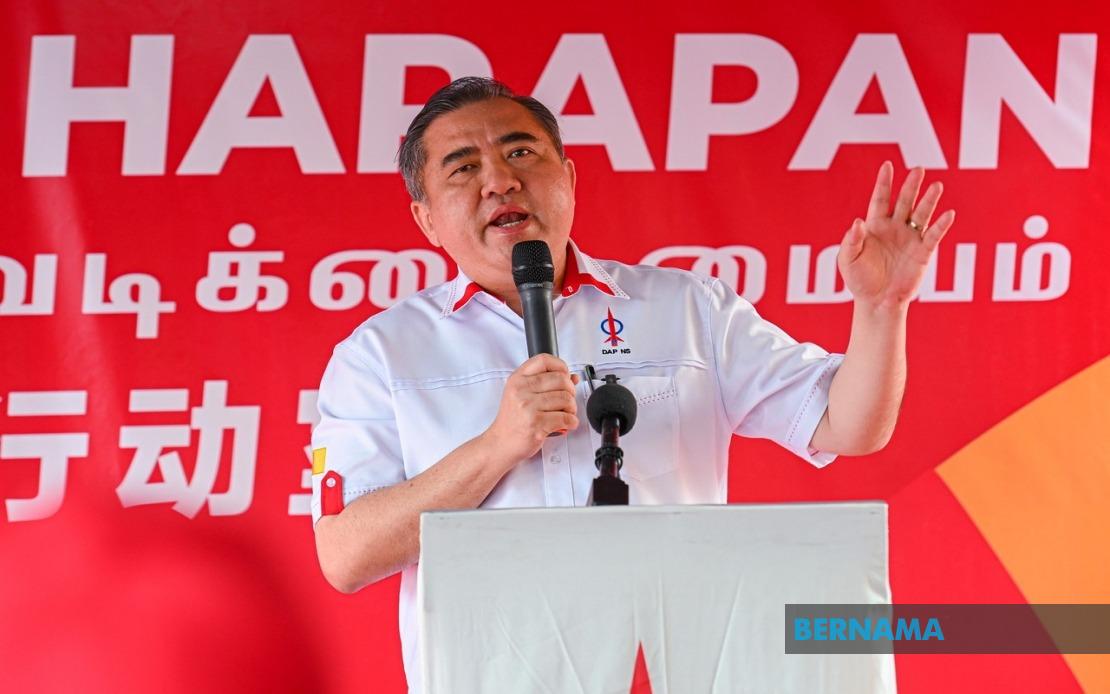
DAP secretary-general Anthony Loke has set an ambitious target for voter participation in the Johor state election, hoping that over 70 per cent of eligible voters will cast their ballots to ensure the incoming government genuinely represents the will of the majority. Speaking after launching the Pakatan Harapan operations room for the Seremban Jaya constituency, Loke underscored that robust electoral participation serves as a critical barometer of democratic health and institutional maturity within any nation.
Loke's emphasis on voter turnout reflects broader concerns about the legitimacy of elected governments in Malaysia. He highlighted a fundamental democratic principle: when fewer than half the electorate participates in voting, questions inevitably arise regarding whether the resulting government can legitimately claim to represent the broader population. This concern carries particular weight in Malaysia, where regional variations in participation rates have sometimes meant that electoral victories are secured with support from only a minority of the total eligible voting pool.
The Transport Minister expressed confidence that the 70 per cent target is achievable, primarily because the operational landscape has shifted dramatically since the 2022 Johor state election. The previous poll took place under pandemic-related restrictions, including border closures that prevented numerous Malaysians working across the causeway in Singapore from returning home to vote. That earlier election recorded only around 54 per cent turnout, a figure substantially depressed by these extraordinary circumstances.
With COVID-19 travel restrictions now lifted, Loke believes citizens face fewer structural barriers to voting. The observable demand for public transport options heading towards Johor Bahru has provided him with concrete evidence supporting this optimism. Electric Train Service tickets from Kuala Lumpur and Johor Bahru have reportedly sold out since the previous week, while express bus capacity has also been exhausted, indicating strong voter mobility and determination to return to their home constituencies.
The surge in transport bookings extends beyond conventional public transit arrangements. Airlines and additional ETS services have reported encouraging demand, while non-governmental organisations and private entities have organised supplementary bus services, many of which are already fully reserved. This ecosystem of transport options, both official and grassroots, suggests that logistical factors are unlikely to significantly suppress participation levels. Loke noted that even voters unable to secure seats on formal transport services can potentially arrange informal transport with friends, further removing practical obstacles to voting.
Loke's assessment carries weight given his position within the transport sector and his direct visibility of booking patterns across major transport operators. His confidence also reflects a broader optimism within Pakatan Harapan about voter engagement levels heading into the election. The party's investment in establishing operations rooms in key constituencies signals serious mobilisation efforts designed to capitalise on whatever heightened participation emerges.
Beyond the Johor state election, the Negeri Sembilan state election scheduled for August 1 represents another critical test of voter enthusiasm. On that same platform, Loke announced the party's candidacy for the Seremban Jaya seat, selecting S. Mugunthan, a 40-year-old research officer working for state executive councillor J. Arul Kumar. Mugunthan will contest against incumbent Datuk P. Gunasekaran, who has held this constituency continuously since 2008, when it was still known as the Senawang seat before recent redelineation.
The selection of Mugunthan reflects a strategic effort to inject fresh perspectives into the party's candidate roster while maintaining electoral competitiveness. Loke emphasised that the selection process prioritised Mugunthan's demonstrated commitment to political engagement and his accumulated experience across both constituency-level and administrative-tier electoral work. This combination of experience and fresh candidacy represents a common pattern in Malaysian politics, where parties seek to balance institutional continuity with renewal.
From a broader Southeast Asian perspective, Malaysia's electoral dynamics carry significance for how regional democracies manage voter engagement and legitimacy questions. High turnout rates, particularly in state-level elections where participation often lags behind federal contests, strengthen the democratic institutions that underpin plural governance systems. Loke's focus on turnout thresholds implicitly acknowledges that electoral victory achieved with minority support, while technically valid, creates long-term governance challenges and potential stability concerns.
The removal of pandemic-related travel restrictions creates a natural baseline for comparison, allowing observers to assess whether Malaysians' willingness to vote reflects genuine political enthusiasm or merely response to accessibility barriers. If the Johor election achieves the 70 per cent target that Loke envisions, it would signal sustained engagement with state-level political processes. Conversely, if turnout remains substantially below this threshold despite improved transport accessibility, it would suggest deeper questions about voter motivation and satisfaction with available political choices.
For Malaysian voters, particularly those in urban centres with employment patterns that require cross-state commuting, the expanded transport capacity represents a concrete removal of practical voting obstacles. The causeway worker population in particular—numbering in the tens of thousands—faced genuine hardship during the previous election cycle when border restrictions prevented them from voting. The restoration of normal travel conditions should see this demographic return to active participation, though whether they do depends partly on campaign messaging and perceived stakes in individual races.

