The Malaysian Fisheries Development Authority (LKIM) is pushing forward with a nationwide infrastructure modernisation programme aimed at bolstering the country's fishing sector through targeted investment in landing facilities. The agency has channelled RM2 million since the previous year into repairing, upgrading and constructing fish landing jetties at strategic coastal locations, signalling a deliberate effort to strengthen the backbone infrastructure that smallholder fishermen depend on for their daily operations and income generation.
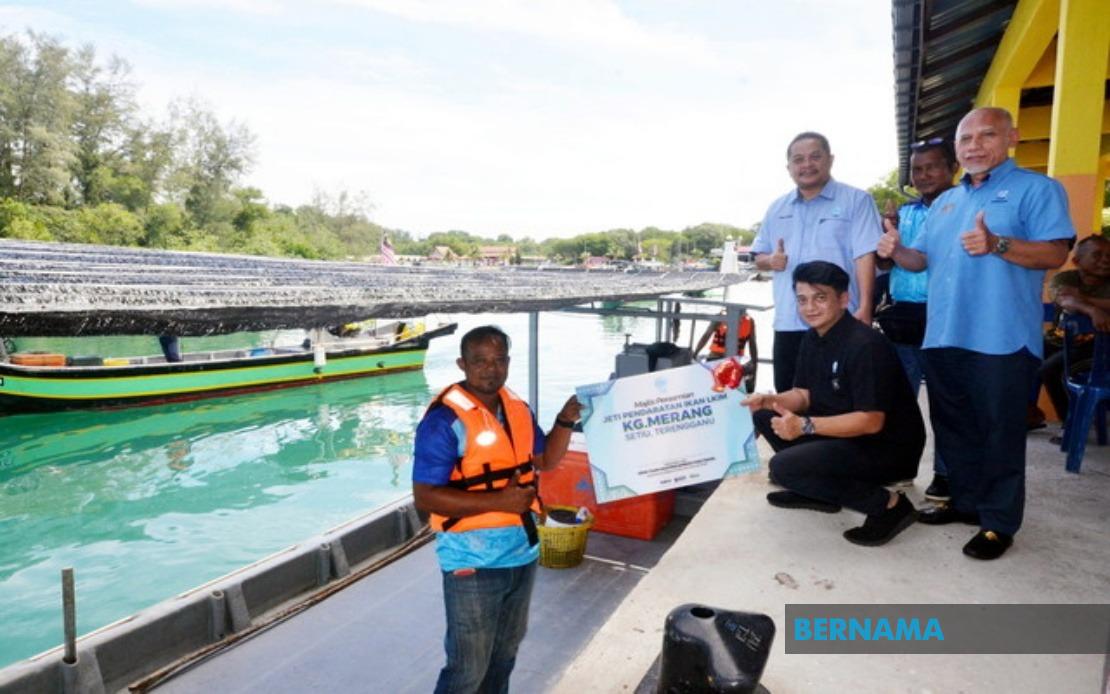
This week marked a significant milestone in that development agenda. At a handover ceremony in Bandar Permaisuri, LKIM chairman Muhammad Faiz Fadzil officially inaugurated the Kampung Merang Fish Landing Jetty in Setiu, Terengganu, which represents a direct investment of RM500,000 in modern concrete infrastructure. The facility replaces an ageing wooden structure that villagers had built themselves and which had deteriorated to the point of becoming unsafe for routine fish landing operations. The new jetty began full operations immediately following the ceremony and is projected to serve 124 fishermen managing a combined fleet of 68 boats from the local community.
The scope of LKIM's portfolio underscores the challenge facing Malaysia's fishing infrastructure renewal. The authority currently oversees management of 372 fish landing jetties scattered across the archipelago, supplemented by 48 fisheries complexes and dedicated ports. This expansive network reflects the critical role such facilities play in sustaining livelihoods across Malaysia's coastal communities, from Perlis to Sabah and Sarawak. Yet despite overseeing this substantial portfolio, LKIM's current funding envelope remains insufficient to address all outstanding infrastructure needs in the timeframe desired by the agency leadership.
Muhammad Faiz articulated a clear funding constraint facing the modernisation programme. Although RM2 million has been deployed since last year, the chairman indicated that this allocation, whilst meaningful, falls short of what is required to roll out jetty improvements at the pace and scale needed across the nation. Beyond the completed Merang project, LKIM has two additional jetty developments in advanced planning stages—one in Perak and another in Labuan—but these remain locked in documentation and procurement procedures rather than under active construction. The chairman has explicitly appealed to the federal government to substantially increase budgetary allocations in the next financial year to accelerate project execution and expand geographical coverage.
The Merang facility illustrates tangible benefits that modernised infrastructure can deliver to fishing communities. Current landing records for Setiu show total annual catches standing at approximately 243 metric tonnes. LKIM anticipates this volume will increase materially once the new jetty reaches full operational capacity and fishermen have fully adapted their practices to utilise the improved facilities. This projected uplift reflects a broader economic principle underlying infrastructure investment in fisheries: better physical infrastructure reduces transaction costs and operational friction in the fish value chain, from landing through to sale.
The efficiency gains transcend mere operational convenience. Muhammad Faiz highlighted how improved landing infrastructure directly impacts fishermen's earnings by streamlining the process of marketing and selling their catch. For fishing communities operating on thin margins and with limited access to market information or alternative distribution channels, modern landing facilities represent a meaningful pathway toward income improvement. The process of transporting, displaying and selling fish becomes less physically demanding and time-consuming when jetties possess proper storage, cleaning and refrigeration infrastructure compared to makeshift arrangements on deteriorating wooden structures.
The Merang project carries particular significance for Terengganu's fishing sector. The state has historically been a major contributor to Malaysia's marine fisheries output, and Setiu in particular has established itself as a significant landing point for both artisanal and small-scale commercial vessels. By replacing a community-built structure with professional concrete infrastructure engineered for safety and durability, the investment signals serious government commitment to formalising and professionalising the landing and trading environment in which these fishermen operate. Such professionalisation can facilitate better record-keeping, traceability and quality assurance—factors increasingly important as consumers and international markets demand greater transparency in seafood supply chains.
The funding constraints acknowledged by LKIM's leadership point to broader questions about infrastructure investment priorities within Malaysia's fisheries policy framework. While RM2 million annually represents a meaningful commitment to jetty infrastructure, the ratio of available funds to the number of facilities requiring maintenance, upgrading or replacement suggests that systematic, comprehensive renewal remains years away at current funding levels. The two projects in Perak and Labuan, stuck in documentation stages, exemplify the delays that emerge when budgetary availability constrains project pipeline advancement. Fishermen and fishing communities awaiting infrastructure improvements face uncertain timelines for accessing modern facilities.
Looking beyond individual projects, LKIM's push for enhanced budgetary support reflects a recognition that Malaysia's competitive position in regional fisheries depends significantly on robust onshore infrastructure. Neighbouring countries including Thailand and Vietnam have invested heavily in modernising their fishing ports and landing facilities as part of broader strategies to upgrade their fisheries industries and enhance product quality and traceability. Malaysia risks falling behind on infrastructure competitiveness if its jetty modernisation programme proceeds at constrained pace. For Malaysian fishermen competing in regional markets, modern landing facilities represent a prerequisite for maintaining market access and price realisation.
The human dimension of infrastructure improvement deserves emphasis. The 124 fishermen now accessing the Merang facility represent not only individual economic units but interconnected household economies and coastal community stability. Fishing remains a primary livelihood source in many Malaysian communities with limited alternative economic opportunities, particularly in rural coastal areas. Infrastructure that improves working conditions, reduces occupational hazards and enhances income prospects therefore carries social significance beyond narrow economic measurement. The transition from an unsafe, deteriorating wooden structure to a modern concrete jetty directly improves workplace safety for these fishermen and their crew members.
Moving forward, LKIM's infrastructure programme faces a dual challenge. In the immediate term, the agency must secure enhanced budget allocations to clear the documentation and procurement backlog affecting the Perak and Labuan projects, whilst simultaneously identifying additional locations nationwide requiring urgent infrastructure attention. Simultaneously, the authority must make strategic choices about which locations warrant investment priority given inevitable funding constraints. Transparent prioritisation frameworks that balance factors such as existing catch volumes, fisher population density, safety urgency and regional equity could help guide resource allocation decisions and build stakeholder confidence in LKIM's modernisation strategy.
The Kampung Merang handover ceremony represents progress within Malaysia's broader fisheries development narrative, but also highlights the gap between assessed infrastructure needs and available resources. As coastal communities await facility upgrades and LKIM presses for budget increases, the nation's commitment to supporting fisheries livelihoods through infrastructure investment will face periodic testing. The coming fiscal year's budget deliberations will prove telling regarding whether policymakers view enhanced fisheries infrastructure investment as a genuine priority worthy of meaningful additional resources.

