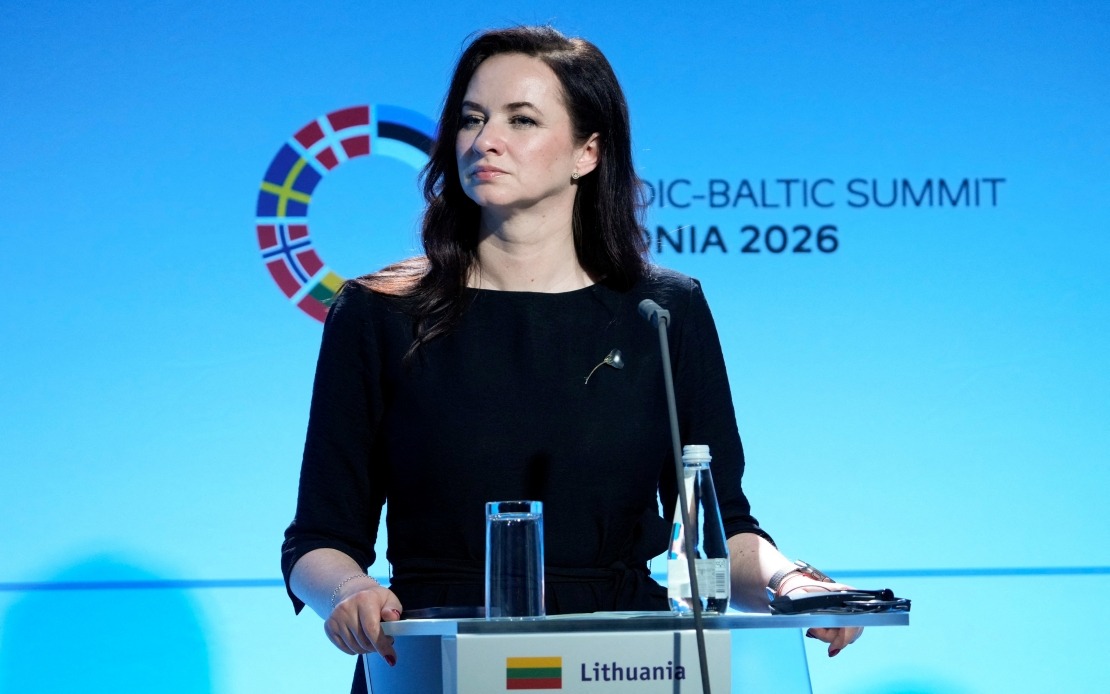
Lithuanian Prime Minister Inga Ruginiene has stepped down from her position, setting in motion a formal process to establish a successor administration following internal shifts within the governing coalition. The resignation announcement came on Tuesday and marks another transition in Lithuania's political landscape following last year's parliamentary elections. The outgoing government, which assumed office in August after the departure of Gintautas Paluckas, will remain in a caretaker capacity to manage state affairs until a fully formed administration takes office.
The constitutional framework governing Lithuania's leadership transitions ensures an orderly handover of power. President Gitanas Nauseda now has a 15-day window to propose a candidate for the premiership. Once nominated, that individual must secure approval from the Seimas, Lithuania's 141-member parliament, before proceeding to form a government. The timeline underscores the importance of building consensus among coalition partners to ensure smooth governance during periods of political reorganisation.
Mindaugas Sinkevicius, who heads the ruling Lithuanian Social Democratic Party, stands as the frontrunner to receive the presidential nomination and lead the new government. Political observers across the Baltic region view his ascension as the most likely outcome, given the Social Democrats' position as the largest coalition partner. Should parliament confirm his appointment, Sinkevicius would then have 15 days to assemble his Cabinet and outline the government's legislative agenda and policy priorities.
The formation process does not conclude with Sinkevicius's appointment as prime minister. Constitutional requirements stipulate an additional 15-day period for submitting the complete Cabinet roster to parliament for approval. This staged approach allows for thorough vetting of ministerial candidates and ensures that coalition partners can negotiate portfolio allocations and policy commitments before the new administration formally commences operations.
The new coalition represents the third governing alliance assembled by the Social Democrats since the October 2024 parliamentary elections. This pattern of multiple coalition arrangements within a single parliamentary term reflects the fragmented nature of Lithuania's political landscape and the challenges inherent in building stable governing majorities when no single party commands an outright majority of seats. The frequency of government changes underscores the delicate balancing act required to maintain coalition cohesion across ideological and policy differences.
Ruginiene's government, despite its relatively brief tenure, claimed achievements in navigating complex policy challenges during economically turbulent times. At the final Cabinet meeting on Tuesday, ministers unanimously approved the resignation resolution, and the outgoing prime minister emphasised her administration's accomplishments while acknowledging the considerable obstacles it had confronted. The emphasis on past achievements, even as the government steps down, reflects efforts to frame the transition as a natural evolution rather than a crisis-driven collapse.
Lithuania's political instability carries implications for regional security and European Union cohesion. As a NATO member state bordering Russia and closely aligned with Western institutions, Lithuania's governance transitions attract scrutiny from alliance partners concerned with continuity in defence and foreign policy. Rapid changes in government can complicate long-term strategic planning and complicate relationships with international partners who prefer dealing with established administrations over extended periods.
The Baltic nation's experience mirrors challenges faced by other post-Soviet democracies seeking to consolidate stable institutional frameworks while managing diverse political interests. The frequency of coalition reshuffles and government transitions reflects not merely personal political rivalries but deeper questions about how to build durable majorities in proportional representation systems where voters distribute preferences across multiple parties.
For observers in Southeast Asia, Lithuania's situation offers comparative perspective on coalition politics. Similar dynamics play out across the region, where multiparty parliaments require careful negotiation to establish and maintain governing alliances. The constitutional mechanisms Lithuania has established—with specified timeframes for nomination, confirmation, and Cabinet formation—represent one approach to managing such transitions with transparency and institutional predictability.
The transition process now underway will test whether Sinkevicius can unite fractious coalition partners around a coherent policy agenda. Early signals from parliamentary leaders suggest sufficient support exists to confirm his nomination, but securing genuine cooperation on substantive policy issues remains uncertain. The coming weeks will reveal whether Lithuania's third Social Democratic-led coalition since October 2024 can achieve greater stability than its predecessors or whether deeper structural tensions will continue generating political volatility.