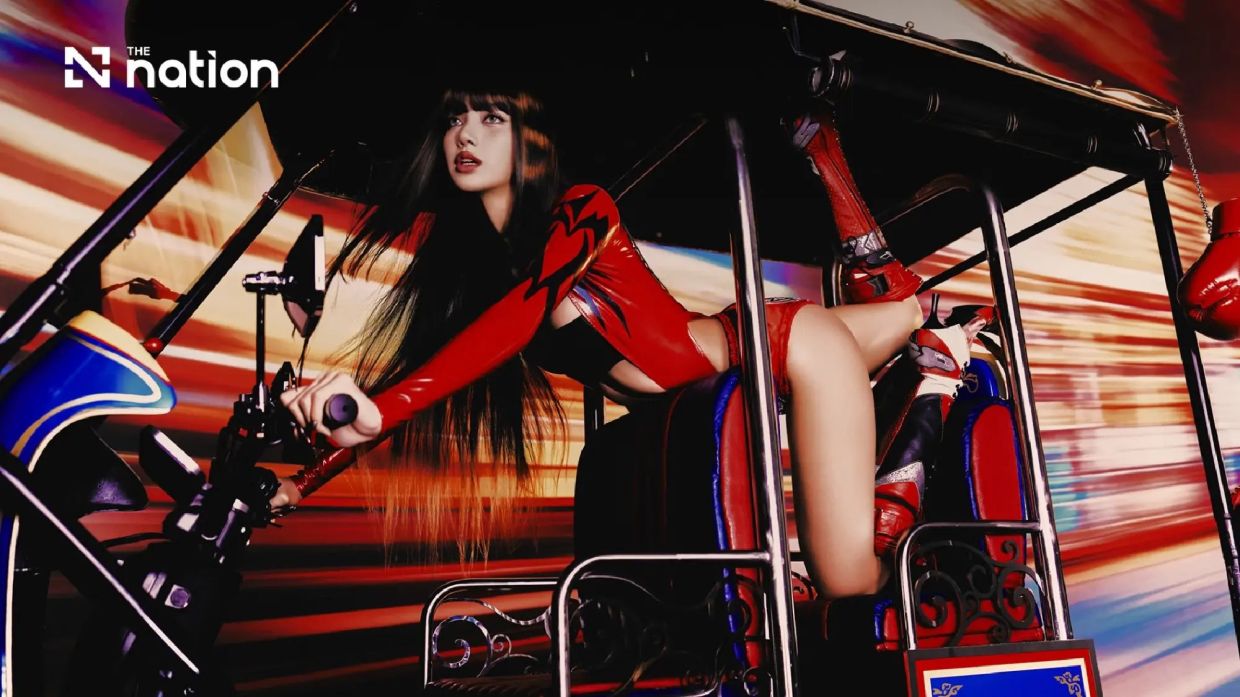
BANGKOK: Lalisa "Lisa" Manobal, the Thai singer and BLACKPINK member, is presenting a distinctly Thai cultural narrative through her upcoming single "SaWaDiKa", strategically positioning Muay Thai combat styling and the nation's ubiquitous blue-and-red tuk-tuk within a high-fashion, contemporary visual framework. The campaign represents a deliberate weaving of recognisable Thai symbols into a sophisticated international pop aesthetic, signalling a thematic continuation in how Lisa positions her heritage within her solo career.
The promotional imagery reveals Lisa reinterpreting traditional Muay Thai preparation attire through a luxury lens. Rather than straightforward reproduction of ring wear, the concept merges combat-sport references with futuristic athletic design, most notably through boxing shorts embroidered with her name and leather bodysuits paired with boxing-inspired lace-up boots. This approach transforms functional sportswear into high-fashion statement pieces, allowing the visual identity to simultaneously honour and transcend its source material. The creative choice reflects a broader trend among Asian artists of reclaiming cultural symbols through contemporary design language rather than nostalgia.
A particularly striking element involves Lisa positioned upon a tuk-tuk vehicle rendered in the characteristic blue and red colour scheme instantly recognisable to anyone familiar with Bangkok's streets. Stylised lighting effects around the three-wheeled taxi create a kinetic sense of movement and velocity, contrasting the stationary vehicle with implied momentum. This juxtaposition mirrors the tension throughout the campaign between static cultural tradition and dynamic global modernity. For regional audiences, the tuk-tuk carries multiple meanings beyond transportation—it represents grassroots Thai commerce, tourism infrastructure, and daily urban life in ways that resonate across Southeast Asia.
The single title itself constitutes the campaign's conceptual cornerstone. "SaWaDiKa" functions as a stylised romanisation of "sawasdee ka", the polite Thai greeting embedded in everyday social interaction across Thailand. By selecting this phrase as the title for a globally distributed music release, Lisa positions the Thai language itself as integral to her artistic identity rather than peripheral decoration. The decision transforms a linguistic marker of Thai hospitality into a cross-cultural entry point for international audiences encountering Thai culture through popular music. Pre-release marketing amplified this approach through red outdoor displays positioned across Bangkok, New York, Los Angeles and Mexico City, each bearing both English and Thai script, creating a visual conversation between linguistic systems.
Thapanee Kiatphaibool, governor of the Tourism Authority of Thailand, publicly welcomed Lisa's deployment of the greeting, explicitly linking the singer's global platform to Thailand's international brand identity. This institutional endorsement underscores how Lisa's artistic decisions now carry diplomatic weight. Since accepting the "Amazing Thailand Ambassador" title in 2025, Lisa functions simultaneously as entertainer and soft power asset, with her creative choices amplifying Thailand's cultural messaging to audiences far beyond traditional tourism marketing reach. The partnership represents a strategic recognition that contemporary music acts command attention spans and cultural influence that government campaigns struggle to achieve independently.
The "SaWaDiKa" release follows a deliberate trajectory Lisa has established across previous solo work. Her 2021 debut "LALISA" grounded itself in Thai artistic traditions, incorporating traditional dress, dance vocabulary and visual references to her birthplace in Buri Ram province. That project explicitly reflected Lisa's own creative direction, as she specified requests for Thai cultural integration at the production stage rather than having it imposed externally. The accompanying video presented elaborate gold-toned Thai-inspired costuming within carefully constructed visual environments, establishing a pattern of intentional cultural representation rather than casual inclusion.
That foundation extended into 2024 with "Rockstar", which relocated the cultural dialogue to contemporary urban Bangkok. Rather than invoking historical or rural Thailand, the video positioned Yaowarat Road in Chinatown and other capital city locations as primary visual narratives, mapping Thailand's living urban geography onto futuristic pop sensibilities. This progression suggests Lisa consciously developing a framework that presents Thai identity as neither frozen in tradition nor displaced from modernity, but actively engaged in contemporary global contexts. The sequence across these releases charts an evolution from heritage celebration toward integrated cultural presence.
"SaWaDiKa" extends this conceptual arc by layering Muay Thai, vernacular transport infrastructure and linguistic identity into a unified campaign. The accumulation demonstrates increasing sophistication in how Lisa constructs Thai representation—moving beyond individual aesthetic choices toward systematic cultural articulation. For Malaysian and broader Southeast Asian audiences, this approach offers a model of how regional artists might navigate global commercial platforms while maintaining substantive cultural particularity. Lisa's strategy sidesteps both wholesale cultural exoticisation and complete cultural erasure, instead proposing cultural specificity as a point of international distinction rather than limitation.
The single arrives strategically positioned as the opening track for Lisa's forthcoming six-track EP "PRESS PLAY", scheduled for October 23 release. This structural placement frames "SaWaDiKa" not merely as individual single but as conceptual gateway into a broader project explicitly described as marking Lisa's return to foundational elements while celebrating her trajectory from Thailand to international prominence. The six-track format itself suggests artistic intent toward substantive creative statement rather than algorithm-optimised content dispersal. The deliberate pacing between the single's September release and the EP's October debut creates extended engagement periods, allowing promotional campaigns and listener anticipation to develop across multiple media cycles.
Timing considerations reveal additional strategic layering. The September 3 release at 5pm Pacific Time translates to September 4 at 7am Thailand Standard Time, ensuring Thai audiences encounter the single during their morning hours when social media engagement typically peaks. This attention to temporal coordination reflects the sophisticated understanding of how global release strategies must account for regional digital behaviour patterns. Southeast Asian listeners increasingly represent substantial proportions of international music consumption, warranting structural consideration rather than afterthought positioning.
Beyond the immediate commercial implications, Lisa's "SaWaDiKa" campaign signals how contemporary Southeast Asian cultural production increasingly claims space within global pop infrastructure. Rather than requesting permission or seeking validation through Western gatekeepers, Lisa positions Thai cultural elements as primary rather than supplementary, making her regional identity central to her international appeal. This represents a recalibration of historical power dynamics where Asian artists historically diluted cultural specificity to achieve crossover success. The willingness of global music platforms and audiences to engage with explicitly Thai language titles, imagery and references suggests shifting market expectations around what constitutes commercially viable international pop content.
For Malaysian observers, Lisa's approach offers relevant cultural and commercial case studies as regional artists increasingly navigate questions of identity representation within global markets. The "SaWaDiKa" campaign demonstrates that substantive cultural integration need not compromise international reach, and that audiences increasingly value authenticity over cultural homogenisation. As Malaysia develops its own music industry infrastructure and artist development pipelines, the strategic frameworks Lisa employs—deliberate cultural positioning, institutional partnerships, multi-release campaign structures—provide templates for how regional artists might build sustainable international presence without sacrificing cultural particularity or artistic integrity.

