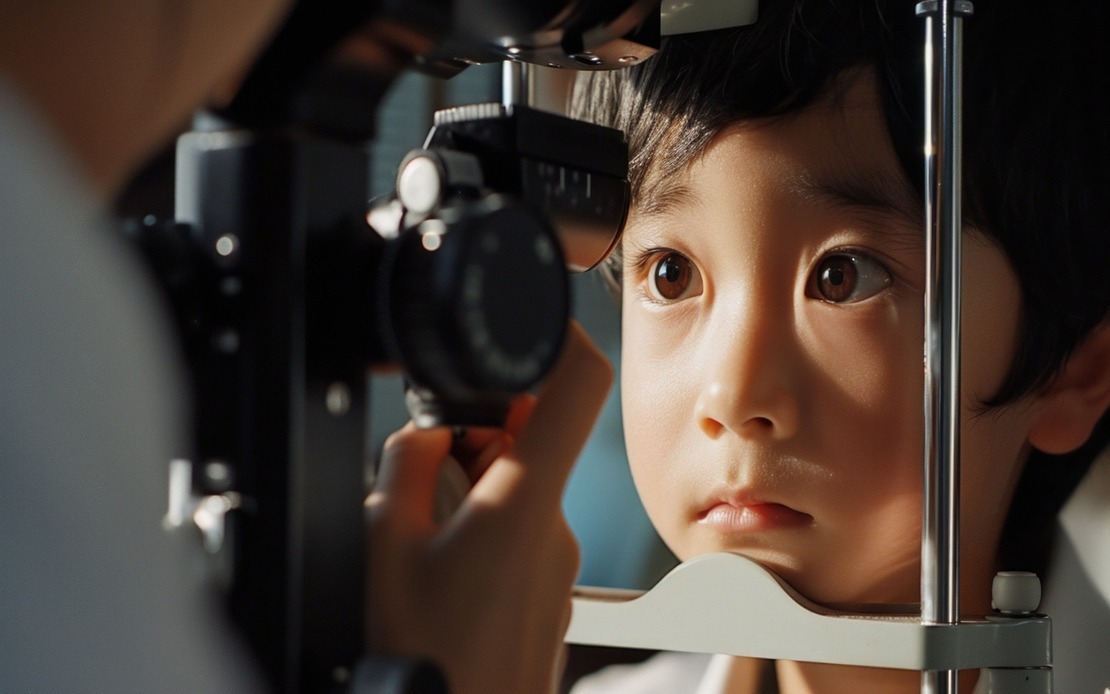
Malaysians of all ages face serious risks from undiagnosed eye conditions that could be prevented with timely screening, according to a consultant ophthalmologist at Sunway Medical Centre. Dr Fazilawati A Qamarruddin warns that squinting and cataracts, among the most prevalent vision disorders in the country, frequently escape detection until damage has already accumulated. The consequences extend beyond blurred sight, affecting children's academic performance and confidence whilst robbing senior citizens of independence and quality of life.
Squinting, medically termed strabismus, represents a misalignment where one eye deviates while the other focuses straight ahead. This seemingly minor cosmetic issue carries substantial implications for visual function and neurological development. The condition disrupts depth perception, the ability to judge distances and three-dimensional space accurately—a capability crucial for learning, sports, and safe mobility. Children with undetected squinting often struggle academically not because of intellectual capacity but because their eyes cannot work together effectively to track text or classroom materials. Beyond academics, peer perception matters significantly, as self-conscious children may withdraw socially when their eye misalignment becomes noticeable to classmates.
Globally, between two and four percent of children develop strabismus, a figure that translates into thousands of affected Malaysian youngsters. What makes this statistic particularly concerning is the detection gap: many cases persist unnoticed until a child's school performance declines, teachers raise concerns, or confident parents spot warning signs themselves. Dr Fazilawati identifies red flags that caregivers should monitor—frequent squinting, head tilting to compensate for misalignment, sitting unusually close to screens, or complaints of headaches. These behaviours often signal that the visual system is under strain and requires professional assessment.
The underlying causes of squinting vary considerably, making professional diagnosis essential. Uncorrected refractive errors, where the eye's shape prevents light from focusing properly, account for many cases. However, strabismus can also indicate nerve damage, neurological problems, brain or orbital tumours, previous eye trauma, or developmental disorders. In adults, sudden squinting accompanied by double vision demands urgent medical evaluation to exclude serious pathology such as tumours or stroke-related complications. This distinction between benign refractive causes and potentially serious systemic disease underscores why amateur assessment cannot replace specialist examination.
Without intervention, childhood squinting frequently progresses to amblyopia, commonly called lazy eye. This condition develops when the brain, receiving conflicting images from misaligned eyes, progressively favours the stronger eye and suppresses input from the weaker one. Over months or years, the neglected eye's vision deteriorates irreversibly—not because the eye itself is damaged but because the brain has learned to ignore its signals. Once this neural pathway sets in, correcting it becomes substantially more difficult. Early detection and treatment, typically through eye exercises, glasses, patching regimens, or surgical realignment, can prevent this cascade.
Dr Fazilawati recommends vision screening by age three and again before primary school entry, intervals that align with critical developmental windows. These screening points catch conditions early enough that simple interventions—prescription glasses or eye exercises—can restore normal binocular vision. She emphasises that waiting for schools to flag problems introduces dangerous delays; by the time academic performance suffers noticeably, permanent visual changes may have begun. Parents observing the warning signs should pursue professional examination immediately rather than adopt a wait-and-see approach.
Cataracts, another prevalent Malaysian eye condition, primarily affect seniors aged over sixty but can develop earlier in people with diabetes, smokers, and those with excessive sun exposure. The condition clouds the natural lens, progressively reducing light transmission and distorting vision. Patients report difficulty driving at night due to glare from oncoming headlights, diminished colour perception making the world appear dull and yellowish, and generalised haziness that interferes with reading and television viewing. Unlike squinting, cataracts cause vision loss that worsens gradually but relentlessly unless treated.
Modern cataract surgery has transformed treatment outcomes substantially from historical practices. The current standard technique, phacoemulsification, uses ultrasound vibrations to fragment the clouded lens into tiny pieces, which are then suctioned out through a small incision of approximately three millimetres. This minimally invasive approach contrasts sharply with older surgical methods requiring large incisions that left substantial scarring and extended recovery periods. The smaller incision reduces infection risk, minimises induced astigmatism, and accelerates healing. Many procedures now occur as same-day surgery with patients returning home within hours, resuming light activities within one week, and achieving full visual recovery within two weeks.
The implications of cataract treatment extend beyond vision restoration. For retirees and seniors, regaining clear sight means recovering driving privileges, reducing fall risk in the home, maintaining independence in daily activities, and sustaining engagement with hobbies and social participation. Early detection matters because whilst modern surgery is highly effective, delaying treatment allows the cataract to mature, potentially complicating the procedure and delaying recovery. Additionally, dense cataracts can mask other age-related eye conditions, making it impossible to detect glaucoma or age-related macular degeneration until after cataract surgery.
Contemporary lifestyle patterns introduce additional screening considerations, particularly for younger populations. Prolonged screen exposure among children and adolescents correlates with worsening myopia, or short-sightedness, a trend observed across Malaysia and internationally. Whether screens directly cause myopia or simply concentrate light exposure in the eye's peripheral retina remains under investigation, but the association is undeniable. Dr Fazilawati advocates the 20-20-20 rule: every twenty minutes of screen use, pause to look at an object approximately twenty feet away for twenty seconds. This practice relaxes the focusing muscles and provides periodic relief from near-work strain.
Dr Fazilawati recommends a structured screening schedule appropriate for different life stages. Children require examinations before school entry when refractive errors can be corrected to support academic success. Adults should schedule baseline eye examinations at age forty, an inflection point when presbyopia, age-related hardening of the lens, becomes noticeable and when early glaucoma can be detected before significant damage occurs. Individuals with diabetes constitute a higher-risk population requiring annual screening because diabetic retinopathy, damage to blood vessels in the retina, can progress rapidly and cause blindness if untreated. Regular monitoring allows early detection when laser treatment or injections can stabilise vision.
The broader public health message emphasises that vision loss is not an inevitable consequence of ageing or bad luck but rather a preventable outcome when screening occurs at appropriate intervals and detected conditions receive timely treatment. Malaysian healthcare systems increasingly offer vision screening services through government clinics and private practitioners, yet awareness and uptake remain suboptimal. Dr Fazilawati's emphasis on early detection reflects evidence that simple interventions—glasses, eye drops, surgery—prove far more effective and less costly when conditions are identified in early stages rather than after significant vision loss has occurred. For children, early detection supports better learning, social integration, and long-term educational achievement. For seniors, prompt treatment maintains independence, reduces fall risk, and sustains quality of life. The investment in screening pays dividends across the entire lifespan.

