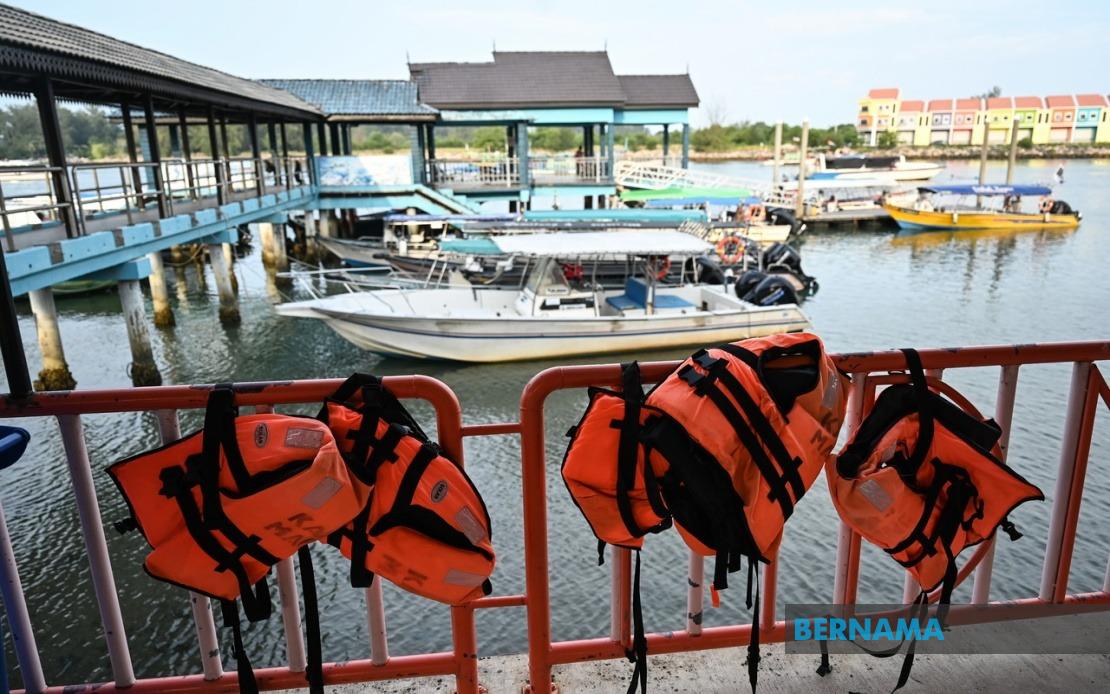
The Terengganu state government has intensified calls for stricter adherence to maritime safety protocols following a fatal boat capsize incident near Kuala Nerus. Datuk Razali Idris, chairman of the State Tourism, Culture, Environment and Climate Change Committee, has issued an emphatic directive that all participants in water-based activities—particularly squid jigging expeditions—must maintain continuous use of life jackets throughout their time at sea, including during rest periods and sleep.
The tragic incident that prompted these reinforced safety warnings occurred approximately nine nautical miles off Dataran Kuala Nerus at around 9 pm, resulting in the death of Ahmad Nasaruddin Mohmad Jalil, a 37-year-old boat crew member. Three participants sustained injuries: Faris Ibrahim aged 33, Ahmad Danial Iman aged 24, and Fatin Fariesya Rohaizan aged 26. Eight individuals were successfully rescued from the waters. Two injured persons received outpatient treatment at Hospital Sultanah Nur Zahirah in Kuala Terengganu, with the third continuing under medical follow-up care.
Razali's statement underscores a critical gap in maritime safety culture along the Malaysian coast. While life jacket availability is often mandated by regulation, enforcement of their continuous use remains inconsistent across the industry. The official has specifically highlighted that participants frequently remove or neglect life jackets during rest periods, viewing them as uncomfortable rather than essential protective equipment. This mindset represents a dangerous misconception that has contributed to preventable drowning deaths in Malaysian waters over successive years.
Beyond personal protective equipment, Razali has advocated for mandatory pre-departure safety briefings conducted by boat skippers before vessels leave the jetty. These briefings should encompass detailed information about prevailing sea and weather conditions, estimated trip duration, proper life jacket fastening techniques, and emergency procedures. He drew a parallel with established practices on tourist ferry services to island destinations, which routinely conduct formal safety orientations—a standard that should extend across all commercial maritime operations regardless of their primary purpose.
The boat involved in the capsize was reportedly in satisfactory mechanical condition and operated by an experienced skipper, factors that initially suggested the vessel met operational standards. However, authorities determined that substantial water ingress into the engine compartment precipitated the vessel's sinking. Sea conditions at the time were rough though not storm-level, suggesting that environmental factors combined with possibly inadequate response protocols created the tragic circumstances. Notably, all passengers were wearing life jackets during the incident, demonstrating that this precaution alone, while lifesaving for most, does not eliminate all maritime risks.
The Malaysia Marine Department holds regulatory authority over vessel licensing and operational approvals, a distinction that limits the state government's direct enforcement capacity. Nevertheless, Razali emphasised that boat operators and squid jigging participants must scrupulously observe all warnings and prohibitions issued by the Marine Department, including abstaining from sea departure when adverse weather conditions render operations unsafe. This hierarchical compliance structure depends upon effective communication between federal maritime regulators and local stakeholders.
Razali stated that the existing standard operating procedures for squid jigging activities remain adequate and require no revision. Rather than regulatory overhaul, the emphasis should be placed on rigorous compliance with current safety guidelines. This position reflects a pragmatic assessment that Malaysia's maritime safety framework, while perhaps not perfect, provides sufficient safeguards when properly implemented. The problem lies not in insufficient rules but in inconsistent adherence and insufficient safety consciousness among operators and participants.
The incident raises broader questions about accident prevention across Southeast Asia's fishing and recreational maritime sectors. Squid jigging has generated substantial economic activity and employment along Terengganu's coast for many years, yet fatality rates periodically spike following incidents that suggest preventable failures in safety protocols. International maritime standards exist and are adopted by many regional operators, yet enforcement and cultural compliance vary considerably. Malaysia's approach of combining regulatory oversight with official public advisory statements represents one regional model, though effectiveness ultimately depends on ground-level implementation.
For Malaysian tourists and residents engaging in water-based recreational activities, the Terengganu capsize serves as a sobering reminder that maritime risks remain genuine despite modern safety equipment and established procedures. Individual responsibility—insisting on life jacket use, questioning operators about safety preparations, and declining trips when conditions appear unsafe—remains fundamental to personal survival. Participants should resist social pressure or commercial interests that might encourage departure during questionable conditions, particularly since most responsible Terengganu operators reportedly accept cancellations and provide refunds when safety concerns justify trip postponement.
The incident also illustrates how single tragedies can catalyse official safety messaging that might otherwise remain dormant. Razali's post-incident statements, while sensible and well-intentioned, essentially reiterate safety principles that should have been actively promoted continuously rather than emphasised primarily in response to fatalities. This reactive pattern suggests a need for more proactive safety culture development, particularly through enhanced training programs for boat operators and mandatory passenger safety orientation as standard commercial practice.
Looking forward, the investigation into the specific circumstances of the capsize may reveal technical factors or operational decisions that warrant targeted interventions. Whether the incident involved equipment failure, navigational error, insufficient response to developing conditions, or confluence of multiple factors will influence recommendations for preventing recurrence. Until investigation conclusions emerge, stakeholders across Malaysia's maritime sector would be prudent to treat Razali's warnings as urgent reminders rather than routine advisory statements, reinforcing life jacket discipline and pre-trip safety procedures across all vessels carrying passengers.

