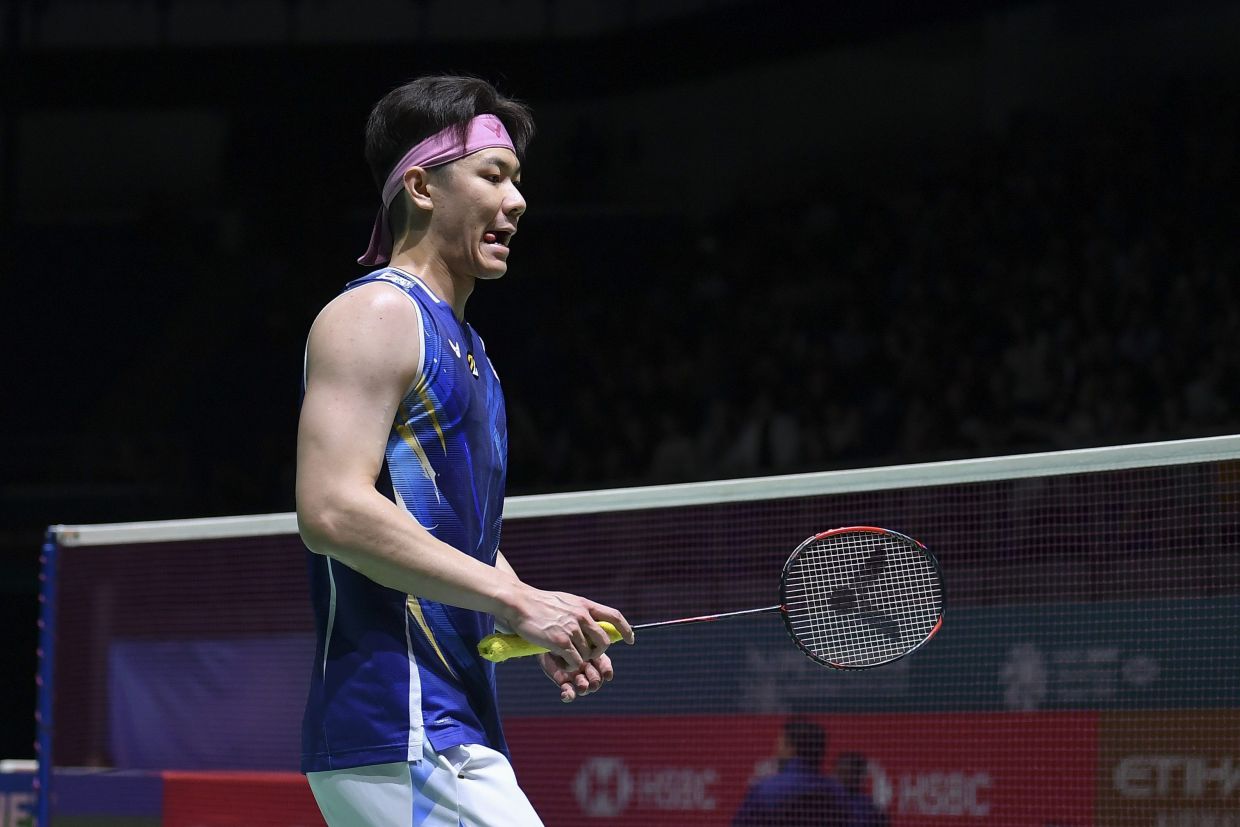
Lee Zii Jia has emphatically declared his intention to remain in professional badminton, signalling his determination to overcome a turbulent stretch that has tested his resolve both physically and mentally. The 28-year-old men's singles shuttler made the announcement through social media, reassuring supporters anxious about his future in the sport following months of setbacks that had raised questions about his commitment to continuing at the elite level.
The Kedah-born player's struggles have been multifaceted and unrelenting. Since departing Malaysia's national badminton programme in 2022, he has grappled with recurring injuries that have curtailed his training and tournament participation, while simultaneously witnessing a decline in his competitive performance. These dual challenges have created a vicious cycle where physical ailments feed into loss of confidence, making the path to recovery increasingly psychological as well as physical. During his darkest moments, Zii Jia confessed that he questioned not just his ability to compete, but also his own character and self-worth, creating an internal struggle that proved as debilitating as his physical limitations.
What makes Zii Jia's statement significant is his candid acknowledgement of his emotional journey. He recognised that there were periods when even those closest to him might have questioned his viability as a competitor, yet supporters continued to back him without immediate results or victories. This public gratitude towards his fanbase reveals an athlete who understands that his value as a person extends beyond tournament wins—a philosophical maturation that often takes years and considerable hardship to achieve. His words suggest a deeper reckoning with what drives him forward beyond trophies and rankings.
The player's account of his mental health challenges holds particular resonance in Malaysian sports discourse, where discussions of psychological welfare among athletes remain relatively underdeveloped compared to physical training. Zii Jia's openness about not being able to confide in those around him during his crisis period highlights potential gaps in the support systems available to professional athletes. His eventual decision to take matters into his own hands and seek an environment where he could speak freely represents a turning point that many elite performers must navigate independently, often at significant personal cost.
Zii Jia's assertion that he has reclaimed agency over his career trajectory marks another critical element of his recovery narrative. Having felt constrained within the national system, he emphasised his need to secure the freedom to make autonomous decisions about his sporting direction. This reclamation of control extends beyond mere competitive choices to encompass broader life decisions, reflecting a holistic approach to rebuilding himself as both athlete and individual. By accepting responsibility for his own outcomes, he has seemingly shifted from a mindset of victimhood to one of empowerment.
The Olympic bronze medallist's recent performance at the Canadian Open provided his first tangible sign of progress this year. Reaching the semi-finals before losing to Japan's Koki Watanabe demonstrated that his physical condition had improved sufficiently to compete against top-ranked opposition for extended stretches. While a semi-final exit might seem modest, within the context of his year-long struggles, it represents a meaningful milestone that suggests his rehabilitation is beginning to yield results. The result offered both Zii Jia and his supporters concrete evidence that recovery remains possible.
Looking ahead, Zii Jia's tournament schedule provides immediate opportunities to build momentum. The Taiwan Open from July 28 to August 2 and the Korean Masters from August 4-9 will present consecutive high-level competitions where he can test his current form and continue the upward trajectory. These tournaments carry strategic importance as they will help determine whether his Canadian Open semi-final was an anomaly or the beginning of sustained improvement. Success in these events could substantially alter perceptions of his viability as a contender.
Zii Jia's situation reflects broader challenges within Malaysian badminton's institutional framework. The sport has produced extraordinary talent, yet individual players' experiences within the national system vary considerably. His departure from the programme and subsequent independent career path demonstrate that the national structure, while resourced and professional, may not suit every athlete's developmental or psychological needs. This reality warrants institutional reflection on how programmes can accommodate diverse personalities and requirements.
The player's resilience narrative also carries implications for how Malaysian society perceives struggle and failure. In a cultural context where public figures often present carefully curated images of unbroken success, Zii Jia's vulnerability offers a different model. His willingness to publicly acknowledge his darkest moments and the time required for recovery normalises the non-linear nature of achievement and resilience. For younger athletes watching his journey, his honesty provides permission to acknowledge their own struggles without shame.
Ultimately, Zii Jia's commitment to badminton rests on a refined understanding of purpose. He is no longer playing solely to satisfy external expectations or achieve specific rankings. Instead, he seeks to prove something to himself—that he possesses the character to persevere through adversity and that his worth transcends moment-to-moment results. This philosophical shift may ultimately prove more valuable to his comeback than any technical improvement, as psychological stability forms the foundation upon which elite athletic performance is constructed. His next months will test whether this internal transformation can translate into sustained competitive success.

