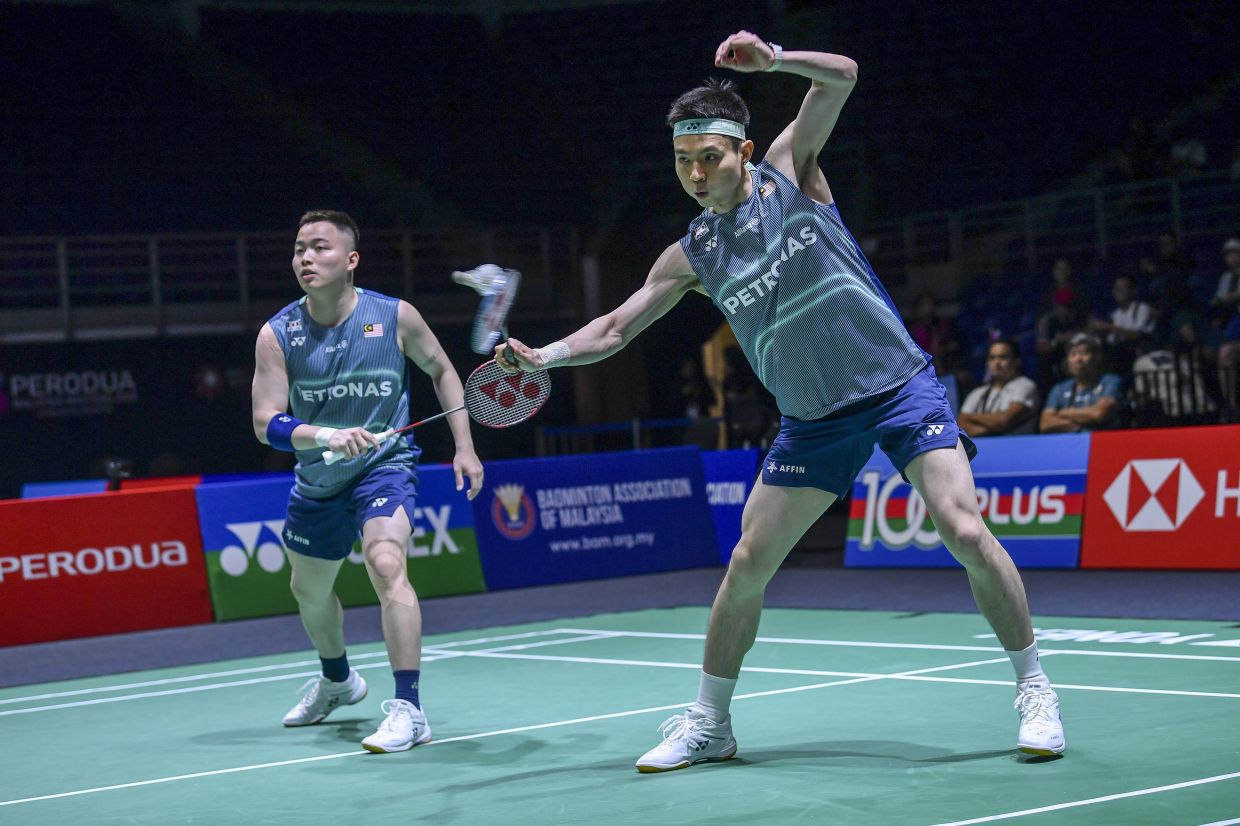
The Badminton Association of Malaysia's performance committee chairman Datuk Seri Lee Chong Wei has issued a stern reminder to players that individual interests cannot override the collective good, warning against using departure threats as leverage in negotiations with the national governing body. His statement marks a shift in tone from BAM's leadership, emphasising that the association will not yield to pressure tactics despite the considerable talent within its ranks.
The remarks came in response to recent comments from men's doubles player Soh Wooi Yik, who indicated his willingness to explore alternative arrangements alongside partner Aaron Chia as the pair pursue their ambition to remain together through the 2028 Los Angeles Olympics. This situation has reignited discussions about player autonomy within Malaysia's badminton structure and the extent to which individual preferences should influence team composition decisions.
Lee acknowledged that BAM maintains an open-door policy for player discussions, but was emphatic that such conversations must take place through proper channels rather than through public posturing or veiled threats. His position reflects growing frustration within BAM management regarding what they perceive as players using their status and recent achievements as bargaining chips in internal disputes. The newly empowered management team, Lee suggested, has adopted a more assertive stance than perhaps existed under previous regimes, signalling that capitulation to player demands is no longer a default response.
The underlying tension stems from a philosophical question about player development and institutional loyalty. Lee's invocation of BAM's role in nurturing young talent underscores the association's view that players owe a measure of gratitude and obligation to the system that developed them. By this logic, reaching elite status does not grant players unilateral authority over their professional arrangements, but rather increases their responsibility to contribute to collective success. This perspective resonates with traditional hierarchical structures common in Malaysian sports governance but sits uncomfortably with modern athlete expectations regarding career autonomy.
The specific case of Aaron Chia and Soh Wooi Yik exemplifies the complexity facing BAM's coaching strategy. The pair demonstrated their continued strength as a unit by capturing silver at the recently concluded World Championships in New Delhi, cementing their status as Malaysia's premier men's doubles combination. However, the coaching staff's commitment to experimenting with alternative partnerships reflects a broader Olympic cycle strategy designed to ensure multiple competitive options emerge before Los Angeles 2028.
These experimental pairings have already yielded mixed results that complicate the narrative. Aaron Chia's pairing with Aaron Tai produced a runners-up finish at the Taiwan Open, while Soh Wooi Yik initially faced adjustment challenges alongside Man Wei Chong before the latter eventually reached the Korean Masters final. Such results suggest the coaching team's strategy contains merit, though they have also generated uncertainty among players about their long-term standing within the programme. The forthcoming China Masters starting September 1 will see further reshuffling, with Aaron pairing with Wei Chong while Wooi Yik links with Aaron Tai.
Underlying these discussions lies a contractual reality that substantially constrains player mobility. Both Aaron Chia and Soh Wooi Yik remain bound to BAM through 2028 under existing contracts, a binding arrangement that significantly complicates any departure scenario. Should they attempt to leave the national system and pursue independent careers, they would face potentially substantial financial compensation claims from the association while simultaneously risking exclusion from international tournament participation. This contractual framework represents BAM's primary enforcement mechanism against unilateral player defections.
The compensation penalty structure functions as a formidable deterrent for players contemplating independence. Beyond immediate financial obligations, players who exit the national set-up face a more insidious problem: the difficulty of accumulating the ranking points necessary for Olympic qualification. International badminton tournaments typically require national federation sanctioning, and a player in open conflict with their home association encounters bureaucratic obstacles that effectively restrict competitive opportunities. This creates a Catch-22 scenario where departing players simultaneously burn bridges to their funding source while crippling their ability to remain internationally competitive.
Lee's hardline public stance serves multiple purposes within BAM's internal politics. First, it establishes clear boundaries around what management considers acceptable behaviour, potentially discouraging other players from attempting similar leverage tactics. Second, it demonstrates to the coaching staff that leadership will support difficult roster decisions even when players publicly resist. Third, it signals to external observers that BAM has moved beyond an era of player appeasement, suggesting the organisation now possesses sufficient institutional confidence to weather any individual player departure.
The broader context involves Malaysia's badminton resurgence over recent years, which has created a deeper talent pool than existed previously. This abundance of emerging players actually strengthens BAM's negotiating position against established stars. Where once the association depended heavily on a handful of established champions, the current environment permits more experimental approaches because replacement talent exists. Lee's warning implicitly acknowledges this shift: the days when individual players held disproportionate leverage have diminished as the talent pipeline has expanded.
For Malaysian badminton enthusiasts and stakeholders, this confrontation between traditional hierarchical authority and contemporary athlete expectations represents a critical juncture. The resolution will establish precedents affecting how future disputes between players and management are resolved. Should Lee and the current BAM leadership successfully establish their authority in this instance, they will have fundamentally reset the institutional relationship between athletes and governing bodies throughout Malaysian badminton. Conversely, any perception of capitulation would embolden players to employ similar tactics in future disputes.
The timing of this confrontation also matters within the broader Olympic planning context. With the Los Angeles Games still four years distant, BAM faces a window during which testing different combinations carries manageable consequences. However, as the 2028 Olympics approach, team stability becomes increasingly important. Lee's current firmness in enforcing coaching decisions and contractual obligations suggests BAM intends to use the next several years to thoroughly evaluate all viable combinations before locking in final selections, regardless of individual player preferences.

