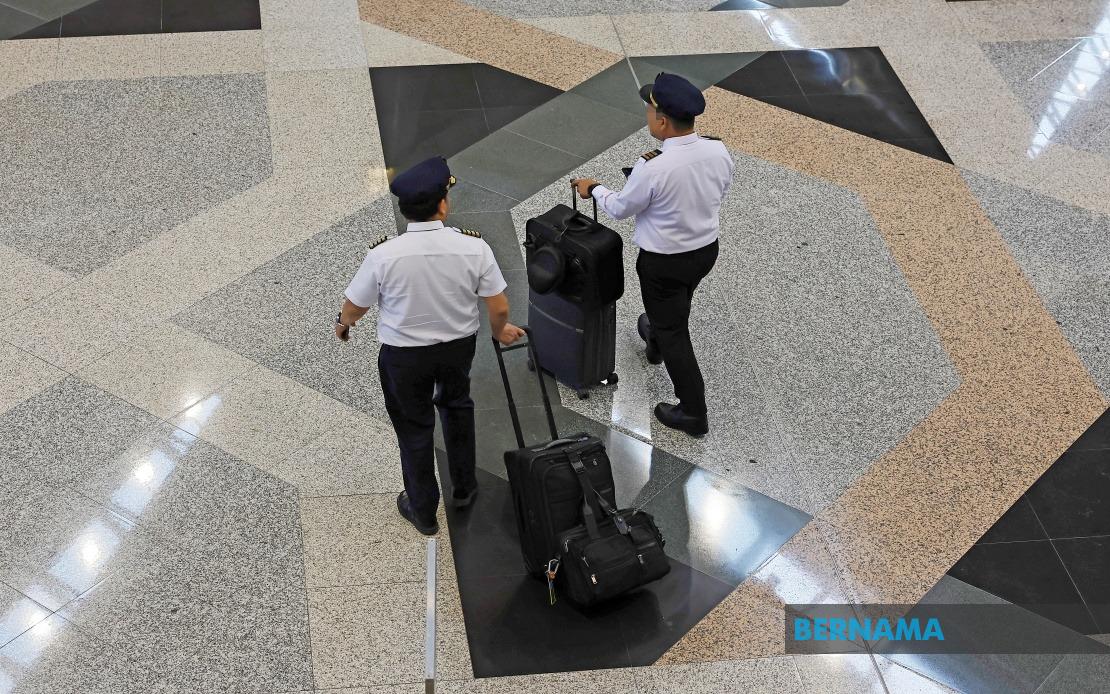
The arrest of a Malaysian airline pilot at Jakarta's Soekarno-Hatta International Airport on drug-smuggling allegations has prompted calls for a critical examination of security practices at Malaysia's busiest aviation hub. Tan Sri Lee Lam Thye, chairman of the Alliance For A Safe Community, has challenged authorities to conduct a comprehensive audit of screening procedures at Kuala Lumpur International Airport (KLIA) in response to the 39-year-old pilot's detention with approximately 25 kilogrammes of suspected narcotics discovered at Terminal 3 of the Indonesian facility.
While maintaining that the detained pilot remains presumed innocent pending legal proceedings, Lee has highlighted a troubling operational question at the centre of the incident: how security screening at KLIA failed to detect the alleged contraband before departure. The question strikes at fundamental vulnerabilities in Malaysia's aviation security architecture, particularly concerning whether protocols designed to safeguard passengers and the nation's international standing are functioning effectively or contain exploitable gaps.
Lee's intervention reflects broader anxieties within Malaysia about the integrity of its air transport security systems. The incident undermines public confidence in mechanisms that are supposed to prevent prohibited materials from entering aircraft at departure points. For a nation that positions itself as a regional aviation hub and aspires to maintain high international standards, such failures carry reputational consequences extending beyond the immediate legal proceedings against the individual pilot. The case demonstrates that existing measures may not be sufficiently robust to detect sophisticated smuggling attempts, particularly when perpetrators have insider knowledge of airport procedures.
The former civic leader has specifically called for a multi-agency review involving airport security operators, the Royal Malaysia Police, and the Civil Aviation Authority. His recommendations emphasise that screening procedures require particular scrutiny regarding how personnel with airport access and flight crew are vetted and monitored. The implicit concern is that individuals with legitimate reasons to be in restricted areas and boarding aircraft may have exploited their privileged access or familiarity with security checkpoints to circumvent detection systems.
Lee stressed that no category of airport worker or crew member should be exempted from rigorous security scrutiny, a principle that challenges potential institutional cultures where familiarity or rank might create informal exceptions to standard procedures. This is a critical distinction because airport security is only as effective as its weakest enforcement point. If screening intensity varies depending on who is being screened, sophisticated operators can identify and exploit those disparities.
The timing of this incident carries significance for Malaysia's aviation sector, which has faced international scrutiny regarding security practices following previous incidents. Restoring and maintaining confidence among international carriers, passengers, and regulatory bodies requires demonstrable commitment to systematic improvements rather than reactive announcements. The government's response to Lee's call for review will signal whether Malaysia treats such breaches as isolated incidents or symptoms of systemic inadequacies requiring structural reform.
The incident also raises questions about information-sharing and coordination between Malaysian and Indonesian authorities. While the arrest occurred in Indonesian territory, the contraband's origin and intended destination likely involved Malaysian airports and the international aviation system. Enhanced cooperation protocols between neighbouring nations' aviation and law enforcement agencies could prevent similar incidents by creating multiple detection layers rather than relying on single-point screening at departure airports.
For Malaysian aviation personnel generally, the case presents uncomfortable implications. An arrest involving a pilot from one of the country's airlines attracts international attention and potentially casts suspicion on Malaysia's recruitment standards and employee screening processes. While individual misconduct should not be attributed to entire institutions, the aviation industry's safety-critical nature means that incidents involving crew members warrant serious examination of personnel vetting procedures beyond airport security checkpoints themselves.
The Alliance For A Safe Community's involvement in raising this issue reflects the role that civil society organisations play in maintaining public accountability. Such groups can articulate citizen concerns and demand transparent responses in ways that political actors sometimes cannot, providing a buffer against complacency or minimal responses that fail to address underlying vulnerabilities.
Moving forward, authorities must balance security enhancement with operational practicality. Excessively burdensome screening measures can slow airport processes and discourage legitimate traffic, yet inadequate measures invite exploitation. The review process should therefore examine not merely whether gaps exist but whether current screening configurations represent optimal calibration of security protection against practical airport operations. This might include investing in advanced screening technologies, revising staff training protocols, and establishing clearer accountability mechanisms for security lapses.
For Malaysia's international standing, how decisively authorities respond to this incident will matter considerably. Regional competitors in the aviation sector monitor such developments, as do international carriers evaluating which airports and nations offer acceptable security standards. A comprehensive, transparent review demonstrating commitment to improvement would reinforce Malaysia's positioning as a serious participant in global aviation safety governance, whereas minimal or defensive responses could reinforce doubts about institutional seriousness regarding security protocols.

