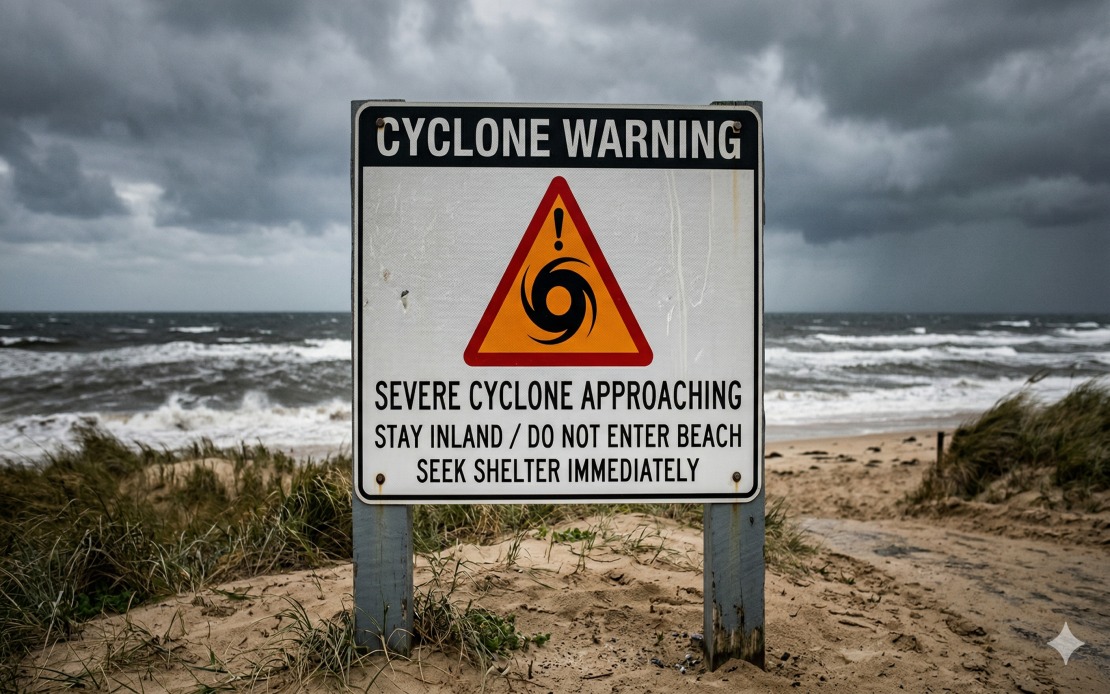
The Baltic nation of Latvia activated its most severe weather alert on Friday as meteorological authorities prepared for an approaching cyclone that threatens to deliver significant rainfall and dangerous wind conditions across the country's central zones throughout the weekend. The situation represents a substantial challenge for emergency response teams and civilian populations in affected areas, with the potential for cascading infrastructure failures and transport gridlock. Officials have implemented coordinated precautionary measures to minimise harm, though the exact trajectory and intensity of the system may still shift as updated forecasts become available.
The Latvian Environment, Geology and Meteorology Centre designated central regions, particularly the vicinity of Riga and Jelgava, as falling under the red warning category for exceptional rainfall. This classification signals exceptional danger requiring immediate public readiness. The alert period officially commences at 8 am on Saturday and extends through 1 am on Sunday, though authorities acknowledged that geographical coverage could expand or contract depending on real-time model updates. The extended timeframe reflects the system's expected duration and the sustained threat it poses to the region.
Hydrometeorological agencies have outlined a multifaceted risk profile extending well beyond precipitation alone. Residential properties face inundation vulnerability, particularly in low-lying and flood-prone localities. Agricultural land throughout the warning zone sits at elevated risk of waterlogging and crop damage. The transportation network could experience severe degradation, with certain roadways potentially becoming impassable due to accumulated water and debris accumulation. Gardens and other outdoor infrastructure face comparable threats from standing water and wind-driven damage.
Critical infrastructure dependencies amplify the complexity of the emerging crisis. The electrical grid serving the warning areas faces potential disruption stemming from falling trees and damaged power lines as wind velocities increase. Water treatment and distribution systems could experience interruptions, compromising public health and sanitation. Telecommunications networks, increasingly vital for coordinating emergency responses and maintaining public communications, likewise face vulnerability to infrastructure damage from the anticipated weather conditions.
In response, Latvia's State Fire and Rescue Service issued comprehensive guidance to residents within threat zones. Citizens received explicit recommendations to minimise unnecessary outdoor exposure, thereby reducing accident risk during hazardous conditions. Property owners were advised to secure objects susceptible to wind displacement, preventing them from becoming dangerous projectiles. Mobile device owners were instructed to ensure full charging, anticipating potential extended electricity unavailability that could render power-dependent communication impossible.
The weather event has already disrupted planned activities across Latvia's entertainment and public gathering calendar. Numerous outdoor celebrations, festivals, and cultural events scheduled for the weekend faced cancellation as organisers recognised the impracticability and safety hazards associated with proceeding during cyclonic conditions. This preventive approach, while economically costly to event stakeholders, reflects prioritisation of public safety over schedule adherence.
The meteorological threat extends beyond Latvia's borders into neighbouring Estonia, where the situation mirrors the challenges facing Latvia. The Estonian Environment Agency issued parallel warnings concerning heavy precipitation and forceful wind gusts anticipated throughout the weekend period. Estonia's Elektrilevi, the primary electricity distribution operator serving most of the country, anticipated significant operational challenges. The firm warned that tree and branch failures resulting from elevated wind speeds could precipitate widespread power interruptions across their service territory, potentially affecting thousands of customers simultaneously.
For Southeast Asian observers and the Malaysian regional context, this European weather event illustrates the escalating frequency and severity of extreme meteorological phenomena affecting developed economies worldwide. While tropical cyclones represent familiar hazards for Malaysia and neighbouring ASEAN nations, the infrastructure disruption patterns and emergency response frameworks deployed across the Baltic region offer comparative perspectives for regional disaster management planning. The coordination between multiple governmental agencies, pre-emptive infrastructure assessments, and public communication strategies reflect international best practices applicable regardless of geographical context.
The Latvian situation underscores how climate variability increasingly challenges even wealthy, technologically advanced societies. The simultaneous threats to multiple interdependent infrastructure systems—power, water, telecommunications, and transportation—demonstrate the cascade failure risks inherent in modern economies heavily reliant on continuous utility provision. Malaysia's own infrastructure resilience, particularly in facing monsoon seasons and occasional tropical storms, warrants examination through the lens of how Baltic nations approach similar preparedness challenges despite differing climatic baselines.
Emergency management authorities across both Latvia and Estonia have implemented pre-crisis positioning of response assets, staged personnel, and established communication protocols intended to accelerate crisis response once conditions deteriorate. This proactive mobilisation reflects institutional learning from previous severe weather events and represents the contemporary standard for responsible governmental disaster preparedness. The emphasis on early warning dissemination and public self-protective behaviour aims to shift responsibility appropriately toward individual and community-level resilience before centralised rescue and recovery operations become necessary.
As the cyclone approaches, both nations await updated forecast refinements that may clarify affected zones with greater precision. The fluid nature of meteorological prediction, even in an age of sophisticated modelling systems, means that official warnings and guidance may require adjustment. Authorities stress that residents should maintain active engagement with official advisories throughout the event window rather than relying on initial Friday briefings alone. The integration of real-time data into evolving operational responses represents modern emergency management doctrine.

