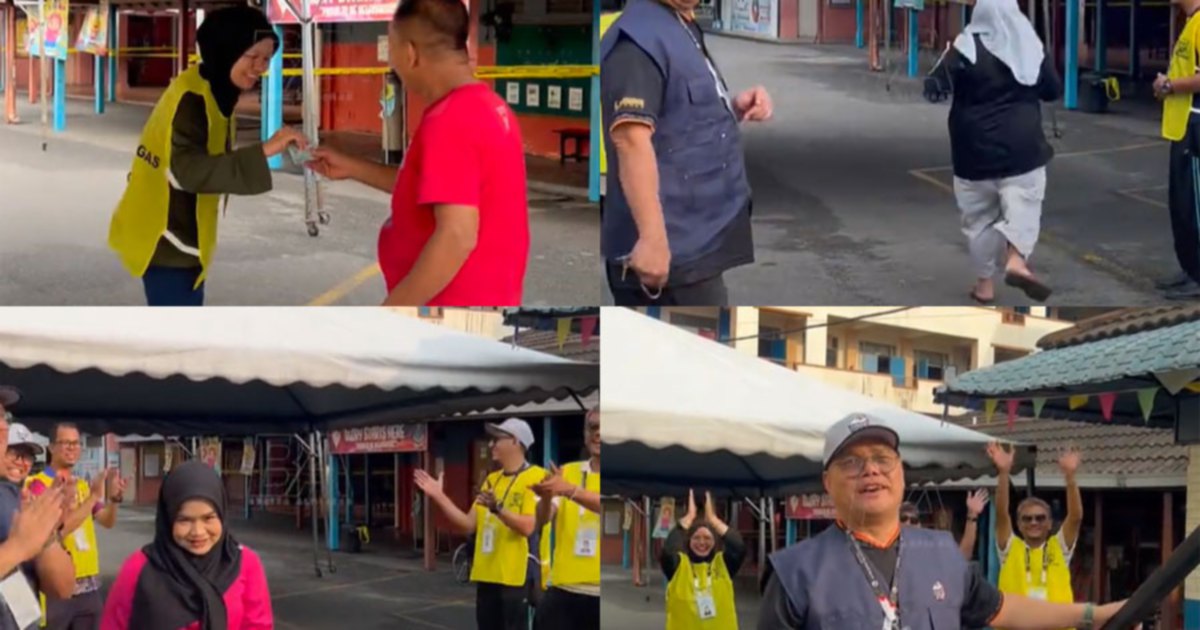
A video that has spread rapidly across social media platforms documents the frantic final moments of voting in the Negri Sembilan state election, showing the determination of citizens who raced against the clock to exercise their franchise before the 6pm closure deadline. The footage, which has generated considerable online engagement, illustrates the intensity surrounding the state election as voters marshalled their efforts in the concluding hours to ensure their votes were registered.
The viral nature of the clip underscores the genuine interest and emotional investment many Malaysians hold towards electoral participation, particularly at the state level where local governance directly shapes community development and policy outcomes. Such moments, captured on personal devices and shared instantaneously across digital networks, reveal authentic slices of election day dynamics that often escape traditional news coverage, providing social media audiences with unfiltered glimpses of civic engagement as it unfolds.
Negri Sembilan state elections carry particular significance within Malaysia's federal architecture, determining the composition of the State Legislative Assembly and the administration responsible for economic development initiatives, agricultural policies, and regional infrastructure projects. The state, situated strategically between Kuala Lumpur and other Klang Valley territories, serves as an important demographic and economic indicator for broader national trends, making its electoral outcomes noteworthy for observers tracking political momentum across different regions.
The documented rush to voting polls before deadline closure reflects organisational pressures that election management authorities face during the final operational hours of polling days. Across Malaysian electoral history, such scenes have become almost ritualistic, with returning officers and poll workers often managing elevated crowd volumes as time-conscious voters arrive in concentrated waves during late afternoon periods. The phenomenon raises ongoing questions about optimal polling day scheduling, voter information accessibility, and whether extended voting hours might better accommodate working-class participants and those managing competing time commitments.
Social media's role in amplifying such election-related content has transformed how Malaysians experience and discuss electoral processes. Where previous generations might have relied on evening news broadcasts or newspaper accounts for election day stories, contemporary audiences witness raw, real-time documentation from polling stations, creating immediate narratives that bypass traditional editorial gatekeeping. This democratisation of election coverage generates both transparency opportunities and misinformation risks, depending on the accuracy and contextual framing of shared content.
The enthusiasm documented in the Negri Sembilan footage also speaks to sustained voter engagement at the state electoral level, a particularly noteworthy observation given that state elections sometimes attract lower turnout compared to federal parliamentary polls. Analysts monitoring Malaysian democratic health frequently emphasise the importance of active participation across all governance tiers, as state assemblies shape critical policy areas from education to transport to urban planning that profoundly affect daily citizen experience.
Viral election content such as this serves multiple functions within Malaysian political discourse. For electoral authorities, such footage provides informal feedback on operational effectiveness and queue management practices. For citizens and civil society organisations, these clips become evidence in broader conversations about voting accessibility and whether current systems adequately serve all demographic groups. For political parties and candidates, the visibility of election day energy offers indicators regarding voter mobilisation success and grassroots enthusiasm levels.
The specific context of the 6pm deadline carries practical implications rooted in Malaysia's electoral regulatory framework and polling station protocols established by election commissions. This standardised closure time, applied consistently across jurisdictions, creates the pressure-point dynamics visible in viral footage, as workers, students, and others juggling professional obligations attempt final-hour participation. Understanding these temporal constraints helps explain why election day voting sometimes clusters heavily in early morning and late afternoon periods rather than distributing evenly throughout available hours.
Regionally, such scenes reflect patterns observable across Southeast Asian democracies, where voting deadlines similarly generate last-minute rushes and competitive queuing at polling stations. The phenomenon transcends Malaysia's borders, suggesting that time-bounded electoral participation naturally produces compressed demand patterns that election management systems must accommodate, regardless of national context or organisational sophistication.
The viral video's emergence and social media traction also highlights how modern Malaysians engage with political participation narratives through personal documentation and peer sharing rather than exclusively through institutional channels. This shift in information flow patterns carries implications for how political campaigns target voters, how civil society organisations promote participation, and how election authorities communicate procedural details to prospective voters.
Looking forward, such viral moments may influence future policy considerations regarding election day logistics in Malaysia. If footage consistently documents pressing congestion during final hours, authorities might explore extended voting hours, staggered polling access by demographic groups, or advanced voting opportunities that distribute participation across multiple days rather than concentrating it into single intensive periods.

