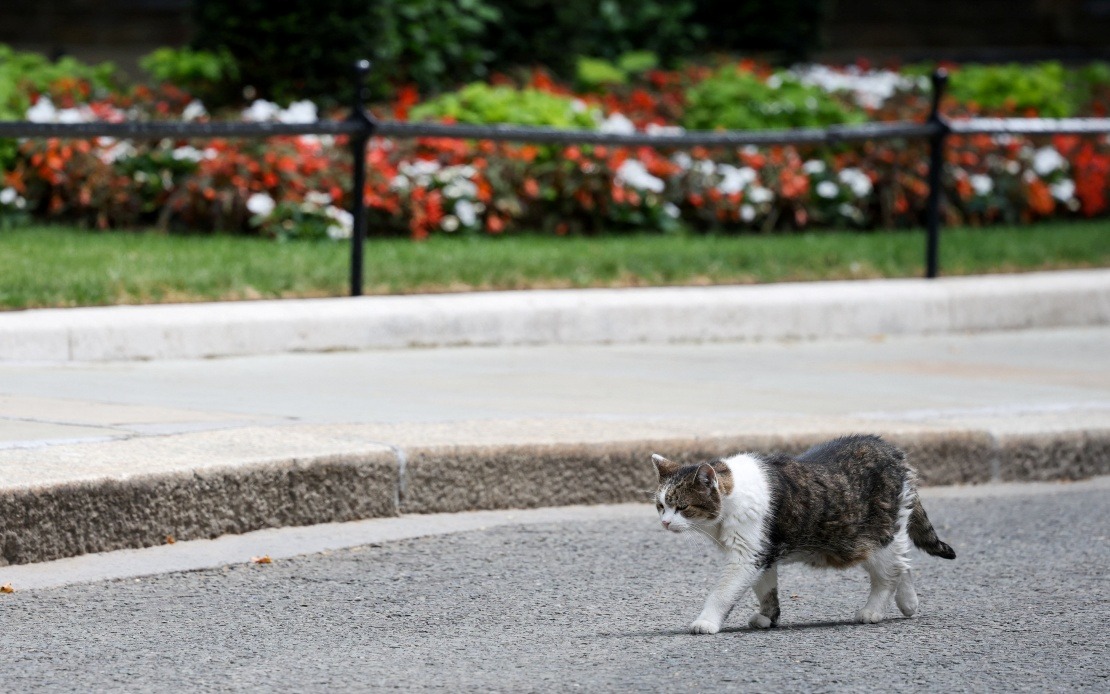
Larry, the celebrated resident cat of 10 Downing Street, has achieved a peculiar distinction in British political life: outlasting six successive prime ministers in an era of rapid governmental turnover. The tabby feline was observed wandering the grounds outside Britain's most famous address on Tuesday, July 21, as newly appointed Prime Minister Andy Burnham convened his first Cabinet meeting following his assumption of office, marking yet another transition in the political leadership of the United Kingdom.
The symbolism of Larry's presence throughout this latest change of power underscores a broader pattern in contemporary British politics. Where prime ministers have come and gone with increasing frequency—a reflection of the intense pressures and competing factions within Westminster—the Downing Street cat has remained a steady, unflappable fixture. While ministers gathered indoors to address the nation's pressing affairs, Larry continued with feline indifference to the machinations of human political power, wandering freely through the residence grounds as if to remind observers that some constants endure regardless of electoral outcomes.
For Malaysian and Southeast Asian observers, Larry's longevity at Downing Street offers an intriguing window into the instability currently characterising Westminster politics. The rapid succession of prime ministers reflects not merely personality clashes or electoral defeats, but deeper structural tensions within the British political system—factional divisions within parties, shifting electoral coalitions, and the growing disconnect between Parliament and the electorate. This stands in contrast to certain regional contexts where political leadership, while not always stable, has occasionally benefited from extended tenures that, regardless of their democratic merits, at least provided policy continuity.
The appointment of Andy Burnham as Prime Minister represents a significant moment in British politics, particularly as he assumes leadership during a period of considerable domestic and international complexity. Burnham, who brings experience from his previous roles in government and his tenure as Mayor of Greater Manchester, faces an immediate agenda requiring both strategic direction and parliamentary management. The fact that his Cabinet meeting occurred as Larry roamed the grounds speaks to the mundane realities of governance—even as formal proceedings commence, the machinery of state functions around both symbolic and practical dimensions.
Larry's tenure spanning six prime ministers encompasses a transformative period in British politics. Each predecessor brought different policy priorities, management styles, and visions for the nation's future, yet the Downing Street cat adapted to each transition without apparent concern. This serves as a peculiar reminder that while individual leaders may leave their mark on policy and direction, institutions themselves often possess greater staying power and resilience. For those observing British governance from abroad, including Malaysian analysts of Westminster systems, such institutional continuity offers lessons about the importance of administrative structures and bureaucratic expertise that survive leadership transitions.
The presence of a resident cat at the Prime Minister's official residence carries historical resonance in British culture. Animals at official residences serve as informal symbols of continuity and homeliness, even within the formal structures of state power. Larry, in particular, has achieved celebrity status among British and international observers, with his comings and goings frequently documented and discussed in media circles. This reflects a distinctly British approach to governance that accommodates the personal and the whimsical alongside formal protocol and constitutional procedure.
For the broader Commonwealth and for observers in Southeast Asia, the succession of prime ministers and Larry's unaffected navigation through these changes illustrates broader truths about political life. Leadership transitions, however significant they may appear in the moment, represent merely one dimension of governmental functioning. The civil service, institutional frameworks, and accumulated administrative wisdom provide the substrate upon which individual leaders operate. Larry's indifference to this transition—his wandering about the grounds while ministers gathered—encapsulates a philosophical truth that transcends British politics: that power operates within structures far larger and more durable than any single individual.
Burnham's first Cabinet meeting as Prime Minister takes place against this backdrop of continuity and change. While he charts a new direction for British governance, the same buildings, the same constitutional frameworks, and apparently the same cat continue their functions much as they have before. For Malaysian observers accustomed to different systems of government and different models of leadership transition, the Westminster experience offers both instructive contrasts and surprising parallels in how states manage the succession of power and maintain institutional memory across political cycles.

