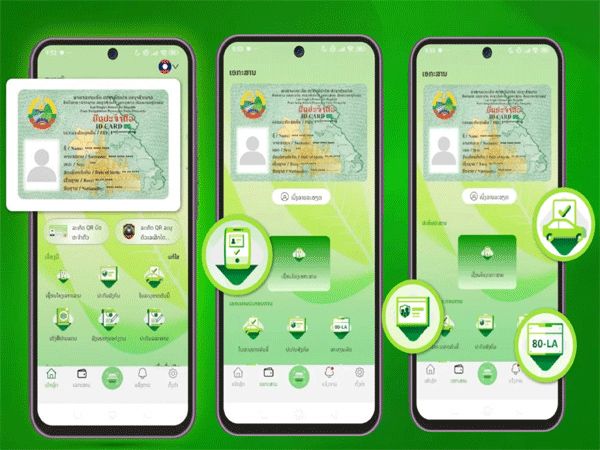
Laos has taken a decisive step toward modernising its administrative infrastructure by retiring its traditional paper-based identity system in favour of the LAeID digital identity application. The Ministry of Public Security has ended the validity of the old white and green identity cards and paper household registration books, marking a watershed moment in the country's transition to digital governance. From July 18, citizens can no longer use these physical documents for official transactions, and the government has begun encouraging the population to migrate to the new smartphone-based identification system.
This transition represents more than a simple technological upgrade; it signals Laos's commitment to reshaping how its citizens interact with public administration. The nationwide rollout of LAeID follows formal notification to all ministries, government agencies, and the general population through an official notice from the Office of the Ministry of Public Security. The timing of this implementation reflects a carefully planned phased approach, giving citizens a defined deadline to transition while avoiding administrative chaos. For Laos, a nation working to improve service delivery and reduce bureaucratic inefficiency, this shift addresses longstanding challenges of document fragmentation and slow administrative processing.
The practical benefits for ordinary Laotian citizens are substantial and immediately apparent. Rather than accumulating multiple identity documents and visiting various government offices with separate paperwork for different purposes, residents can now consolidate their official identity into a single mobile application. This consolidation eliminates the need to carry numerous physical documents and dramatically reduces the time spent on repetitive administrative procedures. The reduction in paper handling also creates financial savings for both individual citizens and government agencies, while potentially improving data accuracy and security through centralised digital storage.
The LAeID system operates on a straightforward registration mechanism designed for accessibility across the country. Citizens must first register for a digital identity card at district and provincial public security offices nationwide, after which they can activate an electronic identification account through the application. The system uses each citizen's unique identity number as the username, with passwords distributed via SMS following account approval or created during the initial registration process. This decentralised registration approach ensures that the digital transition reaches citizens in both urban and rural areas without creating geographic barriers to adoption.
While the immediate functionality focuses on digital identity verification, the LAeID application has been architected as an ambitious long-term platform with far broader ambitions. The system is designed to eventually serve as a comprehensive digital wallet containing birth certificates, marriage certificates, health insurance cards, social security information, vehicle registration documents, driving licences, and even passport data. This vision of integrated government services mirrors similar initiatives underway across Southeast Asia, where countries like Singapore and Thailand have been gradually consolidating citizen data into unified digital platforms. However, Laos is proceeding deliberately, with only the digital identity card function currently operational while connections to other government databases will be progressively added over time.
The phased implementation strategy reflects pragmatic recognition that integrating disparate government databases presents significant technical and administrative challenges. Rather than attempting comprehensive integration immediately, which could introduce system vulnerabilities and implementation failures, the Ministry of Public Security is rolling out functionality in stages. This measured approach reduces the risk of disruption to essential government services while allowing time for backend infrastructure improvements and security protocols to be thoroughly tested. For citizens and businesses accustomed to the existing system, this gradualism also allows adjustment periods before complete reliance on digital transactions becomes mandatory.
Laos's digital transformation initiative extends well beyond identity documentation and represents a broader strategic vision for modernising public administration across the Southeast Asian nation. The LAeID system anchors this larger effort to eliminate paper-based processes and enable citizens to conduct official transactions online from their homes or workplaces. As more government databases become connected to the central LAeID infrastructure, the theoretical endpoint is a comprehensive digital public service ecosystem where citizens rarely need to physically visit government offices for routine administrative matters. This vision particularly benefits rural populations who face geographical and transportation barriers to accessing centralised government offices.
The consolidation of household registration data into the LAeID system represents another significant innovation component. Previously, paper household registration books served as authoritative documents for establishing family relationships and residency status. By migrating this information into the digital platform, the government eliminates a physical document category while creating a more updateable and verifiable record. Changes in household composition, such as births, marriages, or relocations, can be processed more efficiently through digital channels, and the information is immediately accessible to all relevant government agencies without manual verification processes.
From a regional perspective, Laos's implementation of LAeID positions it alongside other Southeast Asian nations pursuing digital governance initiatives. Thailand, Vietnam, and Indonesia have all launched or are developing similar digital identity systems, creating a mosaic of approaches across the region. Malaysia's MyKad and MyDigital initiatives represent comparable efforts, though operating within a more developed technological infrastructure. Laos's initiative, while more recent, demonstrates the region's collective recognition that digital identity systems are fundamental to efficient governance, economic development, and service delivery in the twenty-first century.
The security architecture underlying LAeID will prove critical to its success and public acceptance. The Ministry of Public Security's management of the system places responsibility for data protection and cybersecurity with the government entity best positioned to maintain encryption standards and prevent unauthorised access. However, the sensitive nature of centralised identity data means that any breach or security vulnerability could expose millions of citizens to identity theft or fraud. The gradual rollout provides opportunity to identify and remediate security gaps before the system reaches critical mass, though transparency regarding security protocols and incident response procedures will be essential for maintaining public confidence.
Citizen adoption rates will significantly influence the timeline for fully transitioning away from paper documents and realising the efficiency gains that motivated the LAeID initiative. While the government mandate eliminates legal validity of paper identity cards from July 18, practical enforcement may prove more nuanced, particularly in rural areas where smartphone penetration remains lower and digital literacy varies. The government's success in bridging this digital divide will determine whether LAeID becomes a seamless citizen experience or whether implementation challenges create frustration and resistance to the broader digital transformation agenda.

