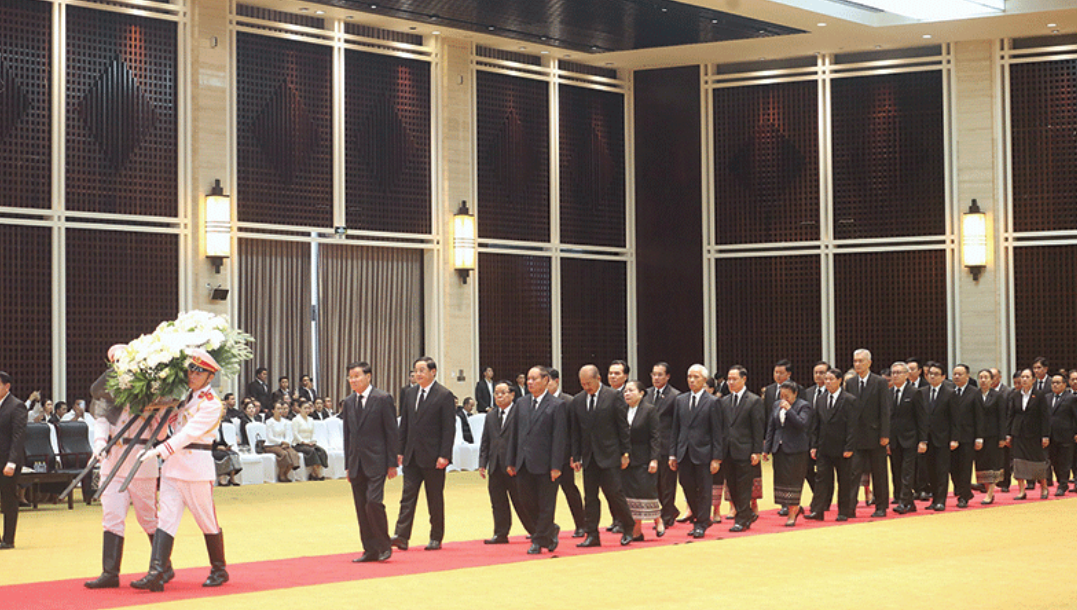
Laos observed a solemn state ceremony on Sunday, August 9, honouring National Assembly President Xaysomphone Phomvihane, who died the previous day. The tribute took place at the National Convention Hall in Vientiane, where party Secretary General and President Thongloun Sisoulith led the delegation of top officials in paying their respects. The gathering assembled senior members of the ruling Lao People's Revolutionary Party, government ministers, National Assembly legislators, organisational representatives and family members of prominent state leaders, creating a comprehensive display of the nation's political establishment united in grief.
Xaysomphone's death represents a significant loss within Laos's political hierarchy. Born on December 12, 1956, he was the son of former President Kaysone Phomvihane, making him a member of one of the country's most influential political dynasties. As a Politburo member and long-serving National Assembly President, he occupied a position of considerable authority within Laos's one-party political system. His decades of service to the revolutionary party, state apparatus and the Lao people earned him deep respect across the nation's leadership structure and institutions.
The ceremony demonstrated the ceremonial importance attached to honouring deceased senior officials within Laos's political culture. Multiple delegations representing different branches and sectors of government took turns laying wreaths at the National Convention Hall. The procession included representatives from the Party Central Committee led by President Thongloun, the National Assembly Standing Committee headed by Vice President Sounthone Xayachack, and the government delegation led by Prime Minister Dr Sonexay Siphandone. Each delegation's participation underscored the interconnected nature of Laos's political elite and their collective acknowledgement of Xaysomphone's contributions.
The presence of Vietnamese officials at the memorial ceremony reflected the deep institutional ties between the two Communist-governed nations. A delegation from the Vietnamese National Assembly, led by Tran Thanh Man, a senior Communist Party figure and Chairman of Vietnam's National Assembly, attended the proceedings. Representatives from Vietnam's Ministry of Public Security and Ministry of National Defence also participated, demonstrating the significance placed on bilateral relations during this period of national mourning in Laos. This Vietnamese presence underscores how closely integrated the political structures and diplomatic protocols of the two countries remain.
Laos declared five days of national mourning from August 8 through 12, during which wreath-laying ceremonies continued at the National Convention Hall. This extended period of official mourning allowed not only the highest echelons of government but also foreign diplomats, business community representatives and the general public to pay their respects. The length and formality of the national mourning period reflected Xaysomphone's seniority within the state hierarchy and the symbolic importance of his role in Laos's legislative and political institutions.
The final farewell ceremony was scheduled for August 12 at That Luang esplanade, where Xaysomphone was to receive full state honours during his cremation, beginning at 1 p.m. Such ceremonial treatment reserved for high-ranking officials serves both to honour the deceased and to reinforce the legitimacy and continuity of the political system. For Southeast Asian observers, these rituals demonstrate how Communist-governed states in the region maintain formal protocols that blend revolutionary ideology with ceremonial traditions rooted in Lao culture and Buddhist customs.
Xaysomphone came from a family deeply embedded in Laos's revolutionary history. As one of six sons of Kaysone Phomvihane, who served as President and was instrumental in establishing the Lao People's Democratic Republic after 1975, Xaysomphone inherited both political prominence and responsibility within the party structure. His brothers have also held significant positions within government and administration, exemplifying how political power within one-party states often concentrates within established families and networks. His brother Santiphab Phomvihane currently serves as Deputy Prime Minister and Minister of Finance, continuing the family's influence on national policy.
The extensive participation of government officials at the ceremonies highlighted the interconnected nature of Laos's political elite. Prime Minister Dr Sonexay Siphandone led the government delegation, while Deputy Prime Minister Santiphab Phomvihane represented the Phomvihane family. Other Politburo members including Dr Phet Phomphiphak, Kikeo Khaykhamphithoune, Khamphan Phommathat and Khamphan Pheuyavong each led delegations from their respective institutional responsibilities. This comprehensive display of officialdom underscored how Xaysomphone's death affected multiple levels of Laos's governance structure.
Beyond the formal state apparatus, delegations representing the Lao Front for National Development and various government ministries participated in honouring the deceased. The Prime Minister's Office, line ministries and government agencies all sent representatives, as did representatives from the business community and families of other prominent party and state leaders. This broad cross-section of participation reflected the integral role Xaysomphone had played in strengthening the National Assembly as an institution and his contributions to national defence, development initiatives and socio-economic affairs.
The mourning period continued into the following week, with additional tributes on Monday, August 10. Senior retired officials and current leaders from line ministries and Vientiane authorities continued to visit the National Convention Hall, extending the ceremonial acknowledgement of Xaysomphone's passing across several days. Foreign diplomatic corps accredited to Laos also paid their respects, a customary practice that signals the international community's recognition of the deceased official's standing and the Lao government's standing within the diplomatic system.
Vietnam's declaration of two days of national mourning on August 10-11 further emphasised the bilateral significance of the relationship between the two nations' leadership. Such reciprocal mourning declarations remain relatively rare in international relations and demonstrate the exceptional closeness of the Lao-Vietnamese partnership at state level. For regional observers, this Vietnamese gesture underscores how the two countries maintain coordinated political protocols and shared revolutionary legitimacy that transcends conventional international relations.
Xaysomphone's death marks the end of an era within Laos's National Assembly and represents a generational transition within the country's political elite. His life trajectory from the revolutionary struggle through decades of legislative leadership encapsulated much of modern Laos's political evolution. The comprehensive state tributes and international participation in his memorial ceremonies reflect how deeply his career intersected with the development of Laos's institutions since the establishment of the Lao People's Democratic Republic nearly 50 years ago.

