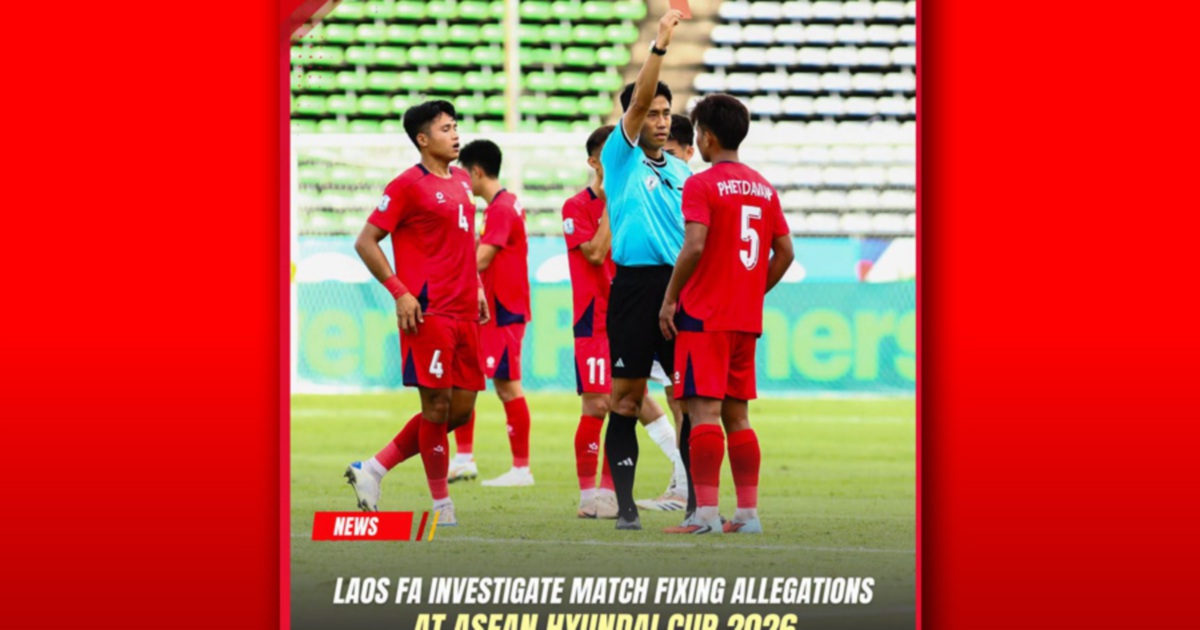
A deepening corruption crisis has engulfed Southeast Asian football following the Lao Football Federation's decision to commission a comprehensive investigation into alleged match-fixing, systematic bribery, and unauthorised gambling operations linked to members of Laos's national squad. The decision to launch the high-level probe signals mounting concern within the regional football community about the scale and sophistication of suspected illegal activities that may have compromised competitive integrity at the continental level.
The corruption allegations represent a significant challenge to the credibility of football governance across Southeast Asia at a critical moment. The Asean Cup, one of the region's most prestigious sporting tournaments, depends fundamentally on the integrity of participating nations' teams and officials. The emergence of such serious misconduct claims involving a competing nation raises uncomfortable questions about the effectiveness of anti-corruption protocols and regulatory oversight mechanisms that are supposed to protect the sport from criminal infiltration.
Match-fixing in professional football operates through complex networks where corrupt actors manipulate outcomes to generate illegal profits through betting syndicates. Southeast Asia has historically proven vulnerable to such schemes due to limited resources devoted to anti-corruption enforcement, the prevalence of underground gambling markets, and sometimes inadequate financial transparency within football associations. The Laos situation appears to involve multiple vectors of misconduct simultaneously, suggesting either a systematic and well-coordinated corruption operation or alternatively, widespread institutional breakdown in oversight and ethical compliance within the federation and its affiliated clubs.
Bribery allegations targeting team members indicate that individual players and potentially coaching or administrative staff may have accepted monetary incentives to influence match outcomes or underperform. Such conduct violates fundamental principles of sporting competition and represents a betrayal of trust by athletes whose salaries and opportunities derive from public support and institutional backing. The willingness of individuals to compromise their professional integrity for financial gain exposes vulnerabilities in player education programs and the adequacy of disciplinary frameworks that are meant to deter such behaviour.
The involvement of illegal gambling represents perhaps the most insidious dimension of this scandal. Underground betting networks in Southeast Asia operate largely outside regulatory oversight, funnelling enormous sums into unaccountable criminal enterprises. These networks actively seek to corrupt sports outcomes as a fundamental business model, creating perverse incentives that undermine fair competition. The scale of potential gambling operations connected to Lao football suggests that corruption may extend far beyond individual athletes to encompass broader criminal syndicates operating across borders.
For Malaysian sports authorities and regional stakeholders, this crisis carries direct implications. Competition integrity at the Asean Cup depends on the assumption that all participating nations maintain minimum standards of governance and anti-corruption compliance. The Laos situation forces neighbouring football federations to examine their own institutional safeguards and consider whether comparable vulnerabilities exist within their respective systems. Malaysian football's reputation becomes entangled with the overall credibility of the tournament format and its outcomes.
The investigation's methodology and transparency will prove crucial in determining whether the Lao Football Federation can restore public confidence in the sport domestically and regionally. A thorough, independent inquiry that publicly discloses findings and imposes meaningful sanctions against wrongdoers would signal institutional commitment to reform. Conversely, a process perceived as superficial or designed to shield powerful figures would deepen cynicism about football governance across Southeast Asia and encourage further illegal activity by demonstrating insufficient consequences.
Longer-term reform necessitates systemic change extending beyond Laos alone. The Asean Football Federation and national associations must substantially upgrade their capacity to detect suspicious betting patterns, investigate allegations rigorously, and enforce consistent disciplinary standards. This requires investment in specialised investigators, cooperation agreements with law enforcement, and coordination with international sports integrity bodies. Educational initiatives targeting players, coaches, and administrators should emphasise the reputational and legal consequences of corruption participation.
The timing of this scandal, intersecting with Asean Cup preparations, creates additional urgency. Tournament organisers must balance thorough investigation requirements against the practical need to proceed with scheduled matches. Any perception that Laos receives preferential treatment or that investigations are rushed or compromised would fundamentally undermine the tournament's legitimacy. Regional football authorities face the challenging task of maintaining competition momentum whilst demonstrating that corruption will trigger serious consequences regardless of sporting calendar pressures.
This episode serves as a cautionary reminder that Southeast Asian football requires ongoing vigilance against criminal infiltration. The region's growing prosperity and increased betting volume create expanding financial incentives for corruption networks to target the sport. Tackling this challenge effectively demands coordinated regional action, adequate funding for enforcement mechanisms, cooperation with law enforcement agencies combating money laundering and organised crime, and sustained political commitment to prioritising sporting integrity over short-term competitive considerations. Without decisive action now, corruption risks becoming increasingly entrenched within Southeast Asian football governance structures.

