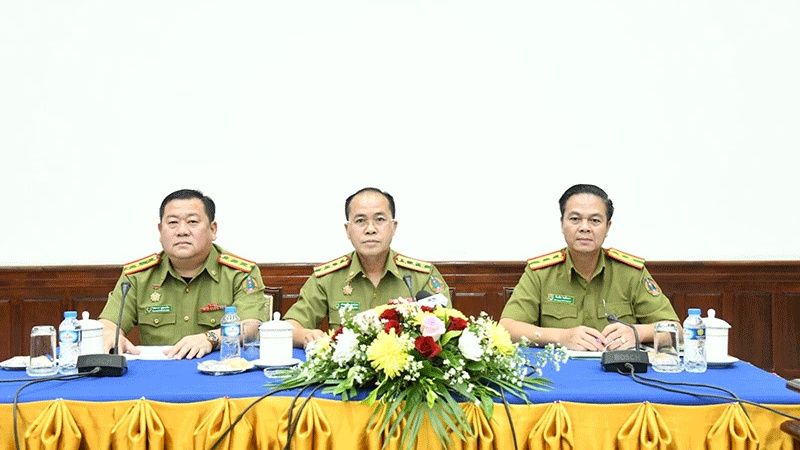
Laotian police have formally charged the proprietor of Tiger Vodka distillery and multiple employees of Nana Backpackers Hostel in connection with the deaths of six international visitors who died in the popular tourist destination of Vangvieng during the latter months of 2024. The indictments were announced at a Ministry of Public Security press conference on Friday, representing the most comprehensive official statement regarding the investigation into the incident that drew international attention and scrutiny of safety conditions in one of Southeast Asia's most visited backpacker havens.
The investigation uncovered that alcoholic beverages manufactured at the privately-owned distillery located in Xaimoungkhoun village contained methanol concentrations exceeding permissible thresholds. Independent confirmation emerged from Thailand's Aek Udon Hospital, which verified the presence of methanol in blood samples taken from two Australian women who succumbed to their illnesses. This evidence pointed toward contaminated spirits as a potential culprit, yet Laotian law enforcement acknowledged a critical evidentiary gap that would complicate prosecutions: the absence of autopsy reports for five of the six victims meant that causation could not be established with legal certainty.
The distillery owner faces charges under Articles 275 and 297 of the Penal Code for manufacturing and distributing substances injurious to public health and conducting unlicensed commercial operations respectively. These charges emerged after prosecutors initially contemplated food safety violations but determined insufficient evidence supported that approach. The case has been forwarded to Vientiane Province People's Court for adjudication. This prosecutorial pivot illustrates how Laotian authorities adapted their legal strategy when confronted with the complexities of proving causation across international jurisdictions with differing investigative procedures.
The hostel establishment became entangled in separate proceedings after staff members removed the body of James Louis Hutson, an American national, from Room 205 on November 13, 2024, transporting him to Vangvieng District Hospital without first notifying authorities. This action contaminated the crime scene and prevented police from conducting a thorough forensic examination of the room where he had died. The removal of evidence prompted charges against the hostel proprietor and ten staff members under Article 383 of the Penal Code. Though the Vangvieng District Court convicted all defendants, the provincial prosecutor's office deemed sentences insufficiently severe and petitioned the superior Vientiane Province People's Court to impose stricter penalties, indicating dissatisfaction with initial judicial outcomes.
The deceased individuals represented a cross-section of Western nations: American James Louis Hutson, Danish nationals Freja Vennervald Sorensen and Anne-Sofie Orkild Coyman, Australian nationals Bianca Jones and Holly Bowles, and British national Simone White. The diversity of victims' nationalities transformed this from a localised incident into a matter of international diplomatic consequence, necessitating engagement with embassies from the United States, Australia, Denmark, and the United Kingdom throughout the investigation. These nations' diplomatic representatives attended the official briefing, underscoring the elevated profile the case had assumed within regional and international circles.
Investigators documented a troubling pattern regarding autopsies: the families of all five victims whose deaths could not be definitively attributed declined requests for post-mortem examinations. This refusal, whether motivated by cultural preferences, emotional distress, or practical considerations regarding repatriation, created insurmountable obstacles for Laotian prosecutors attempting to establish definitive cause of death under their legal framework. Even where methanol contamination had been scientifically confirmed in the distillery's product and detected in the bloodstream of at least two victims, Laotian law apparently requires more direct evidence of causation linking specific individuals' actions to specific deaths. This legal threshold highlights how procedural differences between jurisdictions can impede accountability even when suspicious circumstances and chemical evidence suggest foul play.
The two Australian women presented a particularly difficult investigative scenario. They checked into the Nana Backpackers Hostel on November 9, 2024, but investigators subsequently found themselves unable to reconstruct their complete movements or determine exactly which beverages and food they had consumed during their stay. After developing severe respiratory symptoms, nausea, and disorientation, they received treatment at Vangvieng District Hospital before being stabilised and transported to Settathirath Hospital in Vientiane. Their condition deteriorated further, prompting their families to arrange urgent medical evacuation to Thailand, where they expired despite additional treatment. The incomplete documentation of their activities within the hostel constrained the ability to establish whether they had definitely consumed products from the contaminated distillery.
The investigation process encountered another significant limitation with British national Simone White's case. She was transferred from Mahosot Hospital to Kasemrad International Hospital in Vientiane on November 13, 2024, following loss of consciousness, and died eight days later on November 21. The extended period between her acute medical crisis and death, combined with the lack of autopsy findings, rendered it legally impossible to connect her demise to any specific person's conduct despite the contextual parallels with other victims' experiences. These cascading procedural and evidentiary obstacles frustrated attempts to establish the nexus between criminal actions and fatal outcomes that legal systems require for conviction.
The two Danish nationals' trajectory similarly compromised forensic certainty. They developed symptoms consistent with poisoning—respiratory distress, vertigo, and gastrointestinal symptoms—before being admitted to Vangvieng District Hospital and subsequently transferred to Hospital 103 in Vientiane. Like the Australian victims and the American victim's family, their relatives declined autopsy procedures, effectively terminating any possibility of scientific confirmation of poisoning as the cause. The consistent pattern of families refusing post-mortem examinations across multiple nationalities suggests either shared cultural perspectives on autopsies or coordinated grief management decisions that prioritised swift repatriation over investigative thoroughness.
Deputy Chief of Vientiane Province Police Command Colonel Khamfong Vongdalasane acknowledged that despite methanol presence in both the distillery's output and the Australian victims' blood, available evidence did not satisfy Laotian legal standards for establishing that any specific person's conduct caused death. This candid admission illustrates the distinction between circumstantial suspicion and legal sufficiency—whilst the scenario clearly suggests contaminated spirits as the mechanism, proving beyond legal doubt that the distillery owner's actions directly caused any particular death requires autopsy confirmation and unbroken chains of evidence. The prosecutor's office directed investigators toward the hazardous consumer goods charge instead, a potentially less demanding prosecutorial burden than homicide or negligent death charges would entail.
The Nana Backpackers Hostel remains shuttered pending completion of legal proceedings, and the proprietor along with ten staff members have had their travel documents impounded and faces territorial restrictions until adjudication concludes. Police stated that investigations would continue to develop additional evidence in accordance with the Law on Criminal Procedure whilst maintaining coordination with the embassies representing deceased citizens. Colonel Khamfong expressed formal condolences to bereaved families and pledged commitment to transparent, equitable, and lawful procedures. For Malaysian travellers and Southeast Asian tourism stakeholders, this incident and its legal aftermath underscore the importance of transparent safety standards, product quality assurance mechanisms, and rapid investigative protocols that do not depend exclusively upon family consent for critical forensic procedures in cross-border tourism contexts.

