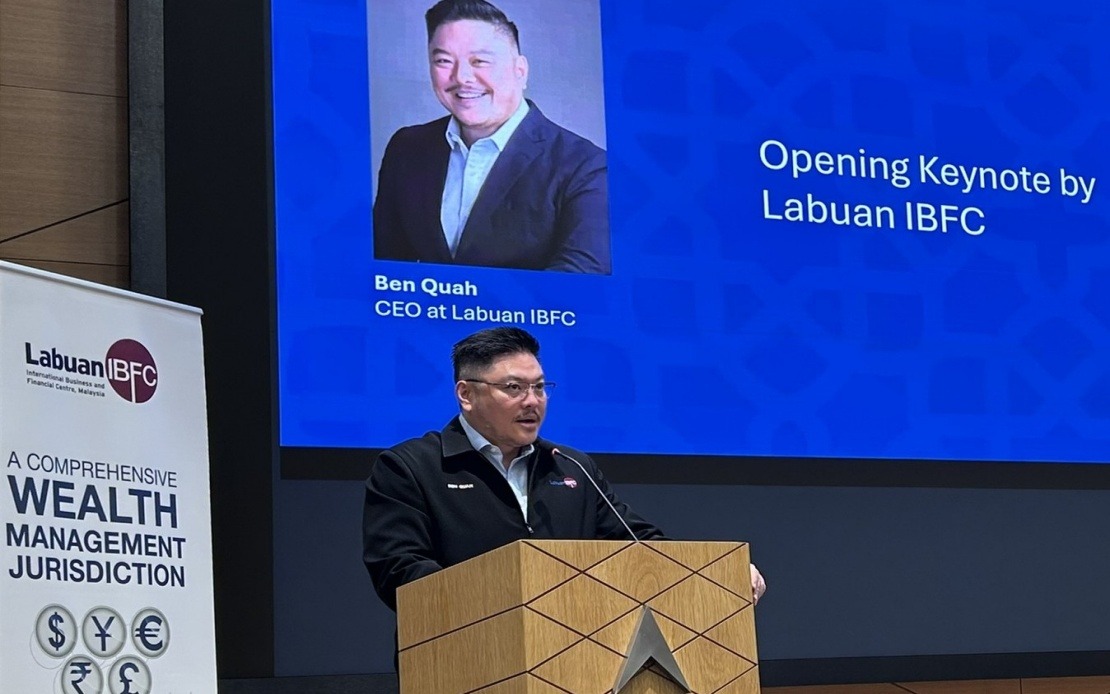
Three major industry bodies have joined forces to elevate standards in Islamic wealth planning, recognising that Muslim families increasingly require sophisticated, cross-border solutions to preserve and transfer assets according to Shariah principles. Labuan IBFC Inc, the marketing arm of Labuan International Business and Financial Centre, partnered with the Association of Shariah Advisors in Islamic Finance Malaysia (ASAS) and the Society of Trust and Estate Practitioners (STEP) Malaysia to host the Islamic Wealth & Legacy Forum 2026 in Kuala Lumpur, drawing together estate planners, Shariah advisers, wealth managers and legal professionals to examine contemporary challenges in asset preservation and succession planning.
The collaborative initiative reflects growing recognition that traditional Islamic inheritance law, or faraid, represents only one component of comprehensive estate planning for high-net-worth Muslim families. As wealth increasingly transcends national boundaries and comprises diverse asset classes—from real estate to financial instruments held across multiple jurisdictions—practitioners acknowledge the necessity for integrated frameworks that combine Shariah compliance with practical structuring mechanisms. The forum's organising theme, "Beyond Faraid: Islamic Wealth Governance, Labuan Structures and Legacy Continuity," signals a deliberate shift toward holistic planning that addresses the full lifecycle of family wealth management across generations.
Labuan IBFC, positioned as Malaysia's offshore financial centre, has positioned itself as a natural hub for facilitating Islamic private wealth solutions with international dimensions. Chief executive Ben Quah emphasised the centre's comparative advantage in offering asset protection and succession continuity for families whose members, businesses and investments span multiple countries. For Malaysian wealth owners seeking to establish family offices, trusts or holding structures that satisfy Shariah requirements while providing tax efficiency and liability protection, Labuan's regulatory framework and Islamic financial infrastructure offer distinct advantages over conventional international finance centres. This positioning becomes increasingly relevant as affluent Southeast Asian Muslim families seek to formalise succession arrangements that have historically relied on informal mechanisms or personal relationships.
The forum structure deliberately brought together complementary expertise from three distinct professional communities. STEP Malaysia, representing trust and estate practitioners, contributes technical knowledge about cross-generational wealth transfer mechanisms and fiduciary administration. Labuan IBFC supplies understanding of international structuring, regulatory environments, and the specific vehicles available through Malaysia's offshore centre. ASAS provides the essential Shariah perspective, ensuring that whatever structures are employed—whether trusts, takaful insurance products, or holding companies—remain fundamentally aligned with Islamic legal principles and religious intent. This tripartite approach acknowledges that effective Islamic wealth planning cannot function as the domain of any single professional discipline, but rather demands sustained dialogue between administrators, financiers and religious scholars.
Practical estate administration challenges formed the foundation for substantive discussions. Participants examined how Muslim family assets should be managed during the administration period following death, including identification of estate assets across jurisdictions, settlement of liabilities, and the division process itself. A key insight emerging from such forums concerns the potential friction between Islamic inheritance principles and modern asset structures—a widow's contractual entitlements under Shariah may conflict with how a family business is legally structured, or investment portfolios held in trusts may not distribute according to faraid formulas without explicit planning. These technical problems cannot be solved through Quranic interpretation alone; they require collaborative design between estate administrators familiar with asset realities and Shariah scholars understanding both classical jurisprudence and contemporary practice.
Governance and documentation received particular emphasis, reflecting recognition that many Muslim families with substantial wealth lack adequate structures for implementing succession intentions consistently with religious obligations. Written succession plans, properly documented governance arrangements, and transparent communication among beneficiaries represent foundational practices often neglected in family contexts where matters of inheritance remain subjects of discomfort or remain entirely unaddressed. The forum highlighted how professional documentation—establishing clear family governance mechanisms, defining trustee responsibilities, and formalising the Shariah parameters within which wealth structures operate—provides practical mechanisms through which families can ensure their intentions survive generational transitions without dispute or deviation from religious principles.
The afternoon sessions demonstrated how various financial vehicles can operationally support Islamic wealth objectives. Takaful insurance, increasingly sophisticated trust arrangements, and family holding companies each serve specific functions in protecting assets, managing liquidity, and facilitating smooth transitions when family members die or face changed circumstances. Labuan IBFC's particular offering includes structures designed specifically for Islamic private wealth, providing flexibility unavailable through conventional international finance centres. For Malaysian families with business interests spanning Southeast Asia or with expatriate members holding assets in multiple countries, these offshore structures allow consolidated family wealth governance while maintaining Shariah compliance and tax efficiency.
ASAS's contribution to the partnership carries particular significance given its role in maintaining Shariah standards across Islamic finance more broadly. The association's emphasis on Shariah governance ensures that wealth plans are not merely compliant with religious law in their intended outcome but are properly structured, documented and administered in ways that satisfy both the letter and spirit of Islamic principles. The concept of Maqasid Shariah—the underlying purposes and principles animating Islamic law—provides the philosophical framework through which wealth management becomes understood not merely as a technical exercise but as fulfilling religious obligations toward family and community. This perspective introduces a dimension absent from purely secular wealth planning, grounding the entire enterprise in faith-based understandings of stewardship and intergenerational responsibility.
The forum's emphasis on ecosystem strengthening reflects understanding that no single institution can adequately serve the Islamic wealth planning sector. Labuan IBFC Inc has formalised its partnership with ASAS through a memorandum of understanding, creating institutional mechanisms for ongoing collaboration rather than one-off events. Such arrangements enable Shariah scholars to review Labuan structures for compliance, facilitate knowledge-sharing between offshore administrators and religious advisers, and establish standards that individual practitioners can follow. For STEP Malaysia practitioners increasingly encountering Muslim clients with complex international holdings, access to Shariah expertise through such partnerships elevates service quality and reduces risk of inadvertently structuring arrangements that may technically function but fail to satisfy clients' religious obligations.
The timing of this initiative reflects broader trends in Islamic finance maturation across Southeast Asia. Malaysia's position as the global leader in Islamic finance increasingly includes sophisticated wealth management components, extending beyond banking and insurance into the structuring of family enterprises and intergenerational wealth transfer. As second and third-generation owners of family businesses built during Malaysia's post-independence growth phase now confront succession challenges, professional frameworks for Islamic wealth planning become increasingly relevant. This is not merely a matter of regulatory compliance or tax efficiency; for many Malaysian Muslim families, ensuring that wealth transition occurs according to religious principles represents a core value that supersedes conventional financial metrics.
The practical challenges highlighted at the forum underscore why professional collaboration has become essential. A Malaysian entrepreneur who built significant wealth while working across ASEAN faces complex questions: Should the business itself be transferred to the next generation, sold to external buyers, or managed through a family office structure? How should different children's inheritance entitlements be balanced against their varying roles in family enterprises? What legal structures, established in Labuan or other jurisdictions, would allow the family to make these determinations while maintaining Shariah compliance and minimising future disputes? These questions demand integrated expertise that no individual professional—however talented—can fully provide in isolation.
The broader significance of this initiative extends beyond individual family planning to systemic capacity-building within Malaysia's Islamic financial ecosystem. By establishing institutional frameworks through which estate practitioners, financial advisers, and Shariah scholars engage systematically on wealth planning matters, the partnership helps professionalise an area that has historically relied on informal arrangements and family relationships. This professionalization serves multiple constituencies: families benefit from improved advice and documented arrangements that reduce post-death disputes; professionals gain clearer standards and expanded opportunities; and religious principles receive more rigorous expression in contemporary contexts far removed from classical Islamic jurisprudence. For Malaysia's aspirations as an Islamic finance leader, such initiatives demonstrate the sector's capacity to address sophisticated real-world problems while maintaining commitment to religious principles, positioning the country as a destination not merely for banking transactions but for comprehensive wealth governance serving the Muslim world's affluent families.

