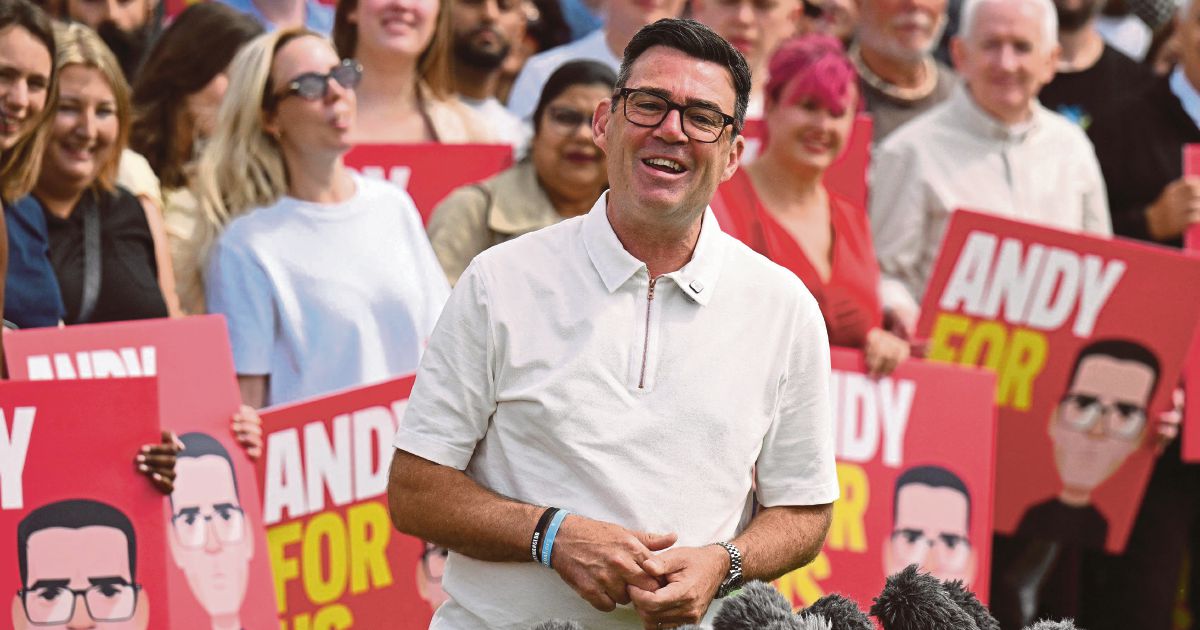
Andy Burnham has taken the oath as Britain's seventh Prime Minister in just ten years, signalling a potential shift in the political landscape following sustained periods of turbulent governance. The Labour politician, who established his reputation through his tenure as mayor of Manchester, inherits a nation grappling with multifaceted challenges that dominated recent election campaigns and continue to shape public sentiment across the United Kingdom.
Burnham's rise to the premiership represents a notable departure from the preceding political establishment in Westminster. His background managing one of England's major urban centres has positioned him as an outsider figure within traditional elite circles, a characteristic that resonates with voters fatigued by conventional politics. The epithet 'King of the North' reflects his deep roots in the northern regions, where he built credibility tackling regional inequalities and advocating for devolved decision-making powers away from the capital's centralised control.
Central to Burnham's early messaging is the promise to fundamentally restructure British governance and priorities through what he terms "rewiring" the nation. This framing suggests not merely incremental adjustments but substantive organisational change designed to redirect governmental focus towards tangible improvements in citizens' lives. The emphasis on rewiring rather than reform carries implications of systemic overhaul, indicating his administration intends to challenge entrenched institutional practices that observers argue have perpetuated inefficiencies across public service delivery.
The cost-of-living crisis remains the most pressing concern for ordinary Britons, with inflation having strained household budgets across income demographics for extended periods. Burnham's acknowledgement of this challenge signals alignment with public priorities, particularly among working families and pensioners who bore the brunt of economic pressures. His northern background provides him credibility on this issue, given that regions outside London typically experience sharper cost pressures and possess fewer alternative income sources than the prosperous south-east.
Public service deterioration has become synonymous with British governance during the preceding decade, encompassing the National Health Service, education, transport infrastructure, and social care systems. These sectors face staffing shortages, underfunding relative to demand, and accumulated maintenance deficits that compound service failures affecting millions daily. Burnham's explicit commitment to address these problems suggests his administration recognises that declining public service quality directly correlates with eroding institutional trust and electoral support.
The appointment reflects broader dynamics within the Labour Party following electoral adjustments in recent years. Burnham's elevation indicates a willingness among party leadership to embrace figures with executive experience managing substantial organisations and communities, rather than exclusively Westminster-focused politicians. His administrative background managing Manchester offers practical experience in navigating bureaucratic systems, negotiating with various stakeholders, and implementing programmes affecting urban populations.
For Malaysian observers and Southeast Asian policymakers, Burnham's ascension warrants attention regarding approaches to regional governance and service delivery. Many Commonwealth nations, including Malaysia, face comparable challenges balancing centralised federal authority with regional representation and devolving decision-making to areas better positioned to understand local needs. The British experiment under Burnham may provide useful insights into whether decentralising certain governance functions whilst maintaining national coherence proves effective addressing persistent regional disparities and citizen dissatisfaction.
The unprecedented frequency of prime ministerial changes in Britain over the past decade—seven leaders in ten years—reflects deeper institutional instability and voter volatility affecting established democracies worldwide. This pattern suggests electoral systems and party structures may struggle adapting to rapidly changing public expectations and fragmented political consensus. Burnham's appointment represents an opportunity to stabilise governance, though analysts remain sceptical whether any single leader can meaningfully alter trajectories established across multiple electoral cycles of underinvestment and institutional decline.
Burnham's communication strategy emphasising rewiring and fundamental change may prove consequential in managing public expectations. Voters sceptical of incremental improvements may respond positively to rhetoric suggesting deeper transformation, though translating campaign promises into legislative reality invariably encounters procedural, fiscal, and political constraints. His success will ultimately depend upon whether concrete policy outcomes materialise addressing the cost-of-living squeeze and demonstrating measurable improvements across health, education, and social services within timeframes matching public patience.
The regional dimension of Burnham's premiership also carries symbolic weight for devolved administrations in Scotland, Wales, and Northern Ireland, which maintain their own governance structures and electoral mandates. His commitment to addressing regional concerns may reshape relationships between Westminster and devolved authorities, potentially reducing tensions that characterised preceding administrations. However, reconciling England's regional disparities remains complex, requiring sustained investment in northern infrastructure and economic development unlikely delivered through rhetorical promises alone.

