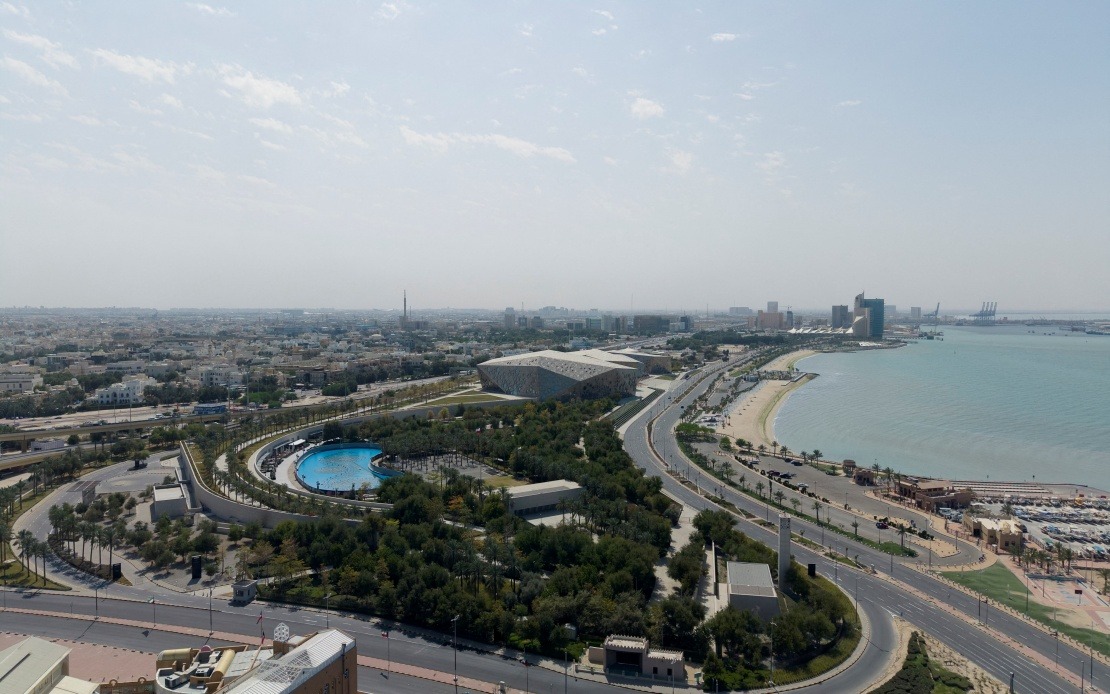
Kuwait's military announced Wednesday morning that its air defence systems were actively engaging incoming drones in what it described as a hostile Iranian attack. The country's armed forces confirmed that explosive sounds heard across various parts of the nation would stem from defensive operations aimed at intercepting the unmanned aircraft before they could reach their targets. Authorities requested residents to adhere to safety protocols distributed by official channels, emphasising the need for public calm during the unfolding security situation.
The attack targeted at least one unspecified location within Kuwait, with reports confirming that firefighting crews had successfully extinguished a blaze at the site struck by the Iranian assault. Despite the apparent scale of the incident, Kuwaiti officials reported no casualties from the initial attack or subsequent air defence responses. The deliberate withholding of specific details regarding the target's nature and precise location reflected broader Gulf state security protocols adopted during periods of heightened military activity.
The incident immediately reverberated across the wider Gulf region. Neighbouring Bahrain's Interior Ministry activated air raid sirens and instructed citizens and residents to retreat to designated safe locations, though the island nation reported no direct impacts from attacks on its territory. Bahrain's Defence Force had previously disclosed that its own air defence network had successfully neutralised what it termed treacherous Iranian aerial operations occurring the previous day. These coordinated responses underscored how deeply interconnected the security situations of Gulf Cooperation Council states had become.
These defensive actions occurred against a backdrop of escalating military brinkmanship between Washington and Tehran. The United States had conducted strikes against Iranian targets, prompting retaliation from Tehran through attacks directed at American military installations scattered throughout the region. Despite these dangerous exchanges, diplomatic efforts pursued through Pakistani mediation continued, with officials working toward a memorandum of understanding designed to de-escalate hostilities and establish a durable peace framework.
The Strait of Hormuz remained the central flashpoint in these confrontations, representing both the geographical and strategic nexus of American-Iranian friction. Control over maritime routes through this vital chokepoint carries immense consequences for global energy markets and international commerce. The frequency of military incidents within and around the strait had intensified markedly, with each new attack raising fears that miscalculation or escalation could trigger broader regional conflict.
For Malaysia and Southeast Asian observers, the renewed Gulf tensions carry significant implications. The region's oil and liquefied natural gas exports represent crucial energy sources for Asian economies, with supply disruptions potentially rippling through markets as far as the Indo-Pacific. Malaysian energy importers face exposure to price volatility triggered by Middle Eastern instability, affecting everything from petrochemical feedstock costs to electricity generation expenses. Several Malaysian firms maintain investments and operations throughout the Gulf, placing their personnel and assets in proximity to active military operations.
The pattern of tit-for-tat escalation evident in recent weeks suggests that neither the United States nor Iran shows signs of stepping back from confrontation despite diplomatic initiatives. Pakistani mediation efforts, while symbolically important, have not yet yielded tangible restraint from either side. The existence of multiple armed factions, proxy forces, and non-state actors operating within the region complicates efforts to establish clear communication channels and mutual understandings. Even with formal agreements in place, enforcement mechanisms remain weak and trust between principals remains extraordinarily low.
The air defence activations in Kuwait and Bahrain demonstrate how rapidly and extensively Iranian military capabilities can project power across the Gulf. The deployment of drone swarms against fixed targets within neighbouring countries indicates advancing technological sophistication and operational reach. American forces, despite their overwhelming conventional superiority, have not successfully prevented Iranian attacks, suggesting limits to existing defensive architecture and the challenges posed by dispersed, low-cost unmanned systems.
Regional governments face a delicate balancing act between maintaining security partnerships with the United States and preserving their own sovereignty and avoiding entanglement in direct American-Iranian conflict. Kuwait and Bahrain, as smaller Gulf states, occupy especially precarious positions geographically and strategically. Their responses to Iranian attacks must demonstrate sufficient resolve to maintain credibility with American security guarantors while avoiding escalation that could trigger disproportionate Iranian retaliation against civilian infrastructure.
The humanitarian dimensions of sustained military tensions merit attention as well. Civilian populations across Kuwait, Bahrain, and other Gulf states experience genuine fear during air raids and activation of defensive systems, even when actual casualties remain limited. The psychological toll of repeated security alerts, combined with economic uncertainty stemming from potential supply disruptions and market volatility, creates broader societal stress that extends well beyond official casualty counts. Schools, hospitals, and commercial activities in affected areas require contingency planning for potential further incidents.
International responses to these incidents have remained measured but concerned. Global powers including China, Russia, and European nations have emphasised their commitment to freedom of navigation and stability in the Gulf. However, their ability to exercise moderating influence remains constrained by competing interests and limited leverage over principal actors. The absence of multilateral mechanisms capable of swiftly addressing crisis situations increases reliance on bilateral diplomacy and third-party mediation of uncertain effectiveness.
Looking forward, the trajectory of American-Iranian confrontation will significantly shape regional stability and global energy markets for months ahead. Escalation risks remain elevated despite diplomatic efforts, with each new incident expanding the range of potential targets and introducing greater operational complexity. Southeast Asian governments and businesses should maintain elevated vigilance regarding developments in the Gulf while exploring diversification strategies to reduce vulnerability to supply disruptions emanating from this troubled region.

