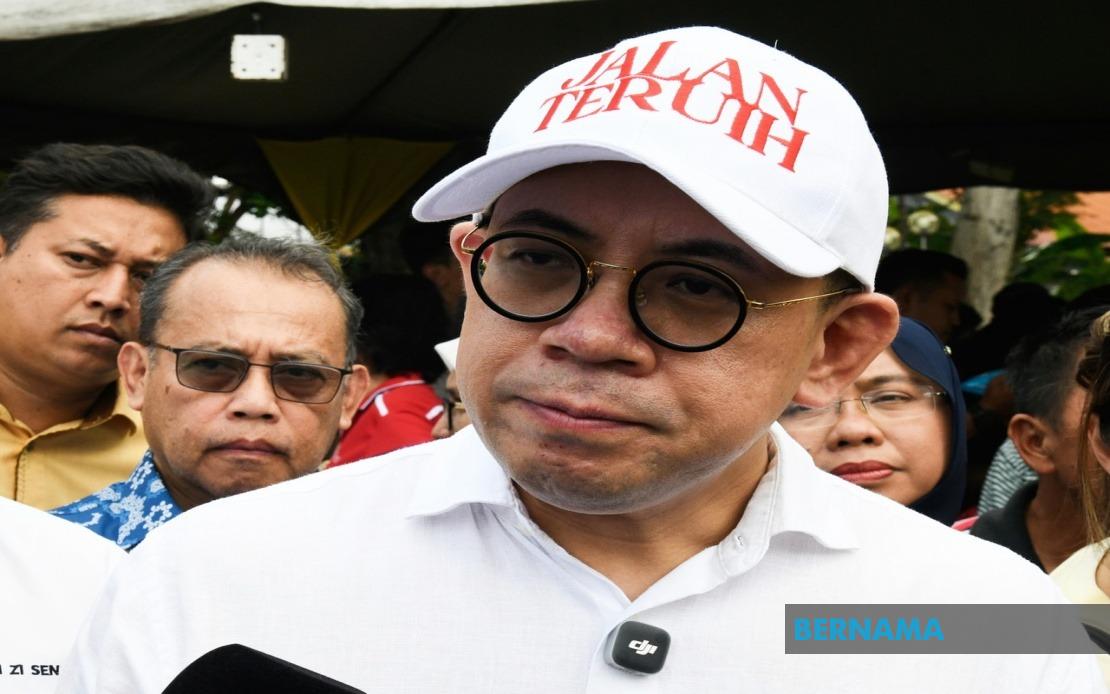
The Ministry of Entrepreneur Development and Cooperatives (KUSKOP) has embarked on an ambitious consultation process across the nation to solicit feedback and recommendations from stakeholders ahead of the 2027 federal budget formulation. Minister Steven Sim Chee Keong announced the initiative during an event in Bukit Mertajam, signalling the ministry's commitment to building a budget that directly responds to the needs of Malaysia's entrepreneurial community and cooperative sector. This engagement represents a structured effort to ensure that businesses operating in the micro, small and medium enterprises space have meaningful input into government fiscal planning.
The consultation process is expected to span one to two months and involves extensive discussions with diverse stakeholder groups including business owners, entrepreneurs, industry associations, traders' unions, and cooperative representatives. The timing aligns with Malaysia's standard budget preparation cycle, allowing KUSKOP to consolidate findings and forward consolidated recommendations to the Ministry of Finance well ahead of the October presentation date. Sim emphasised that the engagement had in fact been ongoing throughout the year, with these formal consultations serving to deepen and systematise input collection as the budget deadline approaches.
Understanding the framework guiding this consultation exercise is crucial for Malaysian businesses seeking to influence policy direction. KUSKOP has adopted what it terms the ABCD framework, a strategic approach encompassing four pillars. Productivity Transformation aims to enhance operational efficiency across enterprises, while Bureaucratic Simplification seeks to reduce red tape that often hampers small business growth. Access to Capital directly addresses one of Malaysia's persistent challenges for SMEs, and Market Accessibility focuses on removing barriers that prevent smaller firms from scaling and competing nationally and internationally. This structured approach reflects government thinking about what genuinely constrains MSME development beyond general support measures.
Within this framework, KUSKOP's priorities for the upcoming budget centre on three concrete outcomes. First, the ministry is advocating for enhanced funding allocations specifically directed toward the MSME and cooperative sectors, recognising that capital remains a critical bottleneck for expansion and innovation. Second, the ministry seeks to negotiate for measures that would reduce the operating cost burden on small businesses, whether through tax incentives, regulatory relief, or utility subsidies. Third, KUSKOP wants to improve how government agencies deliver services to the entrepreneurial sector, acknowledging that even well-intentioned programmes often fail to reach businesses due to poor accessibility or complex application procedures.
The budget consultation process must be understood within Prime Minister Datuk Seri Anwar Ibrahim's broader economic philosophy. As both Prime Minister and Finance Minister, Anwar has consistently articulated a vision where economic growth serves ordinary Malaysians' living standards rather than existing as an abstract statistic. The upcoming 2027 budget will begin formulation next month, with Anwar having indicated that this principle will continue guiding fiscal decisions. For the MSME sector specifically, this philosophy has practical implications: support measures should demonstrably improve business profitability and worker compensation rather than merely appearing to boost aggregate figures.
KUSKOP's consultation approach also reflects recognition that SMEs and cooperatives represent a substantial portion of Malaysia's economic base and employment. These enterprises collectively employ millions and contribute significantly to GDP, yet historically receive proportionally modest budget allocations relative to their economic importance. By creating formal channels for stakeholder input, KUSKOP is attempting to correct this imbalance and ensure that the budget eventually presented reflects grassroots business realities rather than top-down assumptions about entrepreneurial needs.
The ministry simultaneously launched the 2026 KUSKOP MADANI Sales Programme during the Bukit Mertajam event, providing immediate context for why detailed budget planning matters. This initiative, now in its sixth iteration in Penang, demonstrates KUSKOP's practical commitment to supporting both consumers and businesses simultaneously. The programme offered approximately 80 varieties of goods at substantial discounts ranging from 20 to 30 percent, allowing residents to reduce living expenses while providing cooperatives and enterprises direct sales channels. Such programmes represent the tactical implementation of the broader strategic vision that the budget will help fund and expand.
The programme's infrastructure demonstrates government service delivery innovation as well. Thirteen government agencies participated, representing federal ministries, state government departments, and local authorities. This integration brought diverse services—from health and education to social support—directly to consumers rather than requiring them to navigate bureaucratic centres. For businesses and entrepreneurs, such integration into government service delivery platforms creates visibility and potential networking opportunities that cash-strapped startups might otherwise lack.
Regional context matters for understanding Malaysia's budget planning approach. Southeast Asian nations face varied fiscal pressures as global economic growth moderates and geopolitical tensions complicate trade flows. Malaysia's approach of explicitly linking budget formulation to sectoral consultations contrasts with some neighbours' more centralised processes, potentially generating greater stakeholder buy-in but also requiring institutional capacity to synthesise diverse inputs. The success of KUSKOP's consultation exercise will partly determine whether this inclusive model becomes replicable across other ministries and budget cycles.
For Malaysian entrepreneurs and cooperative members, the coming months present a genuine opportunity to influence policy direction, though participation requires proactive engagement. Trade associations and chamber of commerce representatives attending KUSKOP sessions essentially negotiate on behalf of their constituencies, making it essential that individual businesses communicate concerns upward through these representative bodies. The stakeholder engagement process works only when constituencies actively participate rather than passively assuming government will somehow divine their needs.
The 2027 budget cycle timing deserves note for businesses undertaking strategic planning. If proposals submitted now successfully influence budget allocations announced in October, implementing agencies would typically begin rolling out new programmes or modified schemes in 2027. Entrepreneurs planning capital investments, market expansion, or operational restructuring should anticipate potential policy changes and remain flexible enough to capitalise on new support mechanisms that may emerge. Conversely, those operating on existing subsidy or incentive schemes should assess likely changes rather than assuming status quo continuation.

