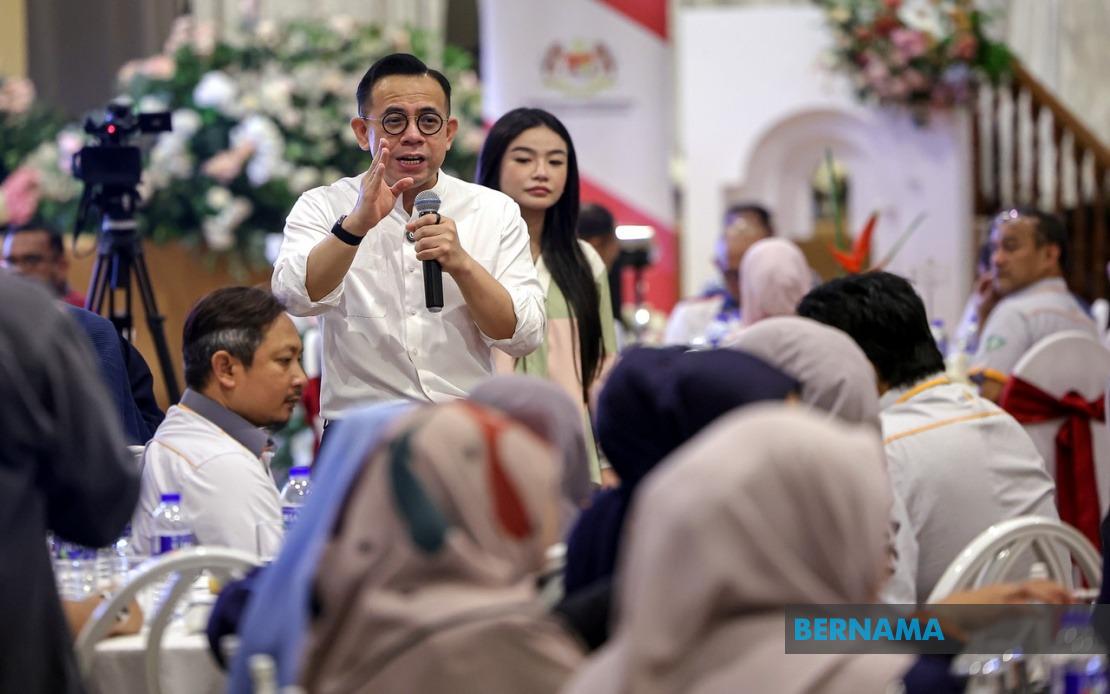
The Ministry of Entrepreneur Development and Cooperatives (KUSKOP) has injected nearly RM7 billion into Malaysia's entrepreneurial ecosystem during the opening half of 2026, channelling support to more than 213,000 micro, small and medium enterprises across the country through its flagship Power Up 10K initiative. Minister Steven Sim disclosed this achievement during an assembly in Seremban, highlighting the government's substantial commitment to strengthening business foundations amid volatile global market conditions.
The disbursement represents significant progress toward KUSKOP's ambitious RM15 billion annual target, suggesting the ministry remains on course to double its first-half expenditure by year-end. This trajectory underscores a deliberate acceleration in support mechanisms designed to fortify the MSME sector, which constitutes the backbone of Malaysia's employment landscape and export capabilities. The funding flows through multiple financing and support programmes bundled under the Power Up 10K framework, each tailored to address specific entrepreneurial needs across different business maturity levels.
At the state level, Negeri Sembilan received RM345 million under the Power Up programme, reaching approximately 6,600 entrepreneurs within its borders. This regional allocation demonstrates KUSKOP's commitment to equitable distribution beyond urban economic hubs, ensuring that business owners in smaller states gain access to capital and assistance. The minister emphasised that such targeted disbursement proves government support mechanisms have penetrated grassroots communities effectively, counteracting perceptions that assistance programmes primarily benefit connected or well-resourced applicants.
Sim articulated KUSKOP's strategic reorientation, positioning all ministry agencies as responsive frontline service providers rather than passive funding custodians. This philosophical shift carries practical implications: agencies must actively pursue business-friendly practices including expanded access to resources, streamlined administrative procedures, and reduced compliance burdens. The minister recognised that while external economic pressures—particularly commodity price volatility—remain beyond governmental control, bureaucratic friction represents a controllable variable that directly impacts entrepreneurial competitiveness and survival rates.
The emphasis on reducing compliance costs reflects pragmatic policymaking. Malaysian entrepreneurs frequently cite regulatory complexity and administrative requirements as significant impediments to growth, alongside financing constraints. By lowering the transaction costs associated with accessing government support, KUSKOP effectively increases the real value of its financial disbursements. An entrepreneur saving 50 working hours navigating paperwork gains equivalent advantage to receiving a modest cash top-up, yet such efficiency improvements receive less publicity than headline funding figures.
Sim's directive to state-level agencies introduced an intriguing competitive dimension to the support infrastructure. Rather than operating on first-come-first-served principles, KUSKOP agencies should proactively identify and reach underutilised entrepreneurs through intensified roadshows and outreach campaigns. This shift from reactive to proactive service delivery acknowledges that many potential beneficiaries remain unaware of available schemes or lack confidence navigating application processes, particularly in rural or non-traditional business communities.
The minister's call for amplified promotional efforts across digital and physical channels reflects contemporary realities of business communication. Social media platforms provide cost-effective mechanisms for disseminating programme information to younger entrepreneurs, while targeted roadshows remain essential for reaching older business owners and community leaders who influence local entrepreneurial ecosystems. The combination addresses the diverse communication preferences within Malaysia's fragmented MSME community, from tech-savvy digital natives to established traders rooted in traditional commerce.
For Malaysia's broader economic strategy, the Power Up 10K initiative represents a countercyclical intervention during uncertain global conditions. Trade tensions, supply chain disruptions, and inflationary pressures create challenging operating environments, particularly for businesses lacking financial cushions or diversified markets. Government-backed financing and support programmes help absorb temporary shocks that might otherwise force permanent closures or retrenchment decisions, preserving employment capacity and entrepreneurial experience within the economy.
The initiative's scale—targeting over 200,000 businesses by mid-year—suggests KUSKOP operates at impressive administrative efficiency. Processing applications, conducting due diligence, and disbursing funds to this volume of recipients within six months demands sophisticated systems and considerable bureaucratic capacity. Successful execution indicates either significant pre-existing infrastructure or substantial recent investment in administrative modernisation, both promising developments for programme sustainability.
Regionally, Malaysia's MSME support approach offers lessons for neighbouring Southeast Asian economies grappling with similar entrepreneurial financing challenges. Thailand, Indonesia, and the Philippines maintain comparable MSME populations yet face chronic underfinancing relative to economic potential. KUSKOP's emphasis on accessibility and administrative simplification provides a policy template adaptable across different regulatory contexts and development levels, though success ultimately depends on implementation rigour and sustained political commitment.
The minister's statements reveal strategic sophistication in entrepreneurship policy. Rather than debating whether government should support businesses—increasingly accepted across ideological divides—KUSKOP focuses on optimising delivery mechanisms and maximising reach. This represents mature policymaking that accepts persistent market imperfections in credit allocation while maintaining pragmatic expectations about intervention effectiveness and economic sustainability.
Looking forward, the ministry faces challenges beyond funding availability. Ensuring disbursed capital actually improves business outcomes rather than accumulating as unproductive inventory requires improved monitoring systems and beneficiary education. Similarly, building sustainable, commercially viable enterprises demands complementary interventions in skills development, market linkages, and digital transformation—areas where government support can catalyse but not monopolise responsibility.
The Power Up 10K initiative's trajectory through 2026 will largely determine whether Malaysia successfully insulates its entrepreneurial sector from global economic headwinds. The RM7 billion distributed thus far provides meaningful relief and opportunity, yet true success metrics extend beyond funding volume to measurable improvements in business survival rates, employment stability, and sectoral productivity growth.

