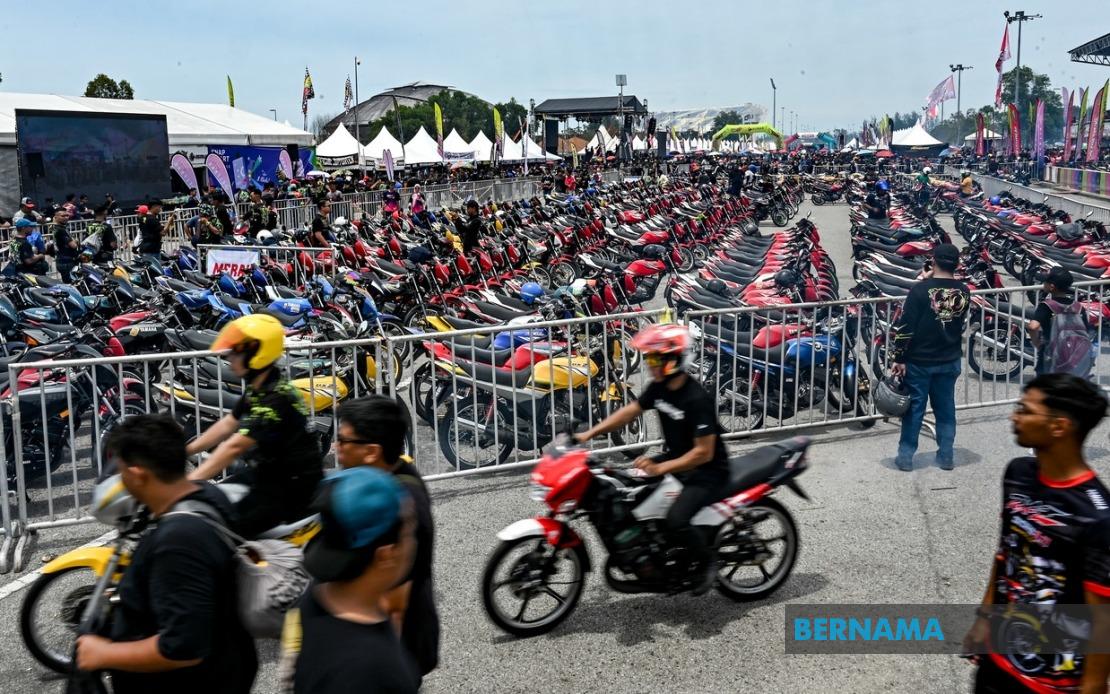
The Kuala Terengganu City Council (MBKT) has incurred substantial expenses managing waste generated by the RXZ Members 8.0 event, which drew more than 100,000 attendees to the Gong Badak Motor Racing Circuit near Kuala Nerus last weekend. The council's clean-up bill reached RM40,000, a considerable sum that underscores the infrastructure challenges facing local authorities when hosting large-scale public gatherings in Malaysian cities. This expenditure, according to MBKT's mayor Lizan Che Mamat, reflects the unanticipated scale of litter left behind despite organisers providing adequate refuse collection facilities throughout the venue.
The financial outlay encompasses multiple operational expenses incurred during the intensive clean-up phase. Staff overtime payments, the deployment of additional waste transport vehicles, and extended working shifts at the Sungai Ikan landfill facility collectively drove up the council's costs significantly. These expenditures reveal the hidden infrastructure burden that event organisers often leave for municipal authorities to absorb, particularly when attendance projections are exceeded. The 130 tonnes of solid waste collected from the event site—predominantly comprising food and beverage packaging—exceeded initial waste management capacity estimates, necessitating expanded operations across multiple departments.
What distinguishes this incident as particularly noteworthy is the paradox of littering despite comprehensive provision of refuse receptacles. Lizan acknowledged that while organisers had distributed numerous rubbish bins throughout the Gong Badak venue, attendees nevertheless scattered waste indiscriminately across the grounds. This behavioural disconnect highlights a persistent challenge in event management across Southeast Asia: the gap between infrastructure provision and public compliance with waste segregation practices. The mayor's candid observation suggests that problem lies not merely with insufficient facilities but with attendee discipline and environmental consciousness.
The council leadership recognised, however, that the sheer volume of visitors may have strained even well-designed collection systems. With attendance exceeding 100,000 people, the proportion of rubbish bins to attendees potentially fell below optimal thresholds, creating bottlenecks where waste accumulated beyond bin capacity. This mathematical reality presents local authorities across the region with a planning dilemma: provisioning infrastructure for peak crowds increases costs substantially and may remain underutilised during normal operations. Balancing adequate provision against fiscal responsibility remains a perennial tension in municipal governance.
In response to this experience, MBKT has signalled intentions to revise its regulatory framework governing large-scale events. The council is considering requiring event organisers to submit comprehensive solid waste management plans as mandatory conditions for venue approval. This prospective policy shift would place responsibility for waste handling squarely on organisers' shoulders, encouraging them to invest in adequate collection infrastructure and waste transport logistics from the outset. Such measures have proven effective in other jurisdictions, distributing the financial burden more equitably between public authorities and private event managers.
Simultaneously, MBKT intends to review the cleaning deposits currently imposed on event organisers. These financial securities, intended to incentivise waste management compliance, evidently require recalibration following the RXZ Members 8.0 experience. Whether deposit levels are too modest to motivate meaningful behaviour change, or whether the enforcement mechanisms are inadequate, remains to be assessed. Adjusting deposit structures upward could discourage careless littering practices while generating revenue streams that partially offset municipal clean-up expenses.
The mayor's remarks also reflected recognition of the legitimate economic benefits that large-scale events generate for regional development. Terengganu has increasingly positioned itself as a destination for motorsport and entertainment activities, leveraging facilities like Gong Badak to attract tourism revenue and expand the local economy. This strategic objective creates genuine tension with environmental stewardship: authorities must balance promotional enthusiasm for events with realistic assessment of their ecological footprint and municipal servicing costs. Lizan's statement that "we welcome the organisation of large-scale activities" reflects this calculated ambivalence.
However, the mayor coupled this welcome with explicit messaging about shared environmental responsibility. His public comments effectively positioned waste management as a collective challenge requiring commitment from event organisers, venue operators, attendees, and municipal authorities alike. This framing moves beyond merely assigning blame to event organisers or individual litterers, instead invoking a citizenship narrative around environmental stewardship. For Malaysian municipalities increasingly hosting major events, this rhetorical approach may prove more constructive than punitive frameworks alone.
The RXZ Members 8.0 incident reveals broader systemic issues relevant to Malaysian local governance. As urbanisation accelerates and cities become focal points for diverse public gatherings, waste management infrastructure and enforcement mechanisms require proportionate investment. The RM40,000 expenditure, while significant, likely represents only a fraction of total municipal costs attributable to the event when environmental remediation, additional utility usage, and administrative oversight are factored comprehensively. These hidden costs merit inclusion in discussions about economic impact assessments for major events.
For event organisers across Malaysia and the Southeast Asian region, the MBKT experience offers instructive lessons about supply-chain planning for waste disposal. Organisers who partner with council authorities to assess waste management capacity, pre-position adequate collection infrastructure, and arrange certified disposal pathways ultimately build goodwill with local governments while reducing reputational risks. Conversely, cost-cutting approaches that under-invest in waste infrastructure often generate precisely the municipal resentment and future regulatory restrictions that MBKT now contemplates.
Looking forward, the council's intention to implement stricter waste management protocols for future events establishes precedent for other Malaysian municipalities facing similar challenges. As cities compete to host increasingly large gatherings, establishing clear expectations and enforcement mechanisms around environmental obligations becomes essential. The Kuala Terengganu case demonstrates that while hosting major events carries undeniable benefits for local economies and brand positioning, these advantages must be weighed against tangible costs to municipal infrastructure and environmental quality. Moving beyond this incident, MBKT's regulatory refinements may ultimately create more sustainable models for balancing growth objectives with environmental responsibility across Terengganu and beyond.

