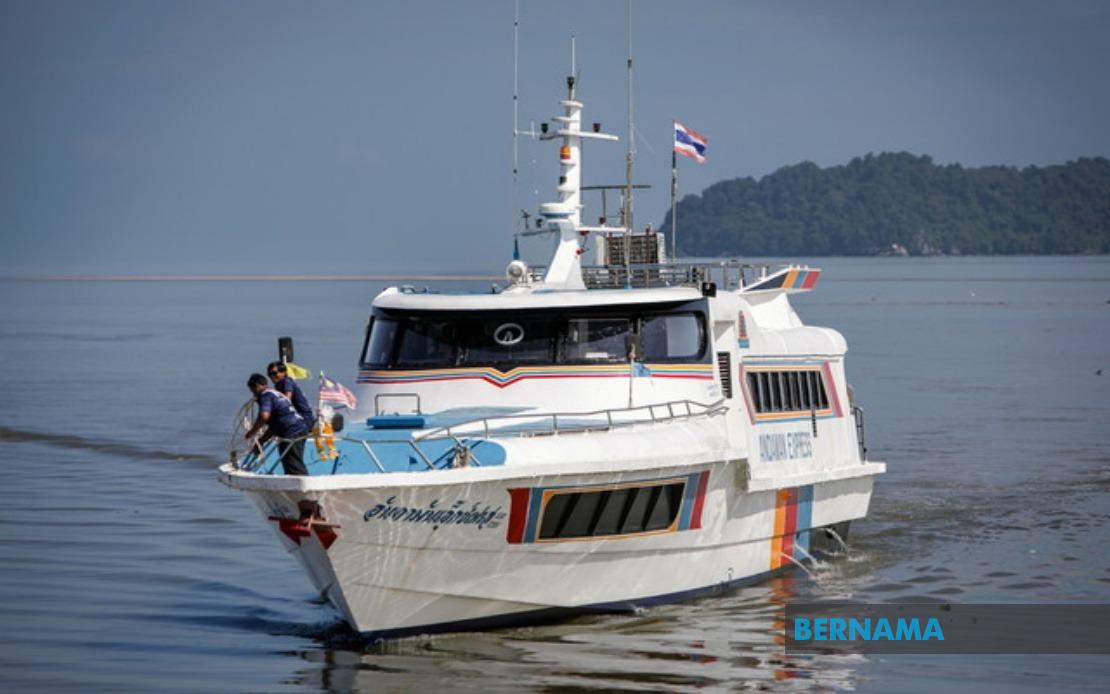
After more than three years of suspension, the maritime crossing between Malaysia and Thailand is set to reopen its doors when the Kuala Perlis-Satun ferry service commences regular operations this Thursday, July 9. The resumption marks a significant milestone in regional connectivity and cross-border commerce, with authorities on both sides positioning the initiative as a catalyst for tourism growth and economic revitalisation in the Perlis and Satun regions.
Perlis Menteri Besar Abu Bakar Hamzah underscored the strategic importance of the ferry's return during remarks made at Tammalang Jetty in Thailand yesterday, following a successful operational simulation. The crossing, dormant since the COVID-19 pandemic disrupted international travel and trade flows, represents more than a simple restoration of pre-pandemic services. Instead, state officials view it as an opportunity to forge deeper institutional ties between three UNESCO-recognised geopark destinations: the Perlis Geopark, Satun UNESCO Global Geopark, and Langkawi UNESCO Global Geopark. This tripartite framework promises to create new synergies in heritage tourism and sustainable development across the northern Malaysian-Thai border region.
The administrative machinery supporting the ferry's reopening has been comprehensively tested and validated. Authorities have confirmed that simulation exercises demonstrated smooth operations across all critical dimensions, including passenger and vehicle processing, safety protocols, and standard operating procedures. Multi-agency coordination involving Malaysia's Royal Customs Department, Immigration Department, and Marine Department has ensured compliance with regulatory requirements, while Thai counterparts have similarly completed their preparations to facilitate seamless border clearance on the Satun side.
Operationally, the service will launch conservatively with a single daily crossing, a measured approach that allows both Malaysian and Thai operators to calibrate schedules and address any operational challenges before scaling up frequency. Abu Bakar indicated that trip numbers will be increased incrementally based on passenger demand and commercial viability, preventing the costly mistakes of over-provisioning infrastructure without corresponding market uptake. This phased implementation reflects lessons learned from previous transport initiatives across the region.
Pricing considerations feature prominently in the state government's strategy to ensure the ferry becomes an attractive option for both leisure travellers and cross-border commuters. Discussions with ferry operators centre on maintaining competitive fares that rival alternative routes while preserving operator viability. Additionally, promotional pricing during the initial phase is being explored to incentivise early adoption and build customer loyalty. Such pricing intervention, though temporary, could prove instrumental in establishing the service as a preferred crossing point, particularly for tourists exploring the Geopark circuit spanning both countries.
Significant infrastructure investments complement the service resumption. The Kuala Perlis Roll-on-Roll-off Terminal is undergoing substantial upgrading works, including construction of a dedicated vehicular route designed to streamline ferry operations and reduce congestion during peak periods. These facility improvements respond to the specific demands of mixed passenger and vehicle ferries, which require separate processing streams to maintain operational efficiency. Enhanced terminal capabilities will be essential for managing the anticipated surge in cross-border traffic once the service gains market traction.
The three-jurisdiction governance structure proposed by the Perlis Menteri Besar represents an innovative institutional response to managing tourism development across an international maritime boundary. The establishment of a committee comprising representatives from Perlis, Satun, and Langkawi will create a dedicated forum for coordinating tourism promotion, harmonising destination marketing, and addressing operational challenges that inevitably arise in cross-border contexts. Such coordination mechanisms have proven effective in other regional contexts, particularly in managing visitor flows and preventing the competitive undermining that can occur when adjacent destinations operate in isolation.
For Malaysian travellers and entrepreneurs, the ferry reopening provides direct access to Satun's coastal attractions and geopark resources without the necessity of routing through overland checkpoints or undertaking longer journeys. The proximity of Satun to Perlis makes the maritime crossing an efficient choice for regional day-trippers and heritage tourists, particularly those engaged in the growing geopark tourism segment. Similarly, Thai visitors gain convenient access to Langkawi and Perlis, diversifying their options beyond conventional peninsular destinations and potentially extending average length of stay in northern Malaysian regions.
The economic implications extend beyond direct ferry operations to encompass broader hospitality, retail, and attraction sectors in both jurisdictions. Increased visitor flows stimulate demand for accommodation, dining, and entertainment services while generating employment opportunities in tourism-dependent communities. For Perlis particularly, which lacks major international tourism infrastructure compared to more developed Malaysian destinations, the ferry service represents a tangible mechanism for capturing regional leisure spending and establishing the state as part of a coherent cross-border tourism narrative rather than a peripheral location.
From a geopolitical perspective, the ferry reopening demonstrates sustained commitment to regional integration and people-to-people connectivity despite periodic strains in Malaysia-Thailand relations. The successful coordination of this project signals that both nations prioritise economic cooperation and mutual benefit, particularly in regions like Perlis-Satun where geographical proximity creates natural linkages that transcend national borders. The geopark framework adds a dimension of environmental stewardship and scientific tourism that elevates the venture beyond conventional commercial ferry operations, positioning it within broader sustainability narratives increasingly important to international travellers.
The timing of the reopening, occurring as travel patterns normalise post-pandemic, positions the ferry to capture pent-up demand for cross-border travel and regional exploration. Thai and Malaysian tourists alike have demonstrated renewed appetite for intraregional travel, and the ferry provides an appealing alternative to conventional overland or air routes. The combination of operational readiness, infrastructure investment, pricing strategy, and institutional coordination suggests that authorities have approached the reopening with appropriate seriousness and planning depth. However, the ultimate test will arrive in coming months when the service must convert promotional interest into sustained passenger volumes and operational profitability, a transition that frequently proves more challenging than the planning and infrastructure phases.

