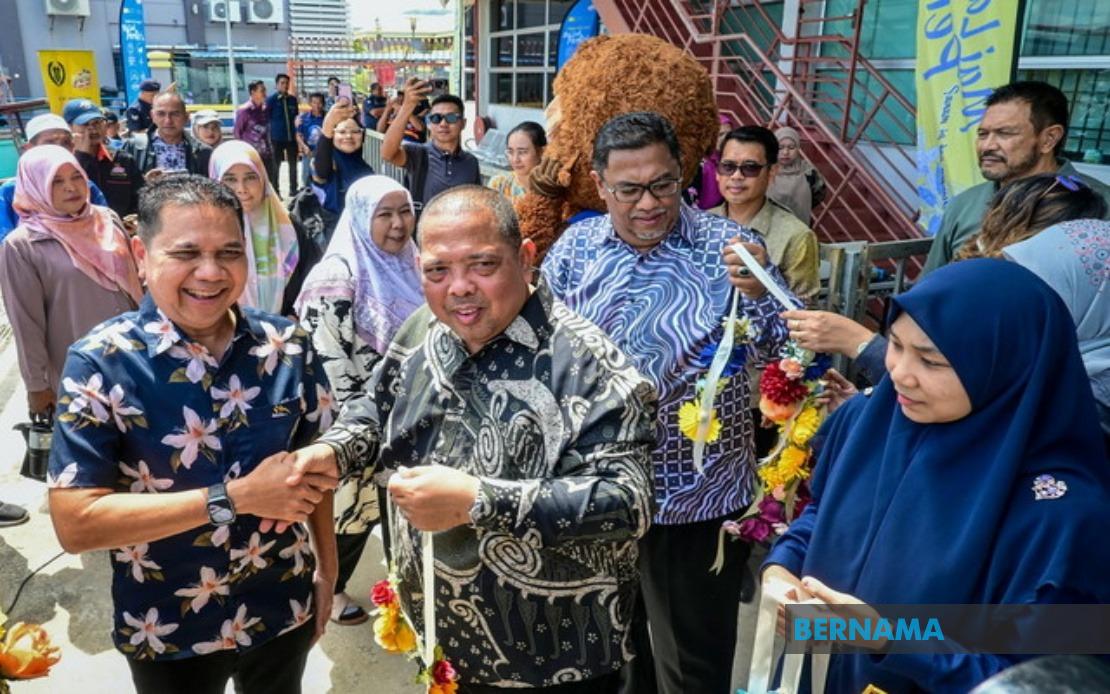
The Kuala Perlis-Satun ferry service has officially resumed operations, marking a significant milestone for Perlis tourism and bilateral connectivity with Thailand. Menteri Besar Abu Bakar Hamzah announced that the state anticipates welcoming between 5.5 million and six million tourists during 2024, bolstered by the reopening of this crucial maritime crossing that had remained suspended throughout the COVID-19 pandemic period. The reactivation represents more than a mere restoration of transport infrastructure; it symbolises the broader recovery and expansion of cross-border travel corridors in Southeast Asia as regional boundaries increasingly normalise.
The ferry link directly connects Kuala Perlis in Malaysia's northernmost state with Satun Province in southern Thailand, with each crossing taking approximately 40 minutes. This sea route offers travellers a distinctive alternative to conventional overland border crossings, providing not merely functional transportation but also an experiential journey featuring panoramic coastal vistas. The aesthetic and recreational dimensions of the voyage distinguish it from utilitarian land-based frontier passages, potentially attracting tourists specifically seeking novel travel experiences across the Andaman coastal region.
Abu Bakar emphasised that the ferry service facilitates bidirectional tourist flows, particularly anticipating increased numbers of Thai visitors utilising the route to access Perlis's shopping and commercial facilities. This cross-border retail dynamic carries substantial implications for local merchants and service providers throughout the state, creating employment opportunities and generating consumption-driven economic activity. The prospect of Thai shoppers accessing Malaysian goods and experiencing Perlis's hospitality sector represents a tangible revenue stream for communities traditionally positioned at Malaysia's periphery, potentially addressing developmental disparities between border regions and more centrally-located areas.
The reopening carries implications beyond tourism statistics and retail transactions. By providing an additional crossing point, the ferry service functions as a pressure valve for the Padang Besar border checkpoint, which experiences significant congestion particularly during Malaysian public holidays, school holidays, and festive seasons when cross-border travel surges. Distributing passenger flows across multiple crossing points enhances overall border processing efficiency and reduces waiting times, thereby improving traveller experience and reducing transportation costs associated with delays. This infrastructure redundancy strengthens regional mobility networks and reduces bottlenecks that historically constrained cross-border commerce and tourism.
The service also symbolises deepening Malaysia-Thailand cooperative frameworks, extending beyond formal diplomatic channels into practical people-to-people connectivity. Enhanced maritime links strengthen social and economic interdependencies between Perlis and Satun, potentially fostering collaborative regional development initiatives. Thai visitors experiencing Malaysian hospitality and retail environments develop personal connections with Malaysian destinations, while Malaysian travellers discovering Satun's attractions build cultural bridges that transcend official bilateral relations.
Yet the ferry route's current infrastructure faces technical constraints requiring investment. Menteri Besar Abu Bakar acknowledged persistent challenges with fluctuating water levels and shallow navigation channels that compromise berthing reliability. The state government is planning to install a floating pontoon system specifically engineered to accommodate tidal variations and shallow-water conditions, ensuring operational consistency throughout varying seasonal and meteorological circumstances. This engineering solution reflects sophisticated understanding of tropical maritime logistics and represents essential infrastructure adaptation.
Longer-term ambitions extend considerably beyond the current ferry operation. State authorities are actively exploring reactivation of the Kuala Perlis-Satun Roll-on/Roll-off service, which would facilitate vehicle transportation across the maritime crossing, fundamentally transforming cross-border vehicular mobility. More ambitiously, government planners are engaging investors regarding a proposed RM500 million megaproject comprising a two-kilometre bridge extending seaward to overcome chronic shallow-channel navigation impediments. Such an undertaking would represent transformative infrastructure rivalling Asia's most significant cross-border engineering initiatives, permanently reconfiguring transportation networks spanning Malaysia and Thailand.
The RM500 million bridge proposal warrants contextual examination. Large-scale maritime infrastructure projects across Southeast Asia frequently encounter extended development timelines, financing complexities, and geopolitical considerations. The Padang Besar-Satun bridge proposal, if realised, would necessitate sustained bilateral coordination, environmental impact assessments, and alignment with both nations' long-term development strategies. Historical precedents from comparable cross-border bridge initiatives across the region suggest that conceptualisation and realisation phases typically span multiple years, requiring persistent political commitment transcending electoral cycles.
For Malaysia's broader tourism ecosystem, Perlis's growth trajectory holds symbolic significance. Often overshadowed by more economically prominent states, Perlis's tourism expansion demonstrates how strategic infrastructure investments in peripheral regions generate measurable returns. The ferry resumption exemplifies how border communities, positioned strategically within Southeast Asia's increasingly integrated tourism networks, can leverage geographical advantages to develop competitive advantages. This model potentially offers instructive lessons for comparable border communities throughout Malaysia seeking to maximise cross-border tourism potential.
The Kuala Perlis-Satun service also reflects post-pandemic recalibration of regional travel patterns. As international tourism recovers, neighbouring countries increasingly prioritise convenient, distinctive travel experiences. Maritime crossings, distinguished from routine land passages, appeal to experiential travellers seeking memorable journeys. The 40-minute passage, combining transportation functionality with scenic appreciation, positions the ferry as a tourist attraction rather than merely transit infrastructure.
Looking forward, success depends on consistent marketing, competitive pricing structures, and reliable operational scheduling. Regional governments must coordinate promotion efforts highlighting the ferry's distinctive positioning within Southeast Asia's broader tourism landscape. Furthermore, operational reliability proves critical; any extended disruptions or scheduling inconsistencies could undermine confidence among Thai and Malaysian travellers and diminish tourism forecasts. Investment in modern maritime vessel technology and professional crew training should receive priority attention alongside infrastructure development.
Ultimately, the Kuala Perlis-Satun ferry resumption represents convergence of multiple beneficial outcomes: enhanced tourism revenues for Perlis, diversified border-crossing options, strengthened Malaysia-Thailand relations, and validation of border communities' development potential. Whether this reopening ultimately generates the projected 5.5 to six million tourist arrivals remains contingent upon consistent service delivery, strategic marketing, and broader regional tourism trends. Nevertheless, the ferry's resurrection demonstrates renewed confidence in cross-border integration and border regions' capacity to drive economic growth within Southeast Asia's increasingly interconnected tourism networks.

