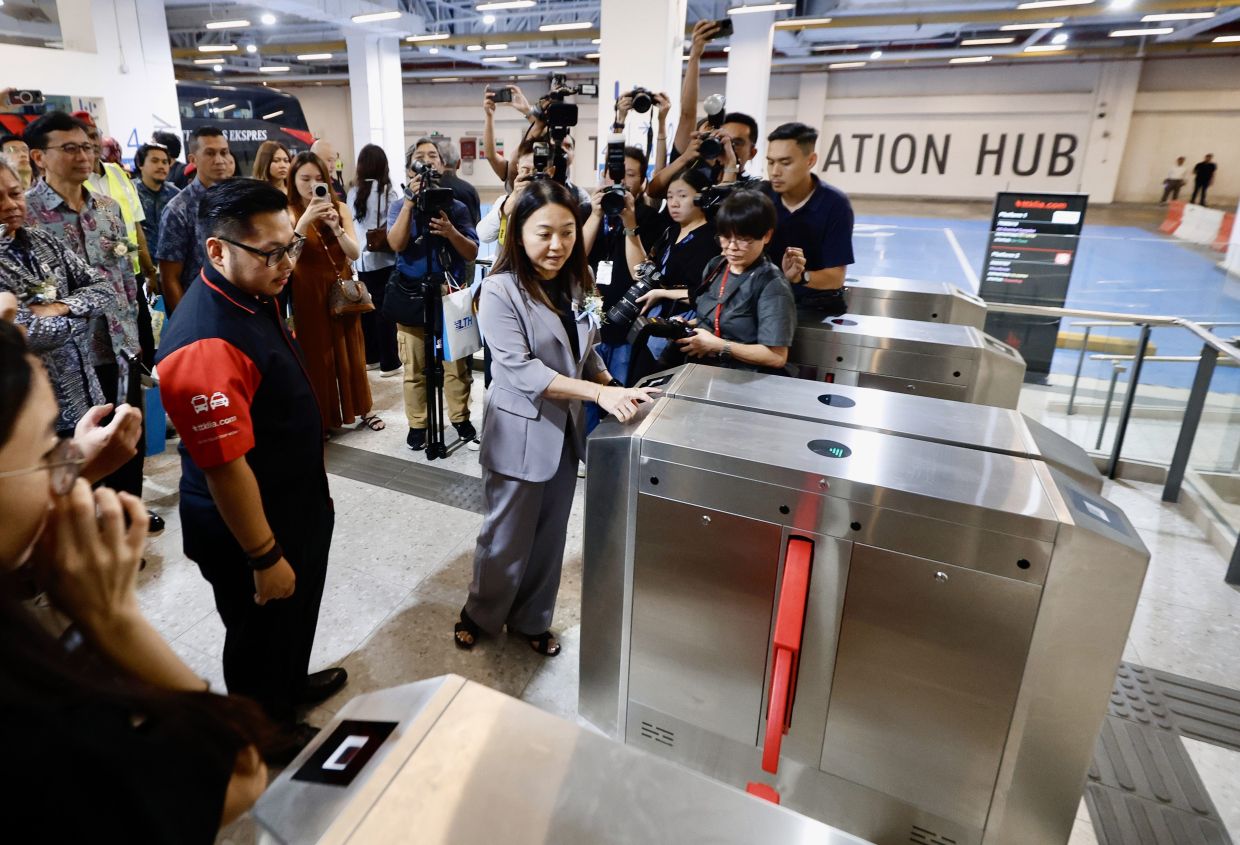
The LaLaport Transportation Hub at Bukit Bintang City Centre represents a significant step in Malaysia's efforts to modernise public transport infrastructure, consolidating approximately 30 bus operators under one roof to create a unified travel experience for commuters across the capital. Launched officially on Thursday, July 16, the hub has already begun operations in phases since February and marks an important milestone in addressing Kuala Lumpur's congestion challenges through integrated mobility solutions.
Current projections indicate the facility will accommodate roughly 3,000 passengers on a daily basis, with structural and operational capacity to expand to 10,000 passengers as demand grows. This scalability reflects planners' recognition that urban transport requirements continue to evolve, particularly in a metropolitan area experiencing rapid growth and economic activity. The hub's design anticipates future expansion without requiring major infrastructure overhaul, a lesson learned from transport planning across Southeast Asian cities.
Minister in the Prime Minister's Department (Federal Territories) Hannah Yeoh emphasised during the launch that the initiative addresses fundamental urban mobility challenges facing Kuala Lumpur. She highlighted transport statistics revealing that the capital experiences approximately 1.2 million vehicles entering the city on average each day, alongside 5.5 million journeys moving in and out, figures that underscore the magnitude of daily movement through Malaysia's primary business and administrative centre. These numbers demonstrate why coordinating transport services through centralised hubs has become essential for managing the city's circulation patterns effectively.
Operationally licensed by the Land Public Transport Agency (Apad), the transportation hub occupies Level LG1 within LaLaport BBCC's East Atrium, providing purpose-built facilities designed specifically for modern bus travel. The infrastructure includes 11 dedicated bus bays with clear delineation, ensuring smooth passenger flow and minimising congestion during peak hours. Beyond the boarding areas, the facility incorporates an air-conditioned waiting lounge offering climate-controlled comfort—a critical amenity in Malaysia's tropical climate—alongside conventional ticketing counters complemented by self-service machines for efficiency-conscious passengers.
Real-time passenger information screens represent a technological component that enhances journey planning and reduces uncertainty for travellers. By displaying live bus schedules and route updates, these systems allow commuters to make informed decisions about departure timing and transit options, a feature increasingly expected in regional transport networks. Such information systems reduce wait times and improve overall passenger satisfaction, elements that directly influence whether urban residents choose public transport over private vehicles.
Strategic location proves central to the hub's utility and success. Its placement at Level LG1 positions the facility directly adjacent to the Hang Tuah interchange, creating seamless connectivity to Kuala Lumpur's existing LRT and Monorail networks through a sheltered pedestrian walkway. This integration eliminates the friction and exposure to weather that typically characterises multi-modal journeys in tropical cities, encouraging commuters to combine bus travel with rail services. For regional visitors and domestic business travellers, such integrated networks reduce journey times and complexity compared to navigating separate transport systems.
Beyond conventional bus services, the hub extends functionality through multiple mobility options addressing diverse passenger needs. Shuttle van services to KL International Airport Terminals 1 and 2 provide direct connectivity to Malaysia's premier aviation gateway, streamlining airport access for both leisure and business travellers. The inclusion of demand-responsive transport (DRT) services—flexible routing systems that adapt to passenger requirements rather than fixed schedules—represents emerging transport technology gaining adoption across Southeast Asia. Additionally, designated taxi and e-hailing pick-up and drop-off areas acknowledge the reality that many urban journeys combine multiple transport modes, facilitating smooth transitions between different services.
The hub's integration of shuttle services to both airport terminals specifically addresses the connectivity gap that previously required travellers to navigate complex transfers or expensive private transport. Airport access quality significantly influences visitor perception of Malaysia's transport infrastructure and contributes to overall competitiveness as a business and tourism destination within the region. By incorporating airport shuttles into the broader transport hub, planners have recognised that seamless first and last-mile connectivity drives adoption of public transport among time-conscious travellers.
From a broader Southeast Asian perspective, consolidated transport hubs reflect regional trends toward integrated mobility planning. Countries across the region increasingly recognise that fragmented transport systems fail to compete effectively with private vehicle use, particularly among affluent commuters. The LaLaport model—incorporating buses, rail connections, airport shuttles, and emerging services like DRT within a single, professionally managed facility—presents a replicable template for other rapidly developing cities in Malaysia and neighbouring nations seeking to enhance urban circulation.
The phased operational approach since February demonstrates pragmatic project management, allowing operators and staff to refine procedures before full-scale launch. Such staged implementation permits identification of operational bottlenecks and passenger flow issues while managing the complexity of coordinating 30 independent bus operators, each with distinct routes, scheduling, and customer service standards. Early operational experience will inform future enhancements and similar projects throughout Malaysia's urbanised regions.
Sustainability considerations underlying the initiative extend beyond immediate traffic reduction. By consolidating bus services at a central hub with integrated connections to rail networks, planners encourage modal shift away from private vehicles, reducing per-capita carbon emissions and urban air pollution. Malaysia's commitments to environmental sustainability and carbon neutrality align with transport interventions of this nature, though messaging emphasising climate benefits remains underdeveloped in official communications.
The facility's location within LaLaport BBCC itself merits consideration, as retail-integrated transport hubs create natural pedestrian activity and revenue diversity. Commuters waiting for buses encounter retail opportunities, while shoppers gain convenient transport access, fostering circular economic benefits. This mixed-use integration distinguishes modern transport infrastructure from purely utilitarian facilities, potentially enhancing long-term viability and operational sustainability.
Successful implementation across Kuala Lumpur could establish momentum for similar projects in other Malaysian cities experiencing congestion and rising motorisation. Penang, Johor Bahru, and emerging metropolitan areas would benefit from comparable integrated mobility frameworks. The LaLaport Transportation Hub's performance metrics over coming months will provide crucial data for evaluating the model's effectiveness and scalability across Malaysia's urban landscape.

