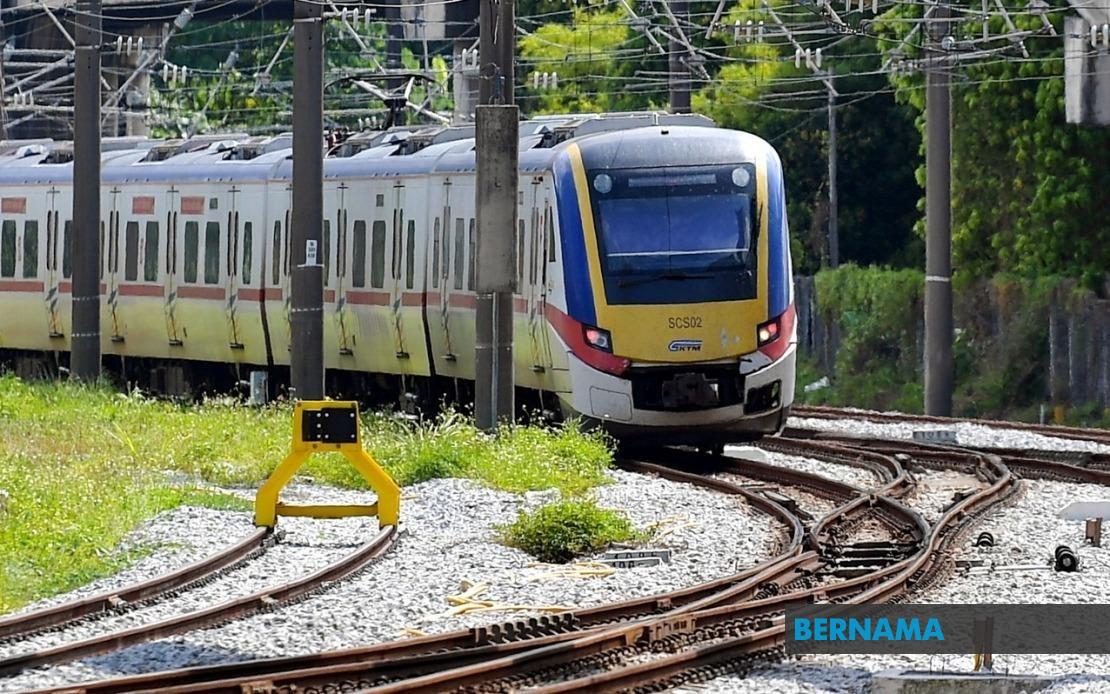
Keretapi Tanah Melayu Berhad (KTMB) is moving to accommodate a surge in holiday travel by deploying an additional 124 train services across its premium and regional networks, making nearly 39,000 extra seats available to passengers during the National Day period and school breaks from mid-August through early September. The capacity injection underscores persistent demand pressures on Malaysia's rail infrastructure as families undertake long-distance journeys during peak festive seasons.
The railway operator will introduce 100 supplementary ETS services with 31,600 seats over three separate periods: August 21-23, August 28-31, and September 4-6. These targeted deployments align with Malaysia's Federal Territory Day celebrations on August 31 and the approaching school term end, when travel congestion typically peaks. By staggering the additional services, KTMB aims to distribute passenger loads and prevent bottlenecks at major interchange hubs such as Kuala Lumpur Sentral and Bandar Tasik Selatan.
Complementing the ETS expansion, KTMB will operate 24 extra EMU Plus services providing 7,344 seats on selected dates within the same August-September window. Notably, this expansion includes extended routing to Bandar Tasik Selatan, a rapidly growing residential area in Kuala Lumpur's south that has experienced significant population growth. This extension signals KTMB's responsiveness to demographic shifts and suggests ongoing investment in capturing ridership from emerging urban zones.
In the northern corridor, eight additional services operating the Padang Besar-Butterworth-Padang Besar route will commence from August 27 through 31, elevating the route's total daily service count to 46. This reinforcement is particularly significant for travellers heading to Penang and the Thai border, regions that traditionally attract holiday visitors and cross-border commuters during school breaks. The consistent frequency on this route supports commercial activity and leisure travel across the northern economic zone.
Tickets for all supplementary services became available immediately, with passengers able to book through KTMB's established sales channels. The expedited ticketing rollout suggests confidence in demand forecasting, though early sales data will be crucial indicators of whether capacity additions match traveller appetite. For Malaysian consumers, the expanded service availability offers greater flexibility and potentially reduced reliance on road transport during peak periods.
Beyond logistics, KTMB's capacity initiative reflects the operator's broader strategic positioning. The railway company simultaneously launched customer appreciation campaigns from August 10-14 to commemorate the ETS's 16th operational anniversary, distributing vouchers, meal packages, free travel tickets, and RM16 discounts. These gestures, while seemingly modest, reinforce brand loyalty and counter competing transport modes at a critical juncture when passengers evaluate their travel options.
The ETS's trajectory illustrates Malaysia's rail sector evolution since 2010. Launched initially on the Kuala Lumpur-Ipoh corridor on August 12, 2010, the service has progressively expanded northward to Butterworth and Padang Besar in 2015, and southward late in 2025, now spanning multiple strategic economic corridors. KTMB Group Chief Executive Officer Datuk Azlan Shah Al Bakri emphasised that this geographic expansion reflects passenger confidence in rail reliability, positioning the service as a credible alternative to driving in an era of rising fuel costs and highway congestion.
Passenger growth statistics underscore genuine demand momentum. The ETS has accumulated 44.3 million passengers over its operational life, with year-on-year growth accelerating sharply. January through July 2024 data shows 3.67 million ETS passengers, a 56 percent surge compared to 2.36 million during the equivalent 2023 period. This near-doubling of ridership within a seven-month window signals a fundamental shift in travel behaviour among Malaysian commuters and leisure travellers, suggesting that quality rail services can compete effectively against private vehicles when pricing, convenience, and frequency align.
The expansion also carries implications for Malaysia's broader transport strategy and sustainability goals. By offering comfortable, premium rail alternatives, KTMB reduces pressure on highways during peak periods, potentially lowering traffic-related emissions and wear on national road infrastructure. For Southeast Asian readers, KTMB's capacity additions model how regional rail operators can deploy flexible service models to match seasonal demand, offering a template applicable across Thailand, Indonesia, and Vietnam.
Operational challenges remain, however. Managing 124 additional services requires coordinated staffing, maintenance scheduling, and real-time coordination across signalling and station systems. Extended operating hours during holiday periods increase fatigue risks and maintenance windows compress, demanding efficiency gains throughout KTMB's workforce. The success of this campaign will partly depend on whether operational execution matches capacity planning, as service reliability—not merely seat availability—drives customer retention.
The financial calculus underlying this expansion also merits scrutiny. KTMB must balance revenue generation against operational costs during periods when fixed infrastructure costs remain constant regardless of utilisation. Premium ETS fares support this model, yet competitive pressures from budget airlines and ride-sharing platforms on secondary routes complicate margin calculations. The strong passenger growth statistics suggest viable unit economics, but fare transparency and yield management will be crucial as competition intensifies.
Looking forward, KTMB's data on holiday-period utilisation rates will likely inform future capacity decisions. If occupancy rates exceed 85 percent across supplementary services, the operator may justify permanent capacity increases or frequency enhancements beyond holiday periods. Conversely, lower utilisation would prompt reconsideration of expansion strategies. For Malaysian consumers planning travel during the National Day and school holiday window, the expanded service palette offers welcome choice and reduced pricing pressure through increased competition for seats.

