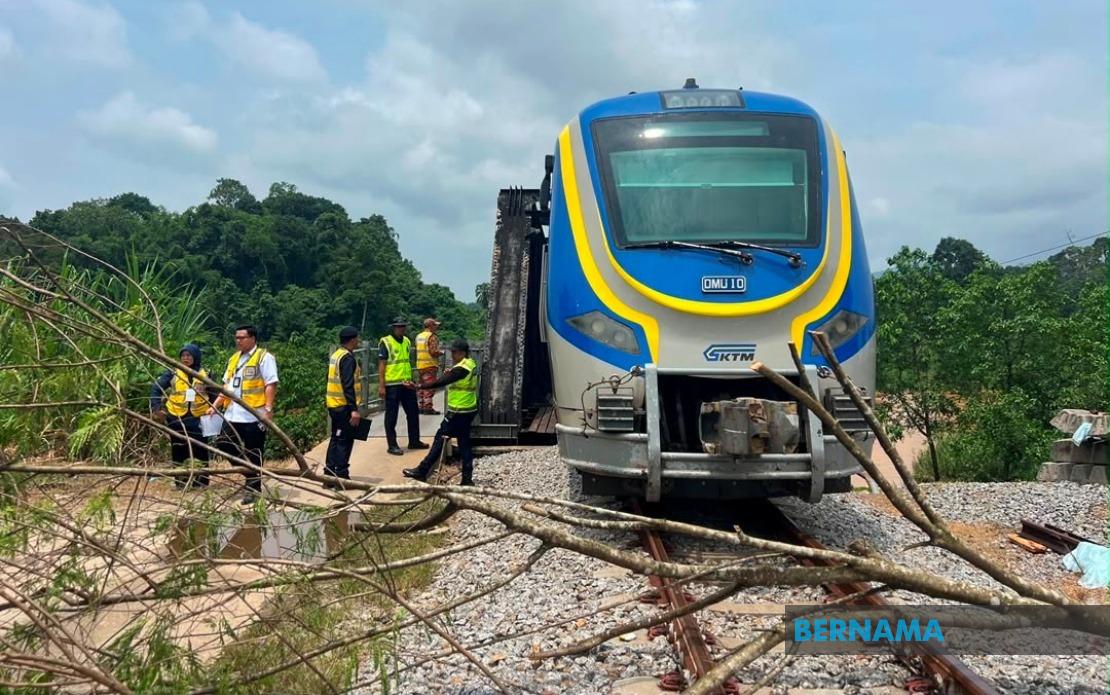
Keretapi Tanah Melayu Berhad (KTMB) has undertaken a comprehensive emergency response exercise on the EX-Kemubu railway route, marking a crucial test of the nation's ability to manage railway incidents in isolated areas. The training programme, conducted in Kuala Krai, brings together multiple government agencies to evaluate critical aspects of disaster response that have historically challenged rescue operations in rural Malaysia. The exercise reflects growing recognition that railway emergencies in remote regions demand specially tailored protocols distinct from those applicable in urban centres.
Khairul Naim Johdi, KTMB's Occupational Safety, Health and Environment general manager, identified accessibility as the paramount concern driving the training initiative. The geographical characteristics of the EX-Kemubu corridor—its distance from main arterial roads and proximity to river systems—create genuine obstacles for rapid emergency response. When railway incidents occur along this route, rescue teams may face significant delays in reaching affected areas, a reality that demands advance preparation and coordination mechanisms designed specifically for such constraints. This recognition underscores the operational complexities that distinguish Malaysian rail operations from those in more densely connected regions.
The training framework evaluated three interconnected dimensions of emergency management. First, the exercise assessed how effectively rescue organisations could physically access incident sites, a practical matter that requires advance planning and resource positioning. Second, responders' reaction times were measured from the moment KTMB's control centre transmitted initial alerts through to active rescue deployment. Third, the exercise examined whether information flowed accurately and swiftly between KTMB and external agencies, ensuring that all parties possessed current situational awareness. These three elements form an integrated chain; failure at any point compromises the entire emergency response system.
Approximately 350 personnel from eleven separate agencies participated in the exercise, demonstrating the breadth of coordination required for comprehensive railway safety. Participating organisations included the Royal Malaysia Police, the Malaysian Fire and Rescue Department, the Ministry of Health, the Malaysian Civil Defense Force, and the Department of Social Welfare. This multi-agency composition reflects the reality that railway emergencies demand diverse expertise—law enforcement, firefighting and rescue capabilities, medical response, civil defence coordination, and social welfare support all contribute essential functions to managing major incidents effectively.
The EX-Kemubu route was deliberately selected as the training venue because its operational characteristics mirror the most challenging scenarios KTMB might encounter. Beyond its remote location, the route traverses terrain with significant geological and hydrological hazards, including sections near rivers where catastrophic incidents could pose compound dangers. Training in such locations forces participants to confront actual environmental constraints rather than theoretical abstractions, producing learning outcomes that directly translate to improved performance during real emergencies. This deliberate selection of demanding environments represents sophisticated emergency management practice.
Khairul Naim explained that KTMB conducts such large-scale exercises annually on a rotational basis, with each of the four operational regions hosting major drills in sequence. Complementing these annual flagship exercises, KTMB personnel undertake smaller-scale training throughout the year, ensuring that skill maintenance occurs continuously rather than relying on infrequent intensive sessions. This layered approach acknowledges that emergency preparedness demands sustained attention and regular reinforcement to maintain organisational readiness at required levels.
The post-exercise evaluation process will examine findings through structured feedback from all participating agencies. This analytical phase extends beyond simply documenting what occurred; it specifically targets identifying response delays, assessing the effectiveness of initial responder actions, evaluating access route effectiveness, and examining information dissemination adequacy. By subjecting the exercise to rigorous post-event scrutiny, KTMB creates opportunities to identify systemic weaknesses before they manifest during genuine emergencies. This commitment to honest critical assessment, rather than accepting exercises at face value, represents mature organisational safety practice.
A central theme emerging from the training programme concerns the particular challenges posed by rural emergency response. Rural areas inherently present communication and access difficulties that urban centres largely avoid. Khairul Naim's emphasis on improving internal coordination and expediting initial notification highlights recognition that the primary vulnerability in rural railway emergencies often lies not in rescue capability per se but in reducing the interval between incident occurrence and emergency services' awareness. When valuable minutes elapse before external agencies even learn that an incident has occurred, subsequent response speed cannot fully compensate for that initial delay.
The exercise also reinforced the critical role played by KTMB's central operations control centre, which functions as the crucial information hub through which incident reports flow to external agencies. Every employee who might encounter an emergency situation must understand that their responsibility is to contact the operations controller, who then synthesises information and initiates appropriate external agency notifications. This clear hierarchical protocol prevents information fragmentation and ensures that external responders receive coherent, timely briefings rather than conflicting reports from multiple sources. Organisational clarity about such procedures translates directly into faster, more coordinated responses.
Training protocols specifically emphasise passenger evacuation procedures, recognising that protecting people aboard affected trains represents the paramount safety objective during any railway emergency. KTMB staff must develop competence in executing evacuations under varied conditions, with training designed to build both technical proficiency and the calm decision-making required during crisis situations. This emphasis on evacuation capability reflects the understanding that while rescue agencies provide essential external support, KTMB's own personnel form the first line of defence for passenger safety and must possess skills enabling them to take life-saving actions before external assistance arrives.
Beyond technical training, the exercise embodies a broader safety philosophy emphasising that genuine emergency preparedness encompasses training, documented procedures, and sustained personnel development. No single training session, however comprehensive, sustains organisational readiness indefinitely. Rather, emergency preparedness emerges through continuous refinement of procedures, regular practical exercises at varying scales, and systematic development of staff competencies. KTMB's commitment to annual large-scale drills across all operational regions, combined with ongoing smaller exercises, demonstrates understanding that railway safety demands persistent, multilayered attention.
The implications of such training extend beyond KTMB's immediate operational needs, resonating across Malaysia's transportation sector. As the nation's sole national rail operator, KTMB's safety practices establish implicit benchmarks for emergency preparedness that other transport operators reference. Furthermore, Malaysia's ongoing efforts to expand and modernise rail infrastructure make railway safety increasingly significant. Training exercises like the EX-Kemubu programme contribute to building the organisational competencies and inter-agency coordination mechanisms essential for managing emergencies across an increasingly complex transportation network.

