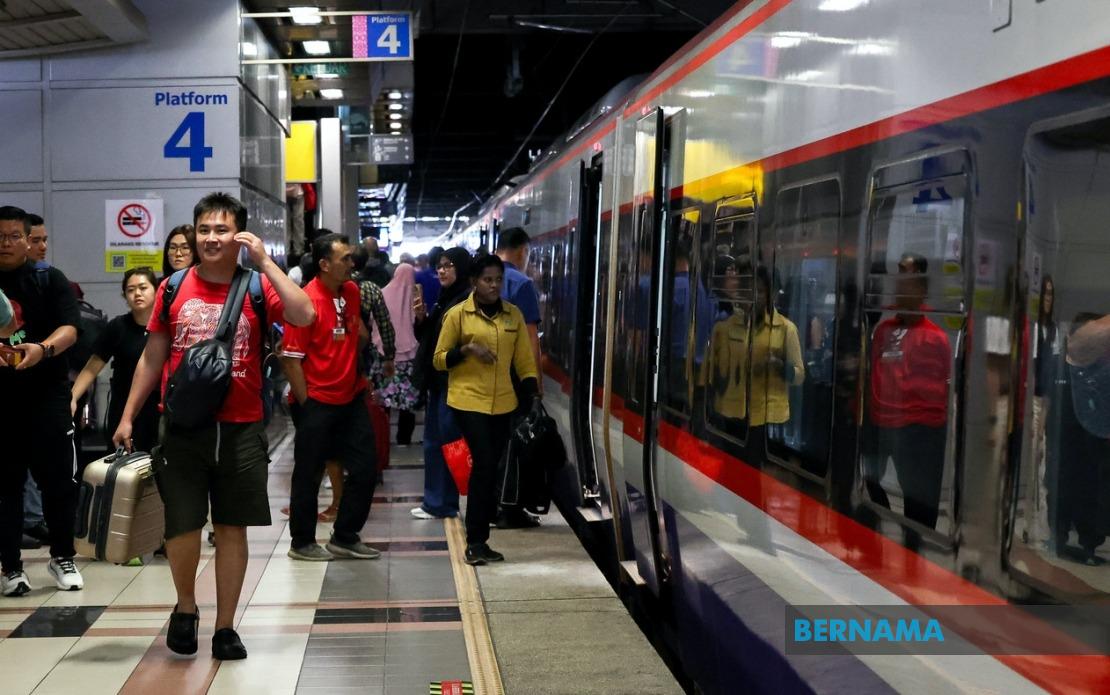
Keretapi Tanah Melayu Berhad (KTMB) is mobilising significant additional capacity on its Electric Train Service network to accommodate voters heading to Johor for the state election this weekend, announcing 7,464 extra seats across high-traffic southern routes. The move represents a second surge of transport provision after initial supplementary services launched in mid-June sold out entirely, reflecting unexpectedly strong demand from the travelling public seeking to return to their constituencies for the polls.
The railway operator will deploy eight additional ETS trains across two primary corridors over a three-day operational window from July 10 to 12. Four extra services will run along the KL Sentral to JB Sentral route and its return leg, while a matching set of four will operate the JB Sentral to Gemas connection and vice versa. This configuration is designed to serve both direct voters travelling from the capital region and those originating from the broader Klang Valley and central Malaysian regions. Each daily deployment will accommodate 2,488 passengers, distributing capacity evenly across the three-day period to prevent bottlenecks on any single day.
To incentivise rail travel during the election period, KTMB is offering a flat 20 per cent discount across all newly added ETS services, a strategy aimed at making train travel competitive with alternative transport options and reducing road congestion on critical voting days. The pricing initiative reflects the operator's role in facilitating democratic participation while managing wider transportation infrastructure pressures. For voters and other travellers, the combination of expanded capacity and reduced fares presents a more affordable alternative to private vehicles or coach services, particularly for families making the journey south.
Ticketing logistics have been staggered to manage demand. Sales for the JB Sentral to Gemas route opened at 3.00 pm on July 7, while reservations for the KL Sentral to JB Sentral corridor began the following morning at 9.00 am. KTMB has emphasised cashless purchasing options through its KITS Style application, the official website, and automated kiosk machines at major stations, reflecting the railway operator's modernisation efforts and pandemic-era preferences for contactless transactions. This digital-first approach also enables real-time capacity monitoring and demand forecasting.
The previous allocation of supplementary tickets, launched on June 19, sold out completely, indicating that Johor's electoral exercise is generating substantial internal migration across Malaysia's transport networks. This phenomenon underscores the logistical challenges that state elections present for transport operators, particularly in southern Malaysia where interstate travel is essential for voters. The rapid depletion of initial offerings likely prompted KTMB to prepare a second wave of capacity, demonstrating responsive planning by the transport authority.
For Malaysian travellers, election-related transport surges have become recurring planning challenges. The concentration of voters returning to constituencies during a compressed timeframe creates predictable but intensive demand spikes that test infrastructure capacity. Railways, as high-capacity fixed-route services, are ideally positioned to absorb such demand compared to road networks, which become congested during simultaneous multi-destination travel. KTMB's proactive expansion of services reflects this advantage, though it also reveals the tight margins of normal operational capacity.
Passengers utilising these services should anticipate busier conditions than usual. KTMB has advised travellers to arrive at stations at least thirty minutes before departure, noting that platform access closes five minutes before train departure times. This guidance is particularly relevant during peak election-related travel periods when station congestion may be elevated. Early arrival also provides buffer time for passengers unfamiliar with station layouts or digital ticketing systems.
The expanded services connect three pivotal transport nodes: Kuala Lumpur Sentral, the country's largest integrated transport hub; Johor Bahru Sentral, serving the southern state's capital; and Gemas, a crucial junction town in Pahang that feeds traffic toward the southern region. These routes capture the primary travel patterns for peninsular Malaysian voters, whether travelling from the federal capital or from broader central and northern zones transiting through Gemas. The routing strategy acknowledges both direct southern voters and those making longer intercity journeys.
For businesses and logistics operators, election-related transport disruptions have indirect economic implications. Courier services, supply chains, and commercial transport must work around congested rail and road networks during voting periods. While passenger rail expansion eases some congestion, the underlying pressure on transport infrastructure during elections remains significant. Companies operating in the logistics and retail sectors typically plan around such events, adjusting delivery schedules and staffing to compensate for disrupted transport corridors.
KTMB's customer service infrastructure is positioned to support high-volume enquiries, with the Call Centre available at 03-9779 1200 and social media channels providing real-time updates. Given the time-sensitive nature of election travel, accessible support channels are essential for resolving ticketing issues or addressing last-minute journey questions. The multi-channel information approach acknowledges diverse user preferences and technical literacy among the travelling public.
From a broader policy perspective, KTMB's election-period capacity expansion highlights the role of state-owned enterprises in supporting democratic processes. Elections create temporary but predictable demand that private operators might decline to serve unprofitably, yet public rail networks are expected to accommodate such surges. This characteristic of public transport infrastructure underscores its democratic and social function beyond normal commercial considerations, positioning railways as essential infrastructure for electoral participation across geographically dispersed Malaysia.
The election weekend travel surge will conclude by July 12, after which KTMB returns to standard service configurations. However, the pattern of expanding capacity during electoral periods suggests this may become a recurring operational expectation. As Malaysia continues its electoral cycle, transport operators will likely incorporate election-period provision into their service planning, creating a baseline of flexible capacity that can be activated during voting periods. This evolution reflects the infrastructure demands created by Malaysia's distributed population and decentralised electoral system.

