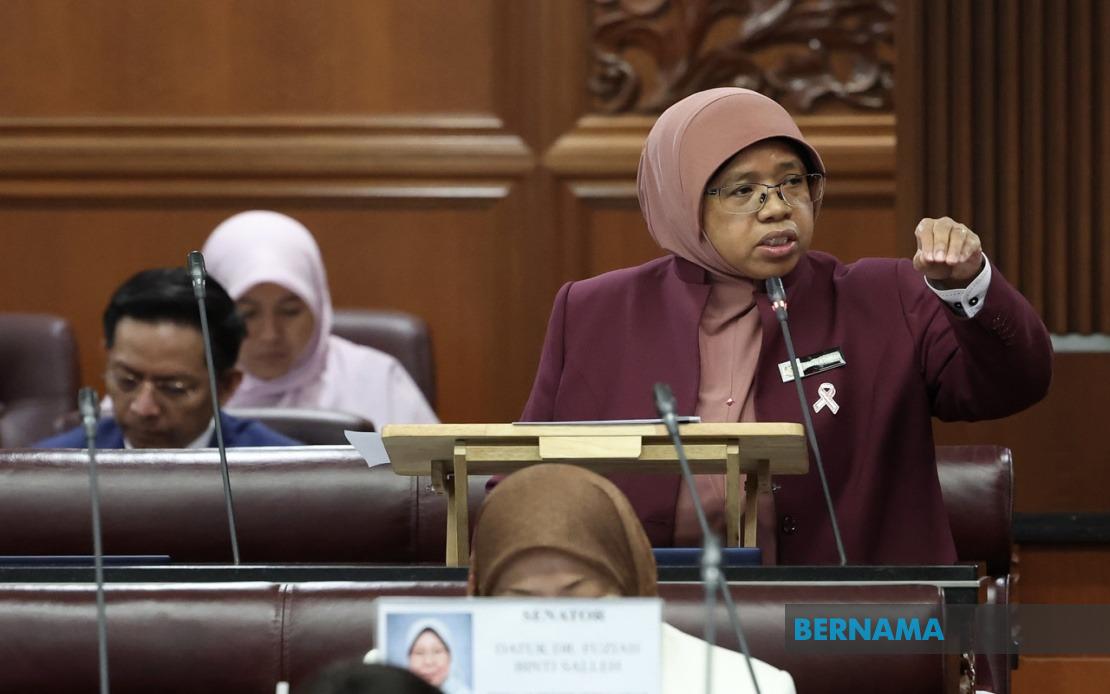
The Ministry of Housing and Local Government has adopted a strategic approach to address the mounting maintenance backlog in Malaysia's ageing public housing stock, concentrating its efforts on People's Housing Programme properties that have exceeded the decade-long mark. Deputy Housing and Local Government Minister Datuk Aiman Athirah Sabu outlined the prioritisation framework during parliamentary proceedings, acknowledging that budget limitations necessitate a careful allocation strategy rather than attempting comprehensive repairs across all facilities.
The ministry's targeting approach focuses on defects that carry the greatest bearing on resident safety and livelihood standards. Critical infrastructure systems including lift mechanisms, roof structures, water storage facilities and distribution networks, sanitary plumbing arrangements, electrical installations, and shared amenity repairs have been identified as the primary focus areas. This targeted methodology reflects a pragmatic recognition that with constrained financial resources, strategic intervention in life-safety systems will yield the most tangible benefits for residents living in high-rise strata developments.
The fiscal reality of PPR maintenance reveals a significant gap between needs and available resources. During the 12th Malaysia Plan period, the ministry channelled RM159.1 million into rolling maintenance programmes across five cycles for high-rise strata PPR developments throughout the country. However, the disparity between applications and approvals demonstrates the scale of the challenge. In 2026 alone, local housing bodies submitted 226 maintenance applications encompassing ten priority categories valued at RM79.9 million combined, yet the ministry could only approve RM44.6 million—representing just 56 per cent of the requested allocation. This funding shortfall underscores the tension between deteriorating housing stock and available government resources.
The procedural pathway for maintenance applications involves multiple institutional layers that can extend timelines substantially. Requests submitted by Joint Management Bodies or Management Corporations must first navigate assessment by the Commissioner of Buildings or relevant local authorities before reaching the ministry's consideration stage. This bureaucratic sequence, while ensuring scrutiny and coordination, introduces delays that property managers and residents must navigate. The formal calendar structures submissions between August and October, followed by evaluation committees meeting sequentially through November and December, with ministerial approval contemplated in January and formal notifications to local authorities thereafter.
The timeline for project initiation extends considerably beyond initial approval. Letters of Acceptance, which trigger actual commencement of repair work, are issued no earlier than April following the submission period—a six-month lag between application and work start. This extended schedule reflects the complexity of coordinating multiple stakeholders, obtaining necessary approvals, and mobilising contractor resources across numerous projects nationwide. For residents contending with deteriorating facilities, the duration between identifying defects and witnessing repairs represents a significant quality-of-life concern that the ministry recognises but cannot wholly overcome given administrative and budgetary constraints.
The maintenance allocation mechanism illuminates broader questions about public housing sustainability in Malaysia. The RM44.6 million approved represents governmental prioritisation amid competing demands across infrastructure, healthcare, education, and other sectors. PPR residents, who comprise predominantly lower-income households that government policy deliberately prioritised for home ownership, face extended periods during which essential building systems remain in states of disrepair. The funding discrepancy—some RM35.3 million unmet in 2026 alone—raises sustainability questions about whether current allocation methodologies can adequately maintain the existing PPR stock as it continues ageing.
The 12th Malaysia Plan expenditure of RM159.1 million across five rolling cycles suggests annual average allocations of approximately RM32 million, substantially below the 2026 application level. This trajectory indicates either mounting maintenance demands outpacing budget growth or a backlog accumulation as older projects require increasingly intensive intervention. Either scenario presents challenges for government housing policy implementation, particularly as PPR properties constructed in the 1990s and early 2000s now enter phases requiring substantial structural and systems-level rehabilitation. The ministry's emphasis on the decade-plus threshold reflects tacit acknowledgement that properties reaching this maturity stage encounter accelerated deterioration patterns.
The focus on critical safety systems rather than comprehensive upgrading represents a triage approach to public housing maintenance. While lift mechanisms, water systems, and electrical installations are unquestionably essential, residents potentially defer hopes for aesthetic improvements, enhanced amenities, or quality-of-life enhancements beyond basic functionality. This maintenance philosophy, though fiscally necessary, effectively stabilises existing conditions rather than advancing housing quality. For occupants of decades-old PPR units, this approach means managing within established parameters rather than experiencing progressive improvement.
Regional Southeast Asian context reveals that Malaysia's PPR maintenance challenge echoes housing pressures across the region. Several neighbouring countries grapple with similar public housing stock ageing, funding constraints, and the competing imperatives of maintaining existing units versus expanding supply for growing populations. The Malaysian experience of accumulated applications exceeding available resources reflects structural challenges common to middle-income countries where government-provided housing for lower-income groups represents significant accumulated liabilities requiring ongoing operational commitment.
The procedural structures described by the deputy minister—application windows, committee reviews, sequential approvals—establish predictability for planning purposes but inherently introduce delays. Property management bodies can anticipate the timeline, budget accordingly, and schedule contractors with appropriate lead periods. However, this systematisation may also entench the resource constraints, as the formal process might not accommodate expedited consideration of emergency situations or particularly deteriorated properties requiring immediate intervention. The balance between procedural rigour and responsive flexibility remains implicit rather than explicitly addressed in the ministry's public statements.
Looking forward, the maintenance trajectory suggests that accumulated housing stock will increasingly preoccupy ministry resources and budgets. As PPR properties progress through their lifecycle, the proportion of funding allocated to maintenance rather than new development or enhancement initiatives will likely expand. This dynamic potentially constrains policy flexibility and capital availability for addressing contemporary housing challenges including affordability pressures, younger household formation, and urbanisation patterns. The ministry's present prioritisation strategy, while rational given current constraints, may reflect emerging structural tensions within Malaysian public housing policy.

