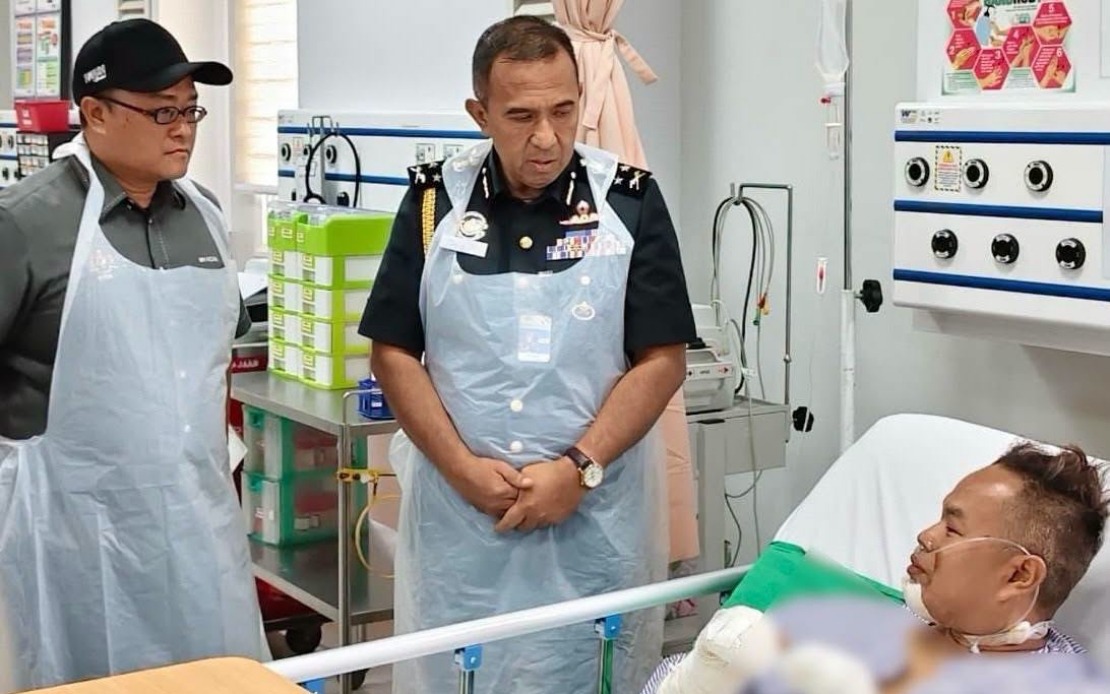
Two enforcement officers attached to the Domestic Trade and Cost of Living Ministry (KPDN) suffered injuries while undertaking operational duties in Selangor on August 18 as part of Ops Tiris 4.0, a nationwide campaign designed to dismantle the illegal decanting of subsidised liquefied petroleum gas. The incident has drawn public attention to the hazards routinely encountered by frontline enforcement personnel tasked with protecting Malaysia's subsidy system from misuse and diversion into black markets.
Assistant Enforcement Officer Mohammad Fauzi Baharuddin sustained more severe injuries requiring continued medical attention, while his colleague Enforcement Assistant R. Yoghanath experienced minor trauma and was discharged following initial treatment. Minister Datuk Armizan Mohd Ali responded to the incident by publicly acknowledging both officers' contributions and extending his personal support through a statement posted on social media platforms, addressing the gravity of their respective conditions and the emotional toll on their families.
In his remarks, Armizan emphasised the often-invisible human cost of enforcement work, drawing attention to the reality that officers regularly leave their families to confront unpredictable field conditions. The minister's intervention reflects broader ministerial acknowledgment that frontline workers frequently encounter dangerous situations when confronting organised subsidy diversion networks. These operations often involve confrontations with individuals determined to protect lucrative illegal schemes, creating genuine safety concerns that extend beyond routine administrative tasks.
Ops Tiris 4.0 represents a comprehensive governmental response to the pervasive problem of LPG subsidy abuse in Malaysia. The operation targets sophisticated decanting operations where subsidised cooking gas intended for household consumption is diverted, repackaged, and sold at higher prices through informal channels. This practice undermines the government's social assistance programme while generating substantial illegal profits for organised criminal networks involved in the trade. The operation's intensity and scope underscore how entrenched this illicit activity has become across multiple Malaysian states.
The LPG subsidy diversion problem carries significant economic implications for Malaysia's fiscal position. Every tonne of subsidised gas diverted represents direct financial loss to the national budget, while simultaneously reducing the availability of affordable fuel for genuine household consumers. The government has invested considerable resources in detection, investigation, and enforcement mechanisms to stem these leakages, recognising that subsidy fraud directly impacts the government's ability to maintain living cost assistance for lower-income households and vulnerable populations.
Armizan's public acknowledgment of officer injuries serves a secondary purpose beyond immediate pastoral care. By highlighting the dangers enforcement personnel routinely face, the minister seeks to elevate public understanding of the occupational hazards inherent in combating organised subsidy fraud. Enforcement operations frequently involve confrontations with armed or aggressive individuals protecting high-value illegal operations, exposing officers to unpredictable violence and injury risks that often remain unacknowledged in public discourse.
The incident also underscores structural challenges facing enforcement agencies in Malaysia. Despite adequate legislative frameworks and operational mandates, KPDN personnel operate with resource constraints that sometimes limit their ability to mount comprehensive protective measures during high-risk operations. The injuries sustained during this particular operation raise questions about whether enforcement teams receive adequate safety training, equipment, and backup support proportionate to the genuine hazards they encounter in field operations targeting organised fraud networks.
Public sector morale constitutes another consideration emerging from this incident. When enforcement officers sustain injuries executing legitimate government duties, visible ministerial support and public acknowledgment become important factors in maintaining institutional morale and encouraging continued commitment among personnel aware of occupational risks. Armizan's response, framed in terms of personal prayer and gratitude for officer sacrifice, represents an effort to reinforce institutional solidarity during a moment when officer safety concerns might otherwise generate demoralisation within the enforcement community.
The LPG subsidy fraud phenomenon reflects broader challenges in Malaysia's subsidy system architecture. Unlike direct cash transfers that reach beneficiaries without intermediary diversion risks, commodity subsidies such as LPG create opportunities for organised actors to exploit price differentials between subsidised and unsubsidised markets. These systemic vulnerabilities require continuous enforcement engagement, explaining why operations like Ops Tiris 4.0 represent recurring rather than one-time interventions addressing what has become an endemic enforcement challenge.
Looking forward, the injuries sustained during this operation may prompt policy discussions regarding enforcement strategy evolution. Some analysts suggest that technological solutions, including enhanced monitoring of LPG distribution channels and real-time tracking systems, might reduce dependence on dangerous field operations. Others argue for increased inter-agency coordination involving police and customs personnel to provide more comprehensive security support during high-risk enforcement activities targeting established criminal networks.
The incident ultimately illustrates that Malaysia's subsidy protection mechanisms depend fundamentally on the willingness of enforcement personnel to accept occupational risks in defence of public policy objectives. As the government continues prioritising subsidy fraud prevention, ensuring adequate support systems, safety protocols, and institutional recognition for enforcement personnel becomes increasingly critical to sustaining operational effectiveness and staff commitment.

