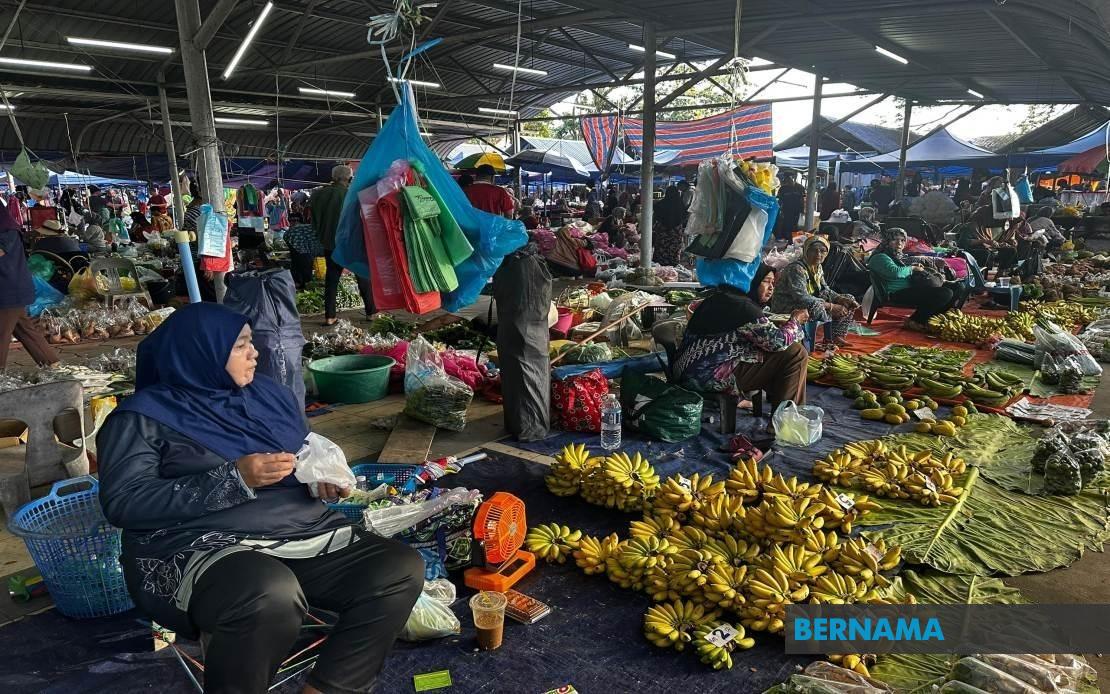
The prospect of elevating Kota Belud's legendary Tamu market to UNESCO World Heritage status hinges on a demanding process that could stretch over years, state officials cautioned during parliamentary proceedings in Kota Kinabalu on July 21. The nomination pathway demands exhaustive scholarly investigation, meticulous cultural inventorying, and substantial groundwork before the application can advance through UNESCO's evaluation machinery, creating both opportunity and administrative burden for Sabah's heritage preservation agenda.
Dr Andi Md. Shamsureezal, who holds the Assistant Minister portfolio for Tourism, Culture and Environment, explained to the Sabah State Legislative Assembly that the international designation framework operates under demanding benchmarks. The procedural requirements transcend simple administrative approval, instead necessitating the convergence of rigorous scholarship and official documentation that demonstrates lasting cultural significance. Speaking in response to queries from Datuk Mohd Arsad Bistari, the legislator for Tempasuk, Dr Andi underscored that considerable elapsed time should be anticipated as applications navigate UNESCO's intricate evaluation protocols.
The documentation foundation for such a nomination must comprehensively capture the Tamu's multifaceted heritage dimensions. This encompasses both the material elements—encompassing architectural features, archaeological deposits, and physical structures bearing historical import—and the immaterial cultural expressions that breathe life into the marketplace's identity. Researchers must systematically catalogue the traditional practices, knowledge systems, and community customs that distinguish Kota Belud's market from other regional trading venues, creating an archive of intangible patrimony that extends beyond conventional heritage inventories.
Central to UNESCO's evaluation framework sits the concept of Outstanding Universal Value, or OUV, a criterion that fundamentally shapes whether any site merits recognition as part of humanity's shared heritage inheritance. Applicants must construct a compelling intellectual case, bolstered by historical research, archaeological investigation, and scientific analysis, demonstrating why Kota Belud warrants global acknowledgement. This threshold prevents UNESCO from becoming merely a ceremonial bestower of accolades; instead, it maintains rigorous standards that ensure only genuinely exceptional heritage properties receive designation.
Sabah has already achieved meaningful success within UNESCO's heritage framework through a different pathway. The Kinabalu UNESCO Global Geopark designation, officially conferred in May 2023, represents recognition of the region's geological significance and marks the state as custodian of internationally valued natural heritage. This designation emerged through the concerted efforts of Sabah Parks, the government agency stewarding the geopark initiative, which has pioneered programming designed to interweave geological education with cultural preservation objectives.
The Tamu Geopark programme exemplifies how the state authority leverages its existing UNESCO credentials to amplify Kota Belud's profile beyond traditional visitor circuits. Through this initiative, the historic marketplace functions simultaneously as an arena for gastronomy education, traditional costume exhibition, handicraft demonstration, cultural performance, and commercial transaction. The programming creates economic multiplier effects throughout the local supply chain whilst simultaneously functioning as a living heritage classroom where visitors encounter authentic community practice rather than staged representations.
For Malaysian policymakers contemplating UNESCO applications across diverse heritage categories, Kota Belud's situation illuminates a broader strategic consideration: different designations serve complementary purposes within comprehensive heritage stewardship frameworks. Whilst World Heritage Site status carries enormous prestige, Geopark recognition offers more immediate promotional benefits and accommodates heritage sites encompassing contemporary cultural vitality. The distinction matters particularly for Southeast Asian communities where heritage preservation intertwines inseparably with economic development and contemporary livelihood maintenance.
The Kota Belud market itself occupies unique position within Malaysian cultural consciousness. Operating as a gathering space where Kadazan-Dusun and other indigenous peoples convene weekly to conduct commerce, socialise, and reinforce community bonds, the Tamu represents continuity connecting present-day residents to ancestral trading traditions. Its heritage significance derives not from archaeological antiquity alone but from unbroken functional operation spanning generations—a living heritage category that UNESCO increasingly recognises as meriting protection despite conventional heritage frameworks traditionally privileging abandoned or reconstructed historical sites.
Regional competition for UNESCO designations has intensified across Southeast Asia as nations recognise the substantial tourism revenues and international visibility that accompany such recognition. Thailand, Indonesia, Vietnam, and the Philippines have pursued multiple concurrent applications, creating incentive structures for Malaysian states to strategically navigate the nomination timeline. For Sabah particularly, accumulating multiple UNESCO designations across different heritage categories strengthens the state's positioning as a premier heritage tourism destination whilst diversifying revenue streams beyond single-sector economic dependence.
The research requirements for World Heritage nomination create opportunities for Sabah's academic institutions and cultural practitioners to establish scholarly authority over indigenous heritage knowledge systems. Universities, indigenous research collectives, and community documentation projects can generate the intellectual infrastructure necessary for compelling UNESCO applications whilst simultaneously creating employment in heritage conservation sectors. This knowledge production process itself generates cultural capacity beyond the formal designation outcome.
Looking forward, Sabah officials must balance enthusiasm for international recognition against the realistic assessment that comprehensive nomination preparation demands substantial resource investment and extended timelines. The Tamu's candidacy remains viable but contingent upon sustained institutional commitment to the documentation and research phases. Success requires coordinated effort bridging government agencies, academic researchers, local communities, and heritage conservation specialists—a collaborative architecture that exceeds singular ministerial responsibility.
For Malaysian readers observing this process, Kota Belud's trajectory offers instructive lessons about heritage preservation in Southeast Asia's contemporary context. Rather than viewing UNESCO designation as destination endpoint, state authorities increasingly recognise it as milestone within longer heritage stewardship journeys. The Tamu's existing visibility through the Geopark programme demonstrates that intermediate recognition frameworks provide meaningful international credibility whilst allowing time for thorough World Heritage documentation preparation.

