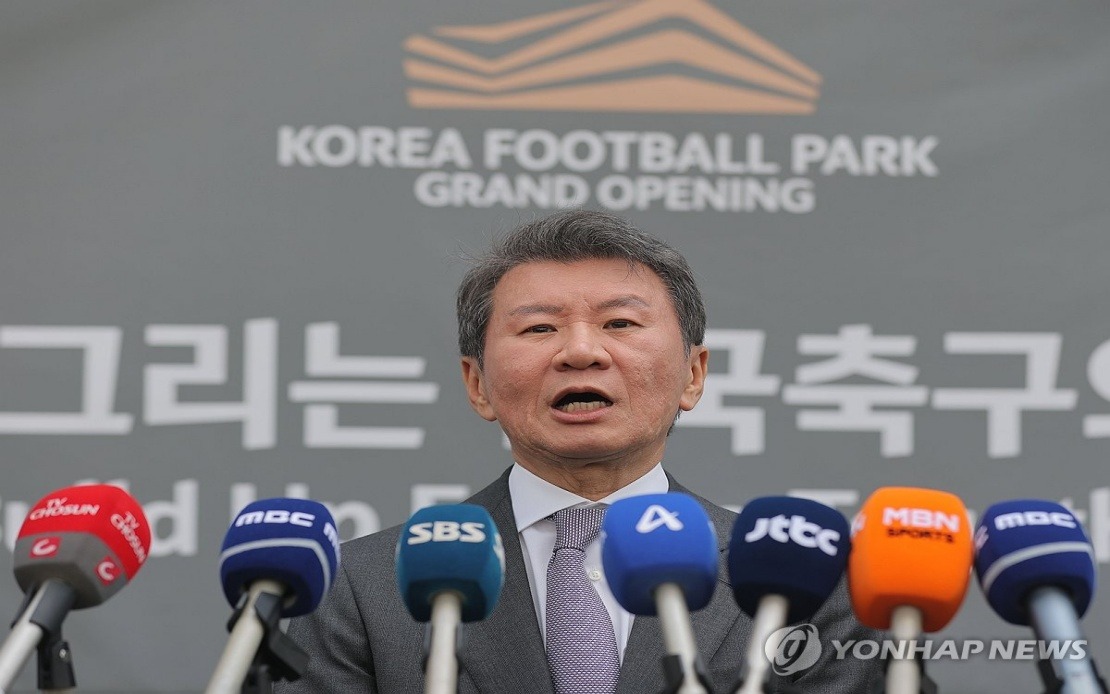
The Korea Football Association has entered a period of transition following the resignation of president Chung Mong-Gyu on Monday, marking the end of his tenure just two weeks before the conclusion of the ongoing FIFA World Cup. Chung formally submitted his resignation letter after presiding over his final executive meeting at the KFA's headquarters in Cheonan, located approximately 90 kilometres south of Seoul. The departure accelerates the timeline he had previously announced in May, when he declared his intention to step down once the tournament concluded on July 20 Korean time.
The decision to resign ahead of the official tournament conclusion reflects the weight of responsibility Chung accepted for South Korea's premature elimination from World Cup competition. The national team, guided by coach Hong Myung-bo, secured just three points through a single victory against two losses, finishing third in Group A and missing qualification for the knockout rounds. The eight best-performing third-place teams advance to the round of 16, but South Korea's points total proved insufficient for this benchmark. Hong Myung-bo immediately stepped down from his coaching position once the mathematical impossibility of progression became apparent, taking personal accountability for the squad's performance.
Chung's exit also reflects deeper institutional controversies that have plagued the football federation throughout the past year. The appointment of Hong Myung-bo as national coach in July 2024 drew sustained criticism from observers who characterised the recruitment process as lacking transparency and failing to meet professional standards. This controversy prompted South Korea's Ministry of Culture, Sports and Tourism to undertake an extensive investigation into KFA operations, which subsequently concluded that Chung and other senior federation officials warranted disciplinary action for various administrative breaches and procedural violations. The legal dispute between the ministry and the federation continues, with government authorities planning to conduct yet another comprehensive audit triggered by the World Cup underperformance.
The governance structure of the KFA stipulates that one of four existing vice presidents will assume interim leadership pending a formal election process. Because Chung retained nearly three years remaining on his fourth term as association president, succession regulations mandate that a replacement must be elected within 60 days. The electoral college comprises representatives from regional football associations, chief executives of K League professional clubs, player representatives, coaching staff, and match officials. Last year's presidential election witnessed participation from 183 of 192 eligible voters, demonstrating robust engagement in the selection process.
However, the traditional election mechanism now faces potential reform driven by government pressure and public dissatisfaction. Minister of Culture, Sports and Tourism Chae Hwi-young recently signalled concern regarding the KFA's established electoral procedures, suggesting that resistance to reform would appear tone-deaf given widespread public disappointment over the World Cup outcome. This signals that political pressure may compel modifications to long-standing democratic processes within the federation. The Korean Sport and Olympic Committee, which oversees all member sports organisations and sets electoral guidelines, has scheduled a general meeting for July 16 to consider regulatory amendments affecting its affiliated bodies.
Among the proposed changes under consideration is an extension of the mandatory 60-day election window, which currently creates tight deadlines for thorough candidate vetting and campaign periods. Additionally, the KSOC is exploring the implementation of a direct election system that would fundamentally alter how KFA leadership is selected. Currently, the electoral college model concentrates voting power among a limited group of stakeholders. A direct election system would potentially expand participation rights to broader constituencies, though specific details regarding eligible voters remain under discussion. These technical adjustments could significantly reshape the federation's democratic processes and public accountability mechanisms.
The World Cup elimination represents a significant setback for a football programme that has historically positioned itself as competitive in Asian football and has qualified for multiple World Cup tournaments. South Korea's earlier-than-expected group stage exit contrasts with recent tournament campaigns where the nation typically advanced further into competition. The performance gap between expectations and results has intensified scrutiny not merely on coaching effectiveness but on the entire institutional framework governing team selection, administrative decision-making, and strategic planning within the KFA.
In his resignation statement, Chung acknowledged the dual nature of his tenure, recognising both accomplishments and shortcomings. He framed his leadership philosophy around pursuing development and advancement for Korean football while accepting personal accountability for moments of underperformance. His words reflected a recognition that federation leadership carries collective responsibility for national team outcomes, even when individual coaching decisions and player performance prove decisive. Chung expressed gratitude to supporters and players while apologising for instances when outcomes fell short of public expectations and institutional objectives.
Looking forward, Chung expressed confidence that Korean football would recover from the current adversity, drawing on historical resilience demonstrated by the programme through previous challenges. This sentiment aligns with broader Korean sports culture, which emphasises perseverance and capacity for institutional renewal. However, the path to recovery now involves not only selecting a new federation president but potentially restructuring the selection process itself. The convergence of World Cup failure, governance controversies, and political pressure creates conditions favouring significant institutional reform within Korean football administration.
For regional football observers, particularly those monitoring East Asian competitive dynamics, South Korea's struggles carry implications for regional balance and development pathways. The upheaval within KFA leadership occurs as other Asian football associations similarly navigate governance questions and competitive performance pressures. The potential institutional reforms being contemplated in Seoul may set precedents for how other national federations across Asia approach democratic governance, electoral transparency, and stakeholder accountability. The coming weeks will clarify whether Korean football's governance transition translates into competitive revival or continued institutional turbulence.

