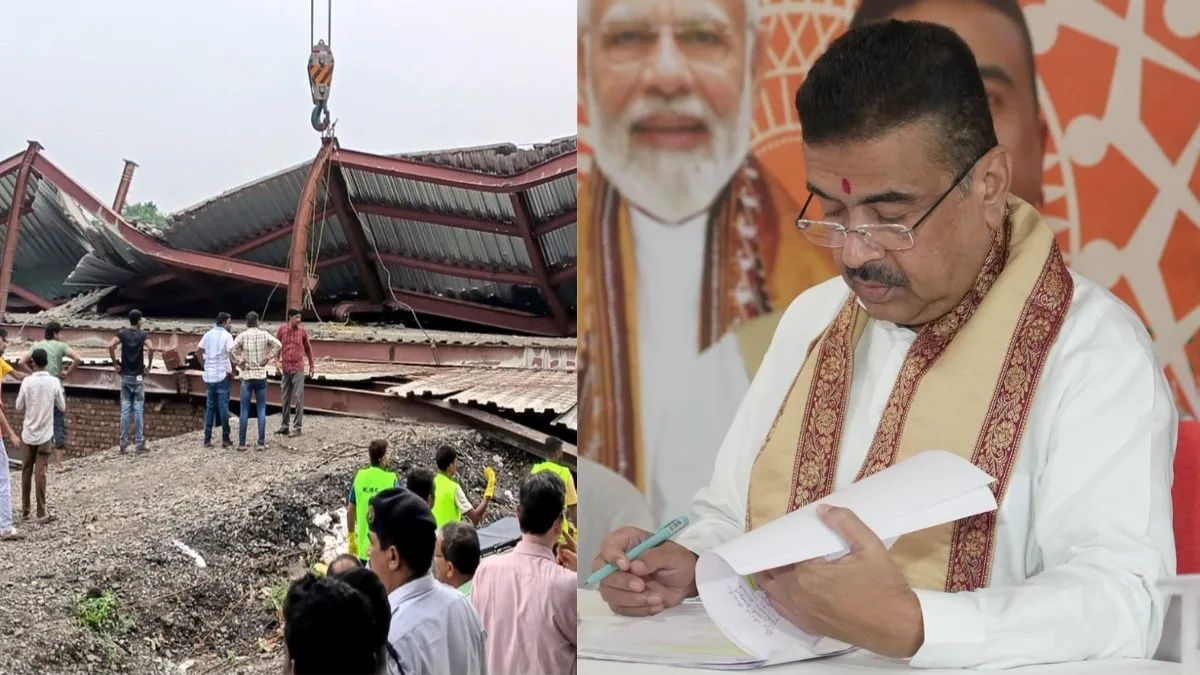
The death toll from the Taratala warehouse collapse in Kolkata has climbed to 11 as rescue teams intensified their search through rubble on the second day of operations. Officials confirmed that another body was recovered on Thursday afternoon at around 1.15pm, brought to the Trauma Care Centre at SSKM Hospital, though identification remained pending. The tragedy has revived serious concerns about building safety standards and regulatory oversight in India's eastern metropolis, with authorities fearing additional victims remain trapped beneath the collapsed structure.
The rescue and recovery effort has demonstrated significant coordination between central and state government agencies. Personnel from the Indian Army, the National Disaster Response Force (NDRF), and multiple other response organisations have maintained a continuous presence at the site. The scale and complexity of the operation underscores the challenges posed by the massive debris field, and the uncertainty surrounding how many people were present in the warehouse at the time of collapse has kept rescue teams working against the clock to prevent further loss of life.
West Bengal Chief Minister Suvendu Adhikari used the state assembly to launch a direct attack on the previous administration's handling of building approvals. He specifically targeted the Kolkata Municipal Corporation (KMC) board when it was controlled by the Trinamool Congress (TMC), claiming systematic irregularities had plagued the approval process for the Taratala warehouse. According to Adhikari, the construction plan had received official sanction despite containing significant structural deficiencies that should have rendered it unsuitable for the intended use.
Presenting documentary evidence during the assembly session, the Chief Minister highlighted how former Mayor Firhad Hakim had signed off on a design with fundamental flaws. The government's investigation report, which Adhikari referenced extensively, substantiated claims that basic structural principles had been violated during the initial planning phase. This public presentation of evidence served both as an accountability measure and as a political statement about the consequences of inadequate oversight in the previous regime.
The inquiry has expanded to examine the conduct of engineers and officials responsible for stamping approval on deficient plans. Rather than treating the collapse as an isolated accident, authorities are investigating it as a failure of multiple institutional safeguards. Five arrests have already been made, including the construction company supervisor, the person who fabricated the iron structure components, the land lessee, the labour contractor associated with Trimex, and a broker involved in securing KMC approval. The primary accused, identified as Azgar, remains at large, and efforts to locate him are ongoing.
In response to the disaster, Adhikari declared a four-week suspension on all construction activity across the Kolkata Municipal area and surrounding municipalities including Rajarhat-New Town, Maheshtala, Budge Budge, Pujali, Bishnupur, Sonarpur, and Baruipur. This blanket halt is intended to allow time for a comprehensive safety review rather than a temporary precaution. During the moratorium, every approved building plan within these jurisdictions will undergo detailed scrutiny through a specially constituted audit mechanism, representing an unprecedented intervention in the state's construction sector.
The audit committee has been placed under the leadership of Additional Chief Secretary Rajesh Pandey and brings together an unusually broad coalition of expertise. Beyond government administrators, the committee includes faculty and engineers from IIT Kharagpur, specialists from the Rail India Technical and Economic Service (RITES), representatives of Indian Railway Construction Limited (IRCON), and officials from the Fire Services Department, Public Works Department, and KMC. This composition reflects an effort to apply rigorous technical standards to what has historically been a vulnerable area of municipal administration.
The Chief Minister's public statements emphasised a zero-tolerance approach to future violations. Adhikari declared that those found culpable would face not merely criminal prosecution and imprisonment, but potential asset seizure to generate compensation funds for victims and their families. This assertion signals a willingness to pursue aggressive remedial measures, though the actual implementation of such confiscation would require navigating complex legal frameworks regarding property rights and the severity of charges that can support such actions.
The collapse incident exposes deeper systemic weaknesses in how Indian cities manage building safety, particularly in regions experiencing rapid industrial and commercial expansion. Kolkata's warehouse and manufacturing sectors have historically operated with variable levels of regulatory scrutiny, and the Taratala incident represents a catastrophic consequence of that inconsistency. For Malaysian observers and regional policymakers, the case illustrates how gaps between design standards, approval processes, and on-site construction practices can accumulate into fatal failures, raising questions about whether similar vulnerabilities exist in Southeast Asian construction sectors.
The four-week moratorium will undoubtedly disrupt ongoing economic activity across multiple municipalities, affecting contractors, developers, workers, and suppliers dependent on continuous construction flow. However, authorities evidently judged that temporary economic disruption is preferable to the risk of additional collapses. The audit committee's composition suggests that technical rigour will be prioritised over bureaucratic expedience, potentially establishing precedent for how other Indian states approach building safety reviews following major incidents.
Beyond the immediate rescue operation and arrest of accused parties, the broader significance of this tragedy lies in its potential to reshape how structural approval processes function in urban India. Whether the audit produces lasting institutional reform or remains a reactive gesture depends largely on political commitment to sustaining oversight mechanisms once public attention shifts elsewhere. The Chief Minister's explicit warnings about consequences for officials and professionals who enable future violations may serve as deterrent, though enforcement history in Indian public administration suggests that political will often weakens once crisis narratives fade from media coverage.

