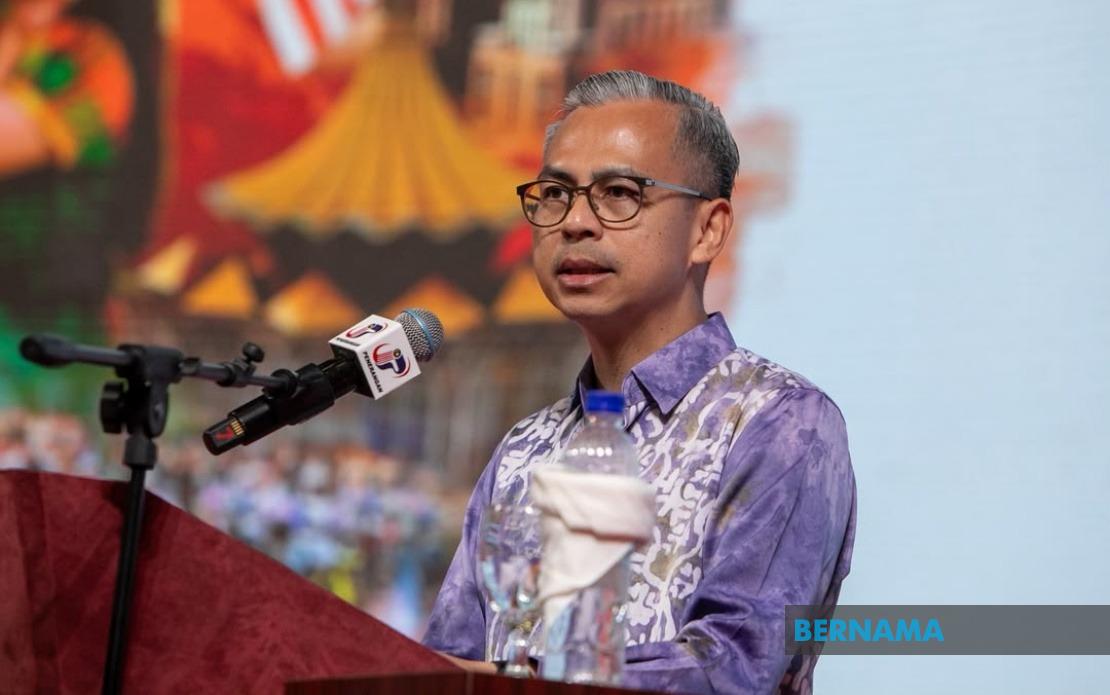
The Kembara Merdeka Jalur Gemilang convoy will continue functioning as a vital conduit for instilling patriotic values and cementing national unity among Malaysians, according to Communications Minister Datuk Seri Fahmi Fadzil, who made the announcement during the launch of the 2026 National Month and Fly the Jalur Gemilang campaign in Ipoh.
Fahmi underscored that despite resource constraints requiring a more measured approach to this year's festivities, the government remains committed to deepening public appreciation for the nation's independence and fostering love for Malaysia. The convoy programme will maintain its position as a centrepiece event during the Malaysia Day and National Month celebrations, which operate under the theme "Malaysia MADANI: Kesejahteraan Dinikmati" (Malaysia MADANI: Shared Prosperity). This thematic alignment reflects the government's broader narrative of inclusive development and collective advancement across the population.
The launch ceremony, held at the Sultan Azlan Shah Ministry of Health Training Institute in Tanjung Rambutan, was officiated by Prime Minister Datuk Seri Anwar Ibrahim, signalling the administration's high-level prioritisation of national celebrations and patriotic engagement. The presence of National Unity Minister Datuk Aaron Ago Dagang and Perak Menteri Besar Datuk Seri Saarani Mohamad underscored the multi-agency coordination surrounding these initiatives, reflecting how patriotic campaigns operate across different governmental levels and portfolios.
Central to the 2026 celebrations will be an intensified push for the "One House, One Jalur Gemilang" initiative, which seeks to encourage households nationwide to display the national flag as a symbolic representation of Malaysia's sovereignty and national pride. This grassroots approach to flag-flying represents a shift toward embedding patriotic expression within everyday domestic spaces rather than confining such displays to official venues and designated periods. By making flag-flying a household normality, policymakers aim to transform national symbols from occasional ceremonial markers into permanent features of the Malaysian home environment.
The convoy itself has evolved into a recognisable fixture within Malaysia's patriotic calendar, traversing the country to bring flag-waving activities and national consciousness-raising directly to communities. The initiative carries particular significance in Malaysia's multi-ethnic context, where such nationwide campaigns serve dual functions: celebrating shared national identity whilst simultaneously reinforcing the principle of unity-in-diversity that undergirds the Malaysian social compact. The convoy's itinerary across diverse regions ensures that patriotic messaging reaches both urban centres and rural constituencies that might otherwise have limited engagement with official national celebrations.
Resource optimisation mentioned by Fahmi likely reflects broader budgetary realities facing the Malaysian government, particularly in an environment of competing expenditure priorities. Yet the commitment to maintaining patriotic programming despite fiscal constraints suggests policymakers view such initiatives as essential investments in social cohesion rather than discretionary spending. This positioning reflects a recognition that in increasingly fragmented societies, deliberate efforts to cultivate shared national sentiment become more critical rather than less so.
Malaysia's approach to national celebrations through vehicular convoys and flag-flying initiatives places it within a regional pattern observed across Southeast Asia, where governments employ visible, participatory patriotic activities to strengthen national consciousness. The Malaysian model, however, incorporates explicit recognition of the nation's multi-confessional and multi-ethnic composition, attempting to construct patriotic narratives that transcend particular religious or communal identities. The Malaysia MADANI theme itself reflects this inclusive positioning, emphasising shared prosperity and collective well-being rather than narrower identity markers.
The timing of the 2026 campaign launch coincides with broader discussions about Malaysia's development trajectory and national positioning in an increasingly competitive regional and global environment. Patriotic campaigns function not merely as celebratory exercises but as political communications tools through which governments articulate their vision of national purpose and collective aspiration. By framing the Malaysia MADANI narrative around shared prosperity, the administration attempts to build consensus around its development model and policy priorities.
For Malaysian readers and stakeholders invested in national cohesion, these initiatives carry implications beyond ceremonial significance. The visibility and reach of the KMJG convoy, coupled with the One House, One Jalur Gemilang campaign, will shape the civic landscape during the 2026 celebrations period. Community participation in such initiatives reflects broader engagement with national identity formation and collective purpose, offering opportunities for citizens to actively demonstrate commitment to national unity rather than passively consuming patriotic messaging. The emphasis on household flag-flying particularly transforms patriotic expression from a top-down governmental exercise into a participatory civic activity.

