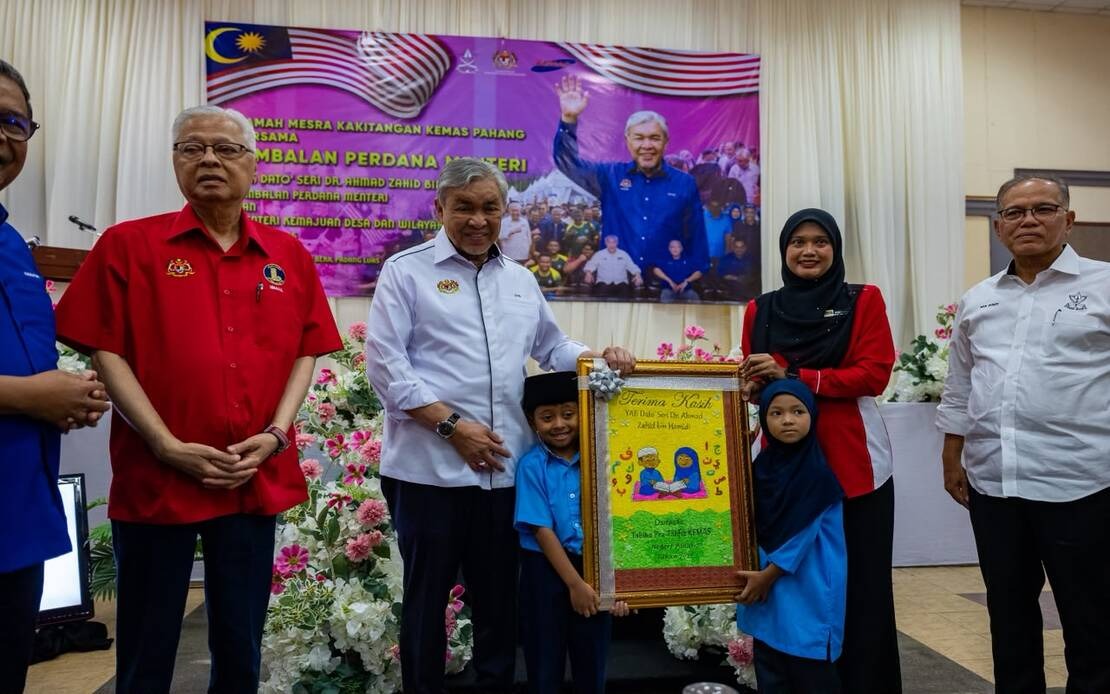
The Rural and Regional Development Ministry is embarking on a significant modernisation of early childhood education, moving beyond traditional classroom methods to create a learning environment that marries technological innovation with religious instruction. Speaking during a community engagement programme in Bera, Pahang, Deputy Prime Minister Datuk Seri Dr Ahmad Zahid Hamidi outlined an ambitious vision to reposition KEMAS—the Community Development Department's network of kindergartens and childcare centres—as a crucial frontier in shaping Malaysia's next generation of learners.
This strategic pivot reflects mounting pressures on the nation's education system following recent policy shifts that lowered the school entry age from seven to six. That decision has heightened focus on the quality and relevance of pre-primary learning, making KEMAS's role as the primary provider of subsidised early education increasingly significant, particularly for families in rural and regional areas where private options remain limited. The ministry now faces expectations to ensure that even the youngest learners are adequately prepared for an education landscape becoming more technology-dependent each year.
At the heart of the modernisation drive is the expansion of digital infrastructure across KEMAS facilities. Ahmad Zahid signalled that Smart Class systems and smartboards would see wider rollout in kindergartens nationwide, positioning basic technological familiarity as foundational rather than supplementary to early learning. This reflects global trends in education policy, where digital competency is increasingly treated as a core skill on par with numeracy and literacy. For Malaysia's largely rural KEMAS network, such upgrades could narrow the digital access gap that has historically disadvantaged children in less developed areas.
Equally prominent in the proposed transformation is a restructured approach to religious education. Rather than treating Quranic instruction as peripheral to mainstream learning, the ministry intends to embed it as a central pillar of KEMAS curricula. Beginning next academic year, kindergartens will expand their memorisation programmes beyond the existing focus on Juzuk 30—the final section of the Quran—to include major surahs including Yasin, Al-Waqiah, Al-Mulk and As-Sajdah. This expansion signals an intentional effort to deepen Islamic grounding among children as young as four or five, reflecting broader societal emphasis on values education in the formative years.
The practical implementation of this expanded religious curriculum hinges on teacher capacity. Ahmad Zahid stressed that KEMAS educators themselves must first develop proficiency in Quranic memorisation before attempting to guide children through structured learning. This prerequisite speaks to a broader challenge: upgrading the qualifications and skills of early childhood educators across the KEMAS network, which operates thousands of facilities serving economically disadvantaged communities. Staff development initiatives will be essential to ensure that the ambition translates into consistent, high-quality delivery across disparate regions.
The convergence of technological and religious education objectives reflects a conscious policy choice to position Malaysian early learners at an intersection of tradition and modernity. Rather than viewing religious instruction and digital literacy as competing priorities, the ministry is framing them as complementary dimensions of a holistic education that prepares children for both cultural continuity and global competitiveness. For policymakers grappling with questions of national identity and economic positioning, this dual emphasis attempts to reconcile preserving Islamic values with meeting 21st-century economic demands.
Governmental cooperation across multiple levels will prove essential to realising these ambitions. Ahmad Zahid called for closer coordination between federal and state authorities, Members of Parliament, and state assembly representatives to mobilise the infrastructure and funding required. Significantly, he highlighted Pahang's own initiatives—including efforts to secure land titles and provide renovation grants for KEMAS facilities—as a model of the inter-governmental partnership necessary to scale improvements. This emphasis on collaborative governance suggests that previous silos between federal, state and local implementation may have hampered earlier expansion efforts.
The financial and logistical dimensions of this transformation are considerable. With KEMAS Tabika and Taska having served approximately 8.4 million children since establishment, the reach of the network is vast. Outfitting thousands of facilities with updated technological infrastructure, coupled with comprehensive teacher retraining programmes, represents a substantial investment commitment. The ministry's framing of this as essential infrastructure spending rather than discretionary spending may signal willingness to prioritise early education funding in upcoming budgetary cycles.
Ahmad Zahid's emphasis on political stability and institutional reform as prerequisites for educational advancement carries particular resonance in Malaysia's current context. The comment reflects awareness that educational transformation requires not just resources but also sustained political will and coherent policy direction across electoral cycles. Early childhood education, often underfunded relative to primary and secondary levels globally, can easily become a casualty of budgetary pressures or political distraction. By explicitly linking it to broader themes of national development and generational preparation, the ministry signals that KEMAS modernisation is framed as a strategic priority rather than a peripheral concern.
For Malaysian parents and educators, particularly those in rural communities dependent on KEMAS services, these developments suggest tangible improvements ahead. The commitment to Smart Class infrastructure addresses real disparities in technological access that disadvantage rural children relative to urban peers. Simultaneously, the structured approach to religious curriculum provides clarity about educational objectives in a society where Islamic values hold significant social importance. The challenge now lies in translating policy announcements into sustained, adequately-resourced implementation across the diverse contexts where KEMAS operates—from urban fringe settlements to remote peninsular villages.

