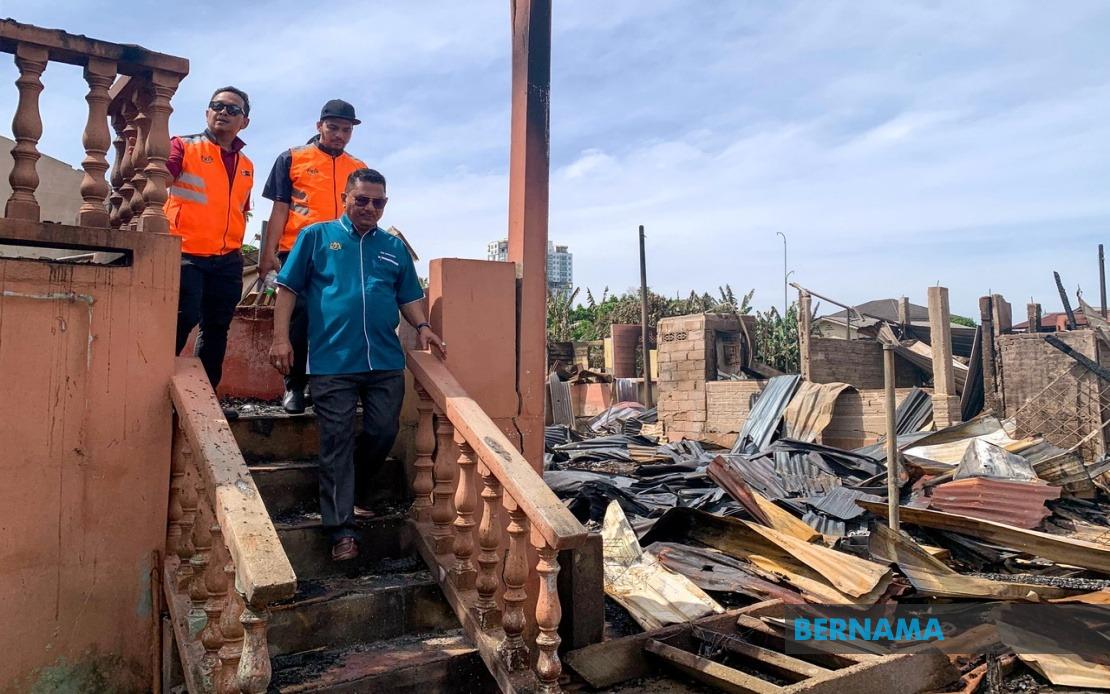
A major residential fire in Kampung Gok Kapur, Kota Bharu that destroyed 27 homes and left 110 villagers homeless on June 8 was sparked by the careless burning of papers in a kitchen, the Kelantan Fire and Rescue Department confirmed. The incident marks another cautionary tale about fire hazards in domestic settings, where everyday activities can rapidly escalate into community-wide disasters when basic safety precautions are ignored. The investigation, conducted by the department's Fire Investigation Forensic Unit, concluded that human negligence rather than mechanical or electrical failure was the primary cause, underlining how critical individual responsibility is in preventing residential fires across Malaysia.
Kelantan JBPM director Farhan Sufyan Borhan detailed the investigation's findings in explaining how the catastrophe unfolded. A resident had used a gas lighter as an open flame source to intentionally burn a pile of papers directly inside the kitchen of one house. This practice, which may have seemed routine or inconsequential to the person involved, created immediate fire risk given the proximity of numerous flammable household materials typical in any kitchen environment. The physical evidence recovered and statements taken from those present revealed a straightforward chain of causation: the open flame ignited the papers, which then caught surrounding combustible items, and the fire consumed the initial structure before jumping to neighbouring properties.
The rapid spread from a single household to an entire neighbourhood highlights vulnerabilities in residential fire safety across Malaysian communities. Once the initial flames began consuming materials within the kitchen, nothing stood between the fire and neighbouring structures except the common wooden construction and close proximity typical of traditional Kelantan village settlements. Residents in rural and semi-rural areas often lack the structural firebreaks, wider spacing between houses, and robust fire-resistant building materials found in modern urban developments. When fire catches hold in such environments, response times from fire stations can be crucial, yet the sheer speed at which flames spread means that by the time emergency services arrive, multiple properties may already be beyond saving.
The department's investigation explicitly identified negligence as the determining factor, meaning the fire resulted not from accident, mechanical failure, or unpredictable circumstance, but from a conscious decision to engage in a risky behaviour without adequate safeguards. This classification has significant implications beyond the immediate incident. It suggests that targeted public education campaigns addressing how residents use open flames in confined spaces could meaningfully reduce future incidents. Many Malaysian households continue traditional practices like burning papers for various purposes, yet few residents understand how rapidly such activities can escalate when executed carelessly in kitchens where cooking fuel, utensils, and food items create perfect conditions for fire propagation.
The 110 residents rendered homeless represent the broader human cost of such incidents. Families lost not only their physical homes but also accumulated belongings, documents, and in some cases livelihoods or small businesses operated from home. The temporary shelter provided at the Mukim Banggol Mosque, while essential, offers only basic accommodation and does not address medium or long-term recovery needs. Reconstruction of homes, replacement of possessions, and psychological recovery from losing a residence typically require months or years, placing strain on family finances and emotional wellbeing that often receives insufficient attention in post-incident reporting.
Fortunately, the incident resulted in no casualties, a outcome that reflects either exceptional luck or the successful evacuation efforts by residents and emergency responders. In contrast, fire incidents elsewhere in Malaysia have sometimes claimed lives, particularly when fires occur at night when residents are asleep and response times are delayed. The absence of fatalities in this case should not obscure how easily matters could have proven far more tragic. Every fire that spreads rapidly through residential areas carries inherent risk of trapping occupants, particularly young children, elderly residents, or those with mobility limitations who cannot evacuate quickly.
The Fire and Rescue Department's determination to transfer findings to police and relevant authorities suggests potential follow-up action, whether administrative warnings, prosecution under fire safety regulations, or community service requirements. The precise consequences will depend on applicable Kelantan state legislation and whether authorities determine that formal legal action serves the public interest. Beyond any individual accountability, however, the incident underscores systemic gaps in how Malaysian communities are educated about domestic fire prevention and prepared to respond when fires occur.
Farhan Sufyan Borhan's public advisory following the investigation emphasizes vigilance regarding open flame sources and avoiding burning activities near or within residential areas. This guidance, while sound, reflects a somewhat reactive approach—warning people not to do dangerous things after tragedy strikes. More proactive strategies might include community education programmes conducted before incidents occur, demonstration of fire extinguisher use in village settings, and establishment of neighbourhood fire watch systems. Several Southeast Asian countries have implemented community-based fire safety initiatives that combine education with practical preparedness exercises, approaches that Malaysian local authorities might adapt to suit different village contexts.
The architectural and spatial characteristics of village settlements like Kampung Gok Kapur merit specific attention from urban planners and fire safety regulators. Unlike planned urban neighbourhoods with building codes requiring minimum distances between structures and fire-resistant materials, many traditional settlements developed organically with houses built in close proximity using readily available materials. Retrofitting such areas with improved fire resistance would require significant investment and potentially prove contentious if construction standards are mandated mid-development. A balanced approach might involve incentivizing homeowners to adopt fire-resistant roofing, maintaining clear space around homes, and establishing community fire response protocols while respecting cultural and economic constraints.
The incident also raises questions about fire station coverage and response capabilities across Kelantan. While Kota Bharu benefits from urban fire services, many areas in the state lack immediate access to firefighting resources. Building community capacity through volunteer fire brigades, providing basic firefighting equipment and training to village leaders, and establishing clear reporting procedures could meaningfully improve response times in areas where professional fire services cannot arrive within critical early minutes when fires are most controllable. Several Malaysian states have begun exploring such decentralized approaches with promising results.
Looking forward, this incident should prompt reflection across Malaysian communities about how everyday activities conducted without forethought can transform into catastrophes affecting dozens of families simultaneously. The use of open flames for burning papers, while perhaps declining in urban areas, remains common in rural and semi-rural settings where residents may lack access to waste collection services. Creating accessible alternatives for paper disposal, combined with targeted education about fire risks in domestic settings, could prevent similar incidents. The 110 residents of Kampung Gok Kapur who lost their homes represent a preventable tragedy rooted in a simple act of negligence that no warning poster or public advisory can entirely eliminate, yet whose frequency could be substantially reduced through comprehensive, culturally sensitive fire safety initiatives.