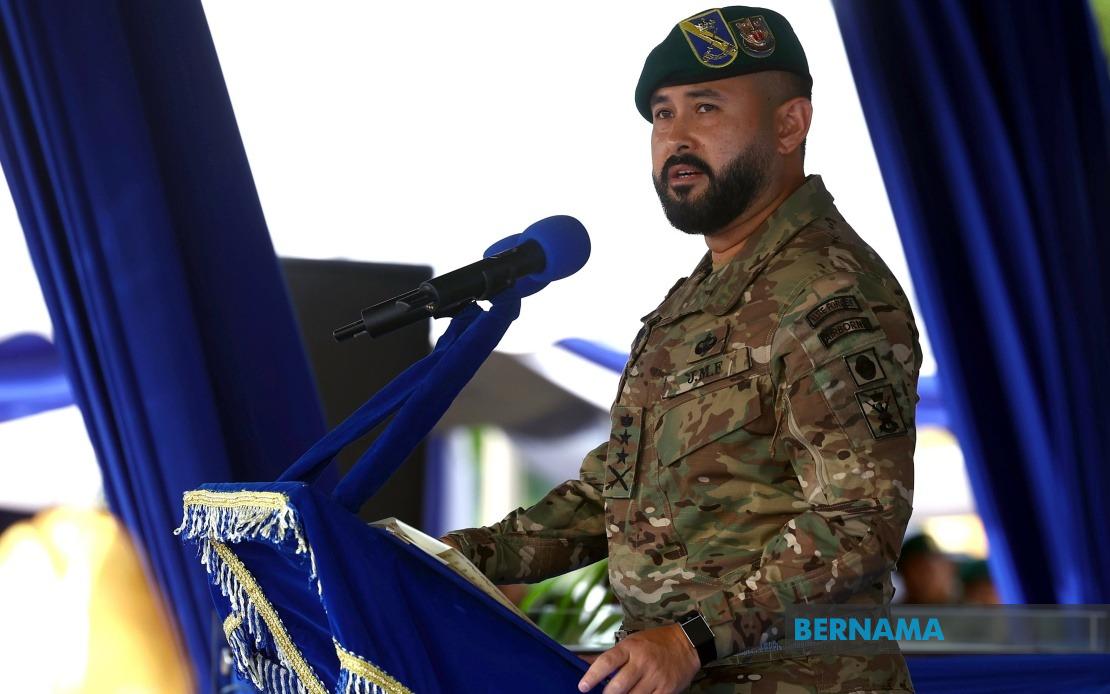
The Regent of Johor, Tunku Mahkota Ismail, has issued a stern warning to all parties involved in overseeing the Regimen Gerak Khas (RGK) not to deviate from development decisions that have already received approval from His Majesty Sultan Ibrahim, King of Malaysia. Speaking at the unit's 61st anniversary parade in Mersing on August 20, the Regent stressed that any modifications to previously endorsed plans must be resisted, particularly when driven by the narrow interests of individuals seeking to exploit well-established strategies for personal advantage.
The RGK, Malaysia's most specialised commando regiment, operates under the purview of His Majesty in his formal capacity as Colonel Commandant of the unit. Every aspect of the unit's development and operational strategy requires royal consent, a safeguard designed to ensure that decisions serve the broader interests of national defence and sovereignty rather than factional agendas. The Regent's remarks carried unmistakable weight, particularly given his authority within the Johor state hierarchy and his influence over military and defence matters in the peninsula.
Tunku Ismail employed a traditional Malay aphorism to illustrate his concern, cautioning against placing trust in guardians who subsequently betray their responsibilities. The warning appeared directed at elements within the defence establishment who might be tempted to repurpose or redirect resources and strategic decisions for purposes other than those originally sanctioned. This rhetorical flourish underscored the gravity with which the Regent views the matter and reflected frustration with what he evidently perceives as creeping institutional drift.
Additionally, the Regent issued a pointed rebuke concerning management within the Ministry of Defence and the wider Malaysian Armed Forces structure. He indicated that he was aware of individuals controlling positions within the defence ministry's hierarchy and pledged to address what he characterised as a "cancer" within the military establishment. These cryptic remarks hinted at concerns about corruption, mismanagement, or the prioritisation of departmental interests over operational effectiveness—issues that have periodically surfaced in Malaysian defence circles.
The Regent emphasised that senior leadership across the defence ministry, armed forces command, and the Malaysian Army bear direct responsibility for maintaining the RGK's operational capabilities at the highest standard. This includes ensuring adequate allocation of equipment, weapons systems, mobility assets, advanced technology, logistics networks, and operational support infrastructure. The cumulative effect of underfunding or misallocating resources to the RGK would directly undermine the unit's capacity to respond to security threats.
The strategic environment surrounding Malaysia has grown substantially more volatile and unpredictable in recent years, particularly given geopolitical dynamics across the Indo-Pacific region and ongoing territorial tensions in the South China Sea. Major powers continue jockeying for influence and advantage, creating a security landscape far removed from the relative stability that characterised earlier decades. Against this backdrop, the Regent argued that complacency regarding existing military capabilities poses genuine risks to national interests, necessitating sustained investment in newer technologies and enhanced operational readiness.
Tunku Ismail called upon the government to prioritise comprehensive action addressing the evolving operational requirements of the RGK. Rather than accepting current force levels and equipment specifications as adequate, he advocated for proactive modernisation efforts that factor in contemporary threats and anticipated future scenarios. This perspective reflects broader concerns within military circles about whether defence budgets and strategic investments keep pace with changing regional threats.
A particularly pointed dimension of the Regent's address concerned procurement and development processes undertaken within the framework of the 13th Malaysia Plan. These initiatives must be guided by rigorous evaluation of operational capability, equipment quality, cost-effectiveness, and alignment with genuine operational requirements rather than influenced by procurement decisions reflecting political patronage or commercial relationships. The Regent's emphasis on capability and effectiveness as the governing criteria suggests concern that other factors have occasionally intruded into defence procurement decisions.
Equally significant were his observations regarding the management of RGK personnel. The Regent warned against allowing favouritism, nepotism, or merit-blind advancement practices to penetrate the unit's personnel systems. The cultivation of a professional, transparent, and ability-based approach to career progression matters considerably for unit cohesion and operational effectiveness. When personnel perceive that advancement depends on patronage rather than demonstrated competence, morale deteriorates and the organisation's broader effectiveness suffers.
The Regent also reinforced expectations that RGK personnel maintain the highest standards of professional skill, physical and mental resilience, personal integrity, and unwavering loyalty to the Crown and nation. These standards, rooted in the historical traditions and sworn oaths of Malaysia's elite commando formation, represent the institutional culture that has defined the RGK's reputation. He stressed that the unit functions as the "tip of the spear" in confronting security threats, a designation that demands excellence in every dimension of performance.
For Malaysia's regional standing, the condition of elite military units such as the RGK carries significance beyond narrow military metrics. Countries throughout Southeast Asia calibrate their assessment of Malaysian military capability partly through the readiness and sophistication of specialised formations like the RGK. The Regent's insistence on maintaining rigorous standards and protecting approved development plans from political interference reflects recognition that Malaysia's security posture and deterrent capacity depend fundamentally on maintaining world-class capabilities among its most advanced units.
The broader implications of the Regent's intervention extend to questions about institutional integrity within Malaysia's defence establishment. His willingness to publicly criticise governance practices within the defence ministry signals that accountability mechanisms remain active and that senior figures remain willing to challenge practices they perceive as damaging to operational effectiveness or institutional integrity. Whether these expressed concerns translate into substantive reform will significantly influence the trajectory of Malaysian defence development in the coming years.

