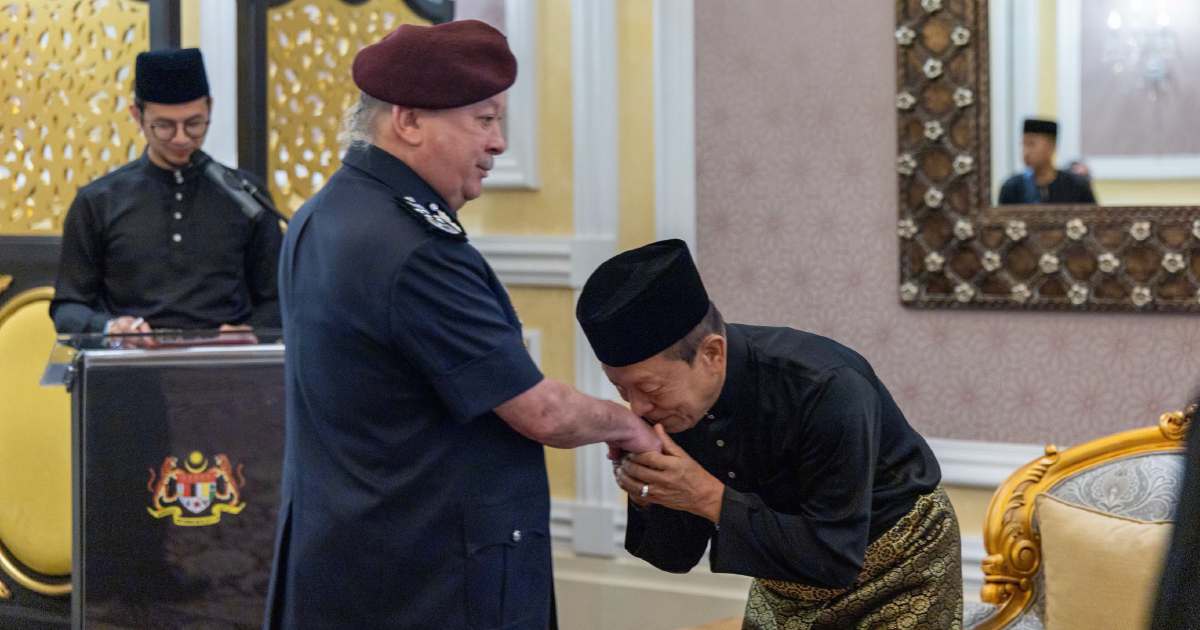
His Majesty Sultan Ibrahim, King of Malaysia, received Malaysian Anti-Corruption Commission (MACC) chief commissioner Datuk Seri Abdul Halim Aman in an official audience at Istana Negara today, underscoring the constitutional monarchy's ongoing engagement with key institutional leaders. The meeting represents a routine but significant aspect of the sovereign's custodial role in national governance, where senior officials brief the Yang di-Pertuan Agong on matters of state importance.
Royal audiences with heads of major agencies form part of Malaysia's constitutional framework, wherein the King maintains direct lines of communication with institution leaders responsible for critical functions. The MACC, as the primary body tasked with investigating corruption and upholding integrity across the public and corporate sectors, regularly interfaces with the highest levels of government. Such meetings ensure that institutional accountability mechanisms remain transparent and operate within the constitutional order established by the Federal Constitution.
The timing of this audience reflects the broader context of Malaysia's anti-corruption agenda, a persistent challenge that has attracted sustained international scrutiny and domestic reform efforts. The MACC has intensified its operations in recent years, investigating high-profile cases and attempting to strengthen its investigative capacity. The agency's autonomy and effectiveness have been subjects of ongoing debate among civil society organisations, legal practitioners, and policymakers who monitor whether the commission operates free from political influence.
Datuk Seri Abdul Halim Aman has led the MACC since his appointment, navigating the complex mandate of pursuing corruption while maintaining institutional credibility. His tenure has coincided with Malaysia's efforts to strengthen governance standards and demonstrate commitment to international anti-corruption conventions. The MACC operates under the Malaysian Anti-Corruption Commission Act 2009 and maintains jurisdiction over federal and state government employees, statutory bodies, and private sector entities in cases involving corruption or misconduct.
Royal engagement with the MACC carries symbolic weight within Malaysia's institutional architecture, as the King serves as guardian of the constitution and custodian of public trust. This audience demonstrates the palace's attentiveness to the nation's anti-corruption machinery during a period when Malaysia continues addressing governance challenges accumulated over decades. The monarchy's involvement signals that integrity matters remain at the highest level of state concern.
For Malaysian readers and regional observers, such high-level meetings also communicate important messages about institutional independence and the rule of law. In a region where corruption remains a persistent development impediment, visible engagement between constitutional authorities and anti-corruption bodies provides assurance of commitment to transparent governance. The MACC's work intersects with Malaysia's standing in international rankings measuring corruption perception, directly affecting investor confidence and the nation's reputation abroad.
The audience occurs against a backdrop of broader governance transformation initiatives. Malaysia has undertaken various measures to strengthen institutional capacity, including infrastructure investment in the MACC, recruitment of specialised personnel, and adoption of advanced investigative technologies. However, challenges persist regarding conviction rates, case resolution timelines, and public perception of the agency's political neutrality—issues that likely feature in discussions between senior officials.
Institutationally, the MACC functions as both investigator and prosecutorial body in certain circumstances, working alongside the Malaysian Anti-Corruption Advisory Board and various government departments. Its effectiveness depends upon sustained resources, political insulation, and cooperation from agencies across multiple tiers of government. Royal audiences facilitate the flow of information from institutional leadership to the constitutional apex, ensuring that the King remains informed about critical national concerns.
Regionally, anti-corruption efforts in Malaysia influence peer standards across Southeast Asia. The ASEAN region faces endemic corruption challenges, and Malaysia's institutional approaches—both successes and shortcomings—serve as reference points for neighbouring governments considering governance reforms. Strengthened anti-corruption mechanisms in larger ASEAN economies contribute to regional economic stability and the attractiveness of the region for foreign investment.
Moving forward, the MACC faces mounting expectations to demonstrate tangible results in high-impact cases while maintaining procedural integrity and respect for constitutional rights. The agency must balance aggressive investigation with fairness, transparency with appropriate confidentiality, and institutional independence with accountability. Royal engagement underscores that these challenges demand sustained attention from Malaysia's highest leadership levels.
The audience at Istana Negara reflects Malaysia's constitutional commitment to separating institutional functions while maintaining cohesion among key state organs. It demonstrates that the monarchy remains an engaged custodian of national integrity concerns, and that the MACC, despite occasional controversies, retains recognition as a central pillar of Malaysia's governance framework. As the nation continues navigating post-pandemic economic recovery and intensifying regional competition, institutional effectiveness in combating corruption remains essential for sustainable development and public confidence in governmental legitimacy.

