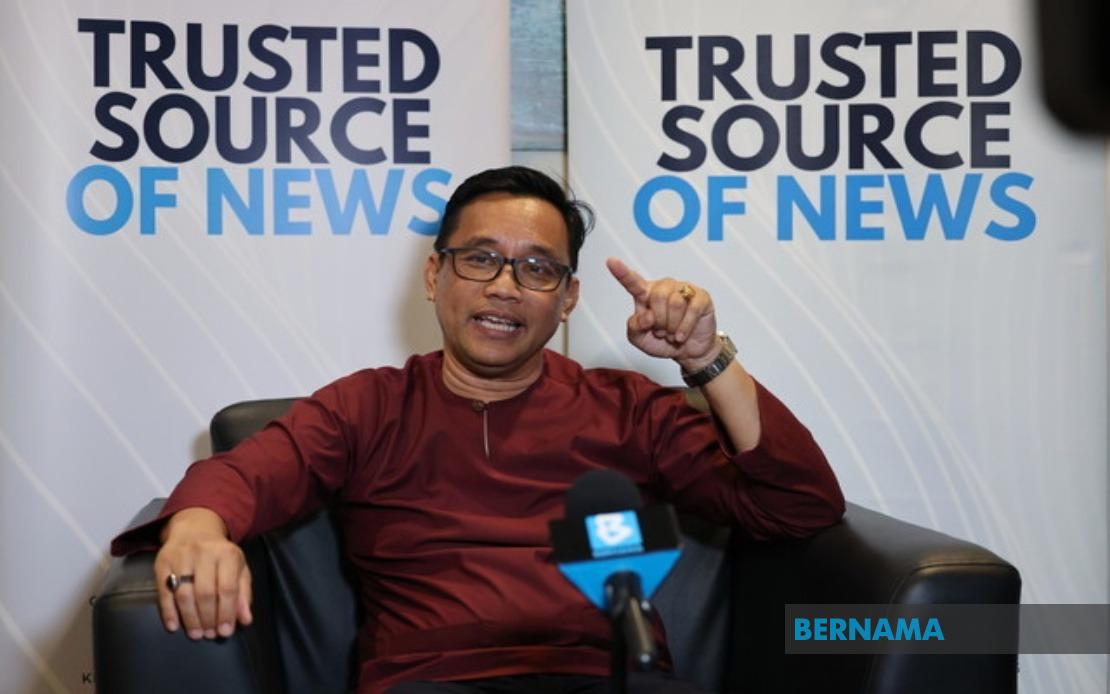
Mohd Khuzzan Abu Bakar is stepping back into electoral politics in the Semerah state constituency for Johor's 16th state election, framing his candidacy not as a reversal of past defeat but as an opportunity to resurrect development initiatives halted when Pakatan Harapan lost control of the state administration in 2020. The 58-year-old former chairman of the Johor Youth, Sports, Culture and Heritage Committee is banking on a narrative of unfinished business to persuade voters to return him to the assembly, promising to complete projects and programmes that stalled during the political transition four years ago.
Amongst his stated priorities are infrastructure restoration and community-focused development that addresses longstanding grievances. The Taman Sri Sulong Youth Mini Complex features prominently in his platform, alongside tackling persistent water supply deficiencies affecting Semerah residents and managing flash flood vulnerability in adjacent areas of Batu Pahat and Tanjung Laboh. These issues, often cited during community engagements throughout Johor's constituencies, speak to frustrations over basic services and environmental management that span administrations and reflect broader challenges in local governance across the state.
Khuzzan's personal connection to the constituency underpins his candidacy. Born in Jalan Mesjid in Batu Pahat and married to a Semerah resident, he positions himself as organically tied to the community rather than a politician parachuted into unfamiliar territory. This localised anchor has become increasingly salient in Malaysian electoral discourse, where voters often weigh candidates' demonstrated commitment to constituency interests against party machinery and national agendas. His framing emphasises reciprocal responsibility, suggesting that his deep roots obligate him to channel resources and attention toward community advancement.
Crucially, Khuzzan's platform extends beyond infrastructure into economic opportunity creation, particularly for younger demographics. His proposed focus on youth employment aligns with broader conversations about job creation in Johor as the state attempts to diversify its economic base beyond traditional manufacturing and resource extraction toward investment-driven and technology-enabled sectors. This positioning recognises that younger voters, who comprise approximately 37.4 percent of Semerah's 47,431 registered voters according to Election Commission data, are increasingly concerned with career pathways and economic mobility rather than conventional patronage politics.
The candidate's background in banking informs his approach to small and medium enterprise support, a perennial concern in Malaysian electoral campaigns. Khuzzan advocates complementing government funding schemes such as TEKUN Nasional and Amanah Ikhtiar Malaysia with structured financial management training and sustained guidance. This two-pronged strategy acknowledges that while financing availability matters, many entrepreneurs struggle with capital deployment, cash flow management, and sustainable scaling without proper advisory support. By positioning SME advancement as integral to constituency economic development, he taps into a constituency segment—small business owners and traders—whose political loyalty is often contestable and issue-driven.
Khuzzan's campaign strategy reflects evolving electoral realities in Malaysian politics, particularly the integration of digital platforms into voter engagement. His embrace of TikTok, Instagram, and Threads signals recognition that social media penetration now spans age demographics far beyond the youth market. His stated surprise at discovering senior citizens following his TikTok account highlights how Malaysian electoral communication has shifted, with traditional broadcast media now supplemented by platforms enabling direct candidate-to-voter interaction. This democratisation of reach allows lesser-known candidates to bypass traditional gatekeepers, though it simultaneously intensifies competition for voter attention.
On-the-ground activation complements digital strategy. Khuzzan's campaign incorporates youth-oriented activities such as e-sports tournaments, sepak takraw matches, and carrom competitions alongside educational programming on artificial intelligence and digital technology. These initiatives serve dual purposes: they create photo opportunities and voter touchpoints while ostensibly preparing younger constituents for evolving economic demands. Whether such activities translate into sustained political engagement or electoral advantage remains an open question, though the multiplicity of engagement channels suggests recognition that contemporary voters, particularly younger cohorts, respond to diverse mobilisation approaches.
The Semerah contest occurs within a specific electoral context. The 2022 Johor state election, held during post-pandemic recovery, saw Mohd Fared Mohd Khalid of BN-UMNO secure the seat with a majority of 4,041 votes. That relatively modest margin suggests genuine political contestation rather than a predetermined outcome, offering Khuzzan a plausible pathway to victory. The larger 16th Johor state election features 172 candidates competing for 56 seats, with polling on July 11 and early voting available on July 7, creating a comprehensive electoral exercise across the state's diverse constituencies.
Khuzzan's confidence appears partly rooted in demographic trends and feedback from grassroots engagement. He notes that encouragement from B40 (bottom 40 percent income) households and e-Kasih recipients signals potential receptivity to Pakatan Harapan's messaging around targeted assistance and social support. The B40 demographic has shown variable political loyalty, responsive to perceived improvement in economic conditions and government service delivery. If Khuzzan's anecdotal reports reflect broader sentiment rather than campaign optimism, this segment could represent swing voters potentially persuadable through emphasis on social safety nets and targeted assistance programmes.
Khuzzan also anticipates different political dynamics compared to the 2022 election, expecting elevated voter turnout including participation from Johoreans working in Singapore. Cross-border employment and remittances constitute a meaningful economic factor in constituencies proximate to Singapore, and voters with significant income sources outside Malaysia often prioritise governance competence and service delivery. This electorate segment may prove receptive to arguments emphasizing infrastructure completion and economic opportunity creation, particularly if they perceive current governance as inadequate to constituency needs.
The Semerah contest represents a microcosm of Johor's political realignment. Pakatan Harapan's 2020 exit from state governance followed leadership transitions and political negotiations at the national level, creating a hiatus in local administration continuity. Constituencies like Semerah where PH previously held power become potential recovery targets, particularly if the opposition can credibly argue that stalled projects and interrupted development programmes represent opportunity costs from the political transition. Khuzzan's campaign essentially contests whether voters prioritise continuity with pre-2020 PH governance or prefer stability under the current administration.
Ultimately, Khuzzan's candidacy hinges on whether his narrative of interrupted development and personal commitment resonates sufficiently to overcome the incumbent advantage. The relatively narrow 2022 victory margin suggests the seat remains contestable. However, Malaysian voters increasingly weigh multiple factors—including local governance performance, national party positioning, and perceived economic competence—rather than single issues. Khuzzan's multi-faceted campaign addressing infrastructure, youth employment, SME support, and digital engagement suggests awareness that contemporary electoral success requires addressing diverse voter concerns rather than relying on traditional appeals.

